Singapore · Country Guides
Kampong Gelam Beyond Haji Lane: A Respectful Culture Guide
A half-day Kampong Gelam guide that connects Sultan Mosque, Malay and regional trade history, textiles, food and contemporary streets responsibly.
· 6 min read
Kampong Gelam · 1.3023° N, 103.8590° E
A centre of Malay royal history, Muslim life and regional commerce, anchored by the Sultan Mosque and streets of textiles and trade.
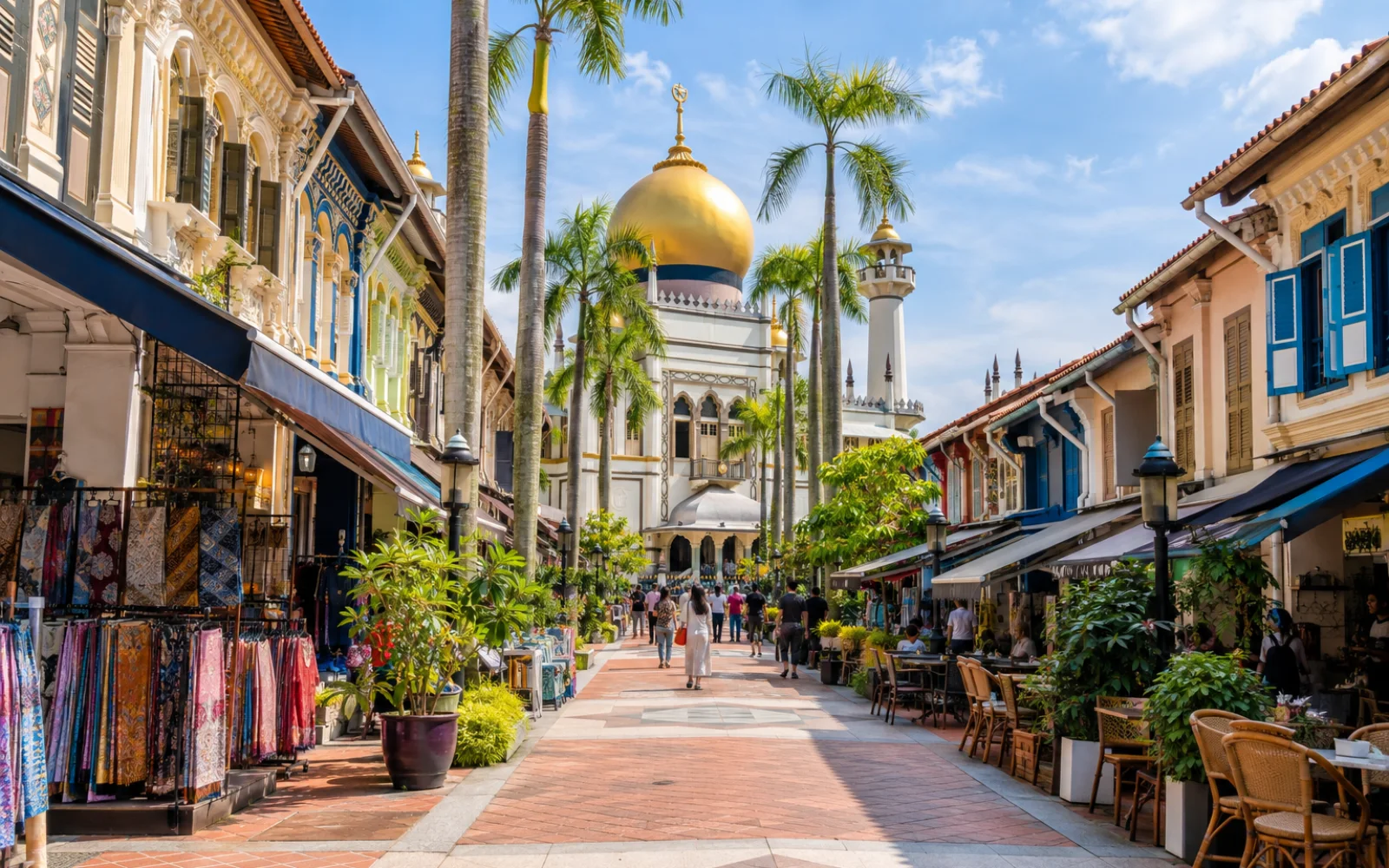
Kampong Gelam is regularly compressed into one colourful photograph of Haji Lane. That misses its importance as a centre of Malay royal history, Muslim life and regional commerce involving merchants from across the archipelago and beyond. Sultan Hussein Shah built the first Sultan Mosque beside his palace in 1824–26, and the present building, completed in 1932, remains an active mosque and national monument.
Bussorah Street gives the familiar approach to the mosque, Arab Street is associated with textiles and carpets, and Sultan Gate connects to the former palace area and Malay heritage interpretation.
The Kampong Gelam culture guide builds a half-day route. See also Little India or the Singapore overview.
Singapore · Country Guides
A half-day Kampong Gelam guide that connects Sultan Mosque, Malay and regional trade history, textiles, food and contemporary streets responsibly.
· 6 min read
No. Haji Lane has bars, boutiques and murals, but Bussorah Street, Arab Street and Sultan Gate each reflect different parts of the district's history.
Sultan Hussein Shah built the first mosque beside his palace in 1824–26. The present building, by Denis Santry of Swan & Maclaren, was completed in 1932.
One short, occasional email with a useful new guide, a place story and notes on what we have updated.
Join by emailSend us that email and we will add you to the list. We only email people who ask, and you can leave any time. See our privacy policy.
