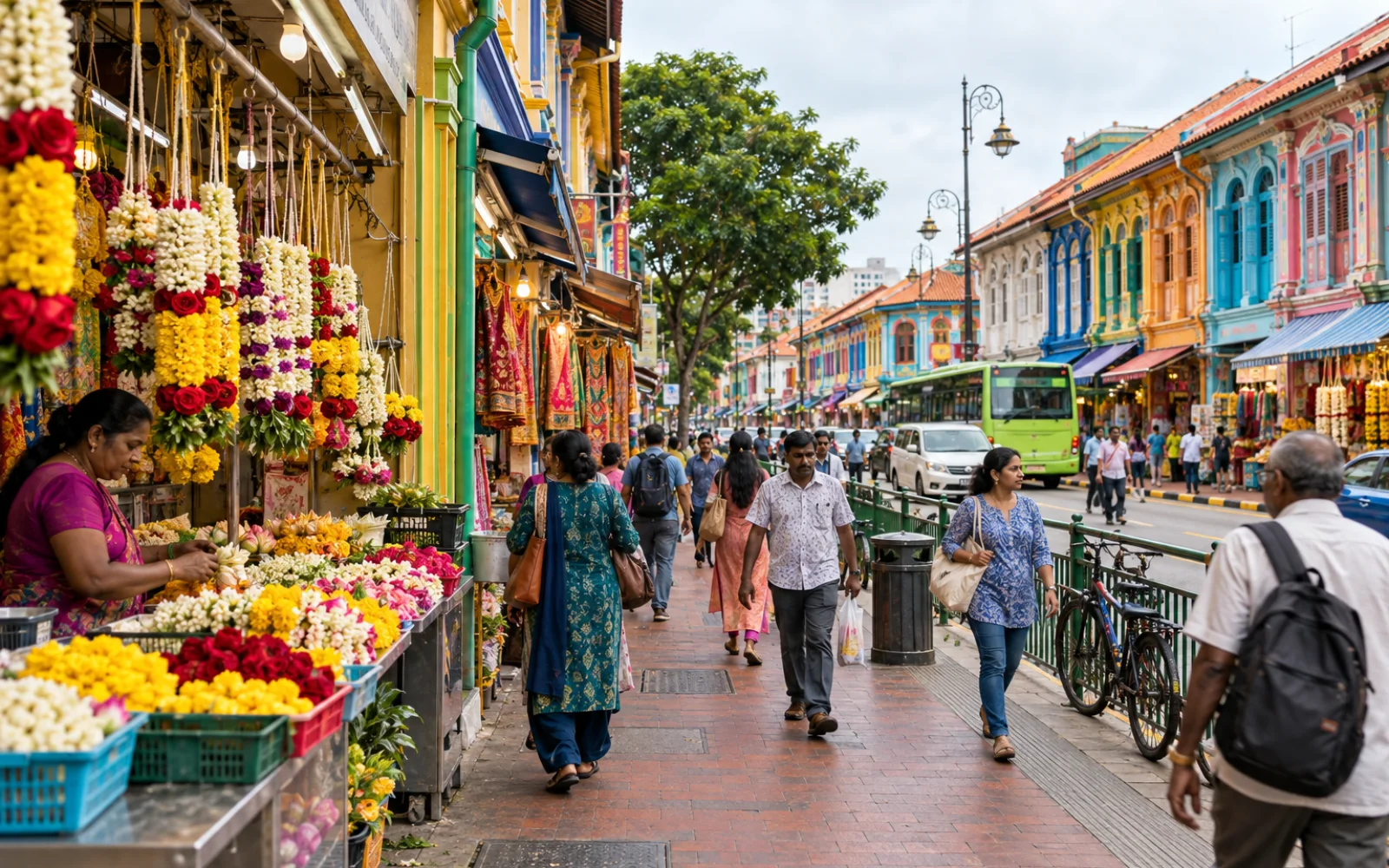
Singapore · Country Guides
Little India, Singapore: Lime Pits, Temples and Tekka
Lime pits, convict-built Serangoon Road, a temple from 1855 and a market since 1915 explain Little India's streets, temples and food.
· 5 min read
Little India · 1.3066° N, 103.8496° E
A district that grew from lime pits, cattle trade and worship, with a conservation area since 1989 and Tekka Centre at its centre.
Little India began as a place of lime and bricks. Tamil speakers called it Soonambu Kambam, "village of lime", and by the 1820s the British had set up lime pits and brick kilns along Serangoon Road, which convicts laid as one of Singapore's earliest roads. Cattle trading followed at Kandang Kerbau, until livestock was banned in 1936. The original Tekka Market was built in 1915, and Tekka Centre is still the district's food and trade heart.
Sri Veeramakaliamman Temple traces a shrine to 1855, and the shophouse streets have been a conservation district since 7 July 1989.
The Little India guide follows these layers on a half-day route. See also Kampong Gelam or the Singapore overview.
Singapore · Country Guides
Lime pits, convict-built Serangoon Road, a temple from 1855 and a market since 1915 explain Little India's streets, temples and food.
· 5 min read
Tamil speakers called the area Soonambu Kambam, meaning village of lime, because of the lime pits and brick kilns the British set up along Serangoon Road by the 1820s.
According to the National Heritage Board, Tamil workers set up a shrine to the goddess here as early as 1855, and a fuller temple followed in 1881.
One short, occasional email with a useful new guide, a place story and notes on what we have updated.
Join by emailSend us that email and we will add you to the list. We only email people who ask, and you can leave any time. See our privacy policy.
