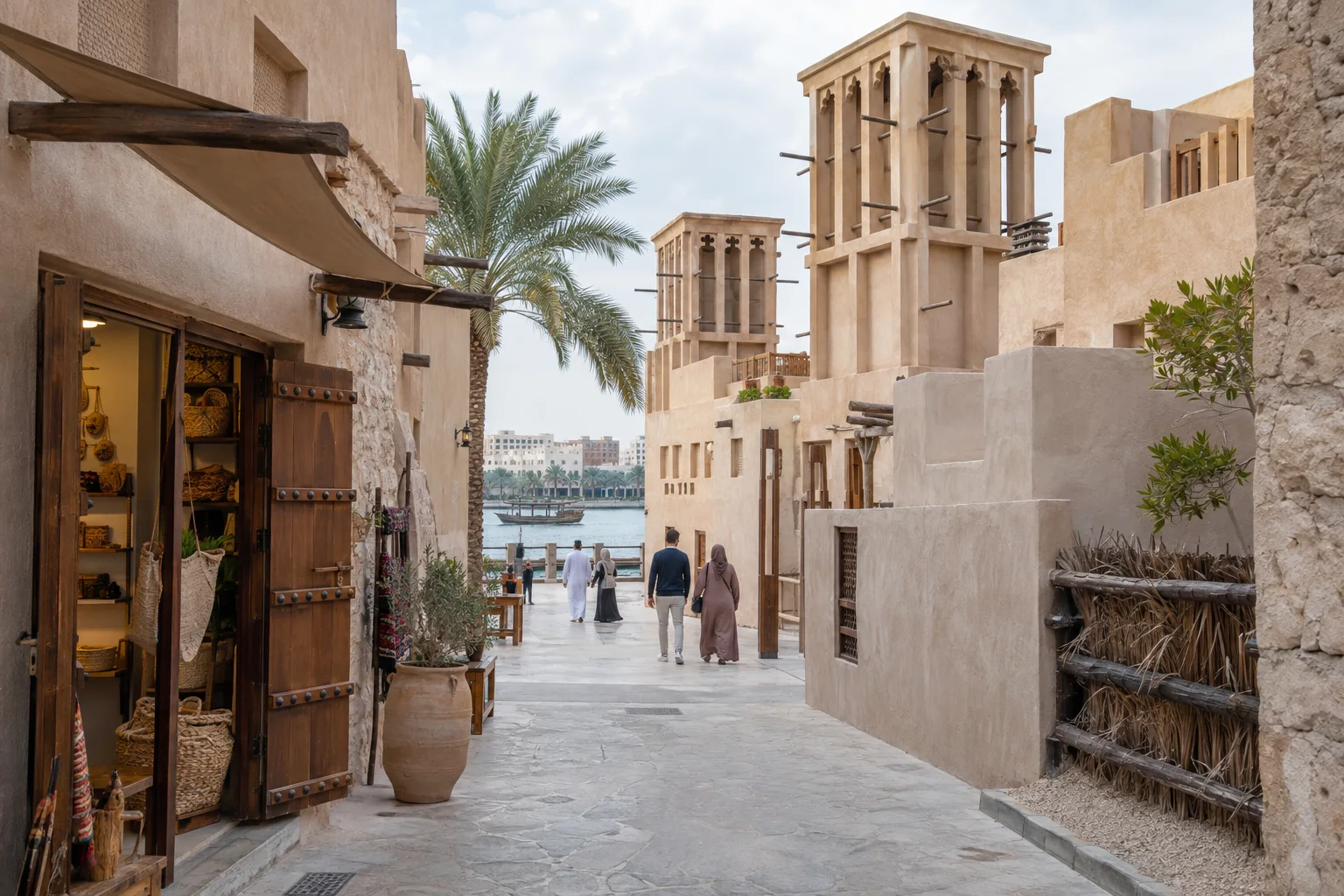
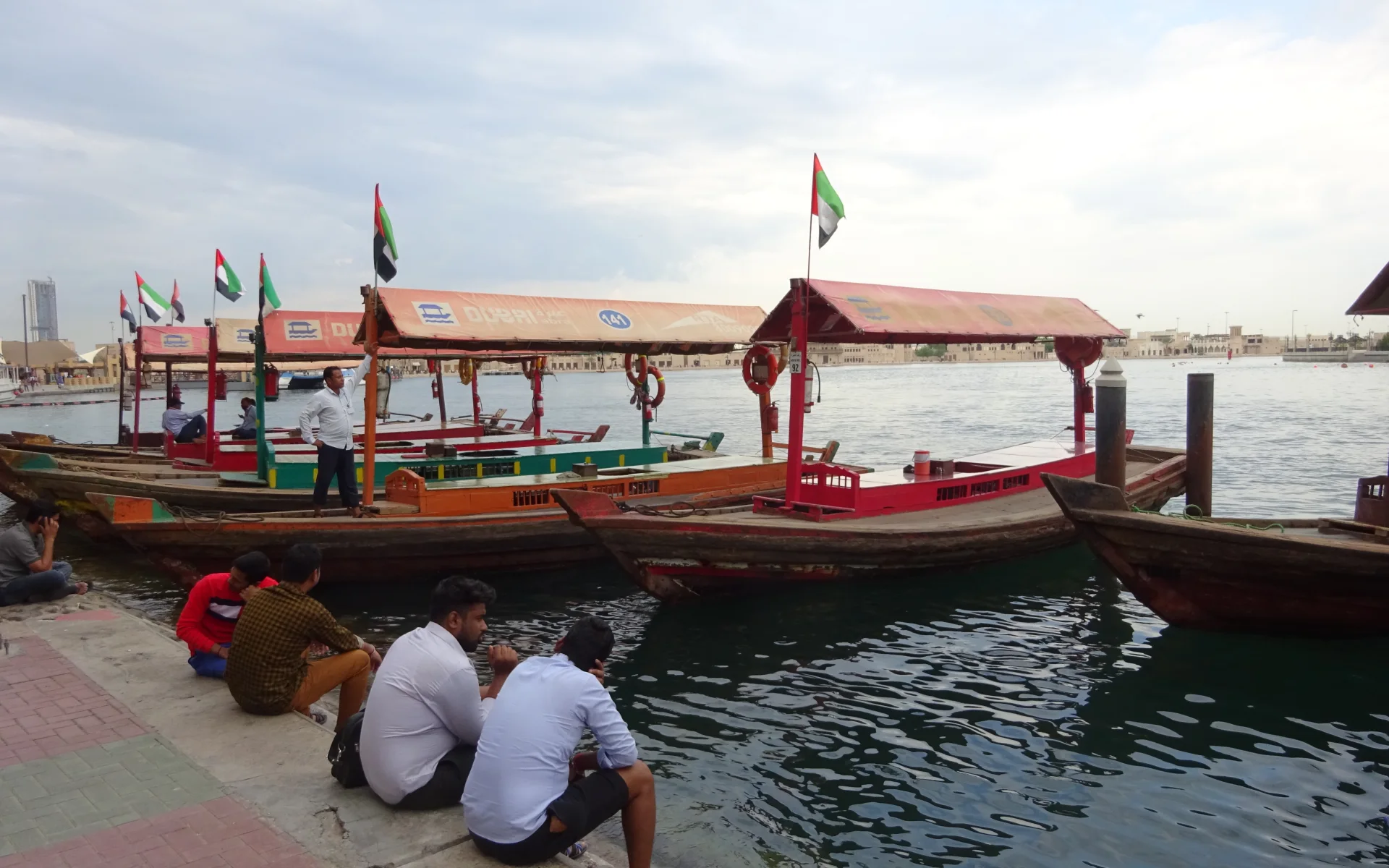
Ajman: An 18th-Century Fort, Dhow Builders and a Ramsar Mangrove
An 18th-century fort that sheltered the ruling Al Nuaimi family until 1970, a dhow-building coast and a Ramsar-listed mangrove make Ajman's small waterfront rich in stories.
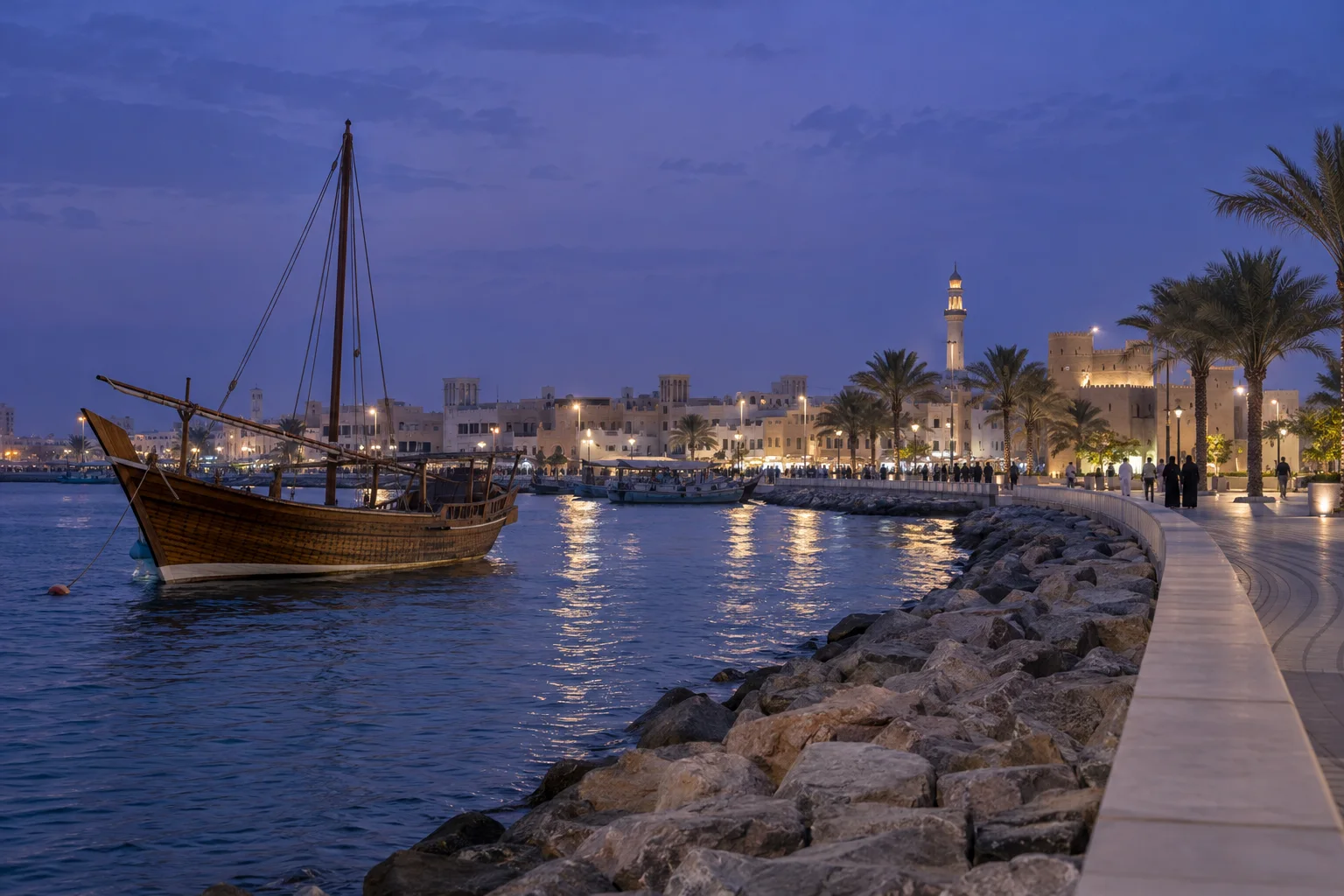
Cover: AI-generated illustration. © ANUSHKA DAHANAYAKE (PVT) LTD.
Ajman is one of the smallest emirates, but its coastal capital holds more of the Gulf's story than its size suggests. Fishing, pearl diving, dhow building and farming were the traditional mainstays, with farmland inland at Al Manama and Masfout, and the sea shaped the town's character long before the Corniche was built. The city now holds more than 90 per cent of the emirate's population, with an estimated 565,767 residents in 2024.
A fort, a ruling family and a museum
In 1816 or 1817, Sheikh Rashid bin Humaid Al Nuaimi and about fifty followers took the coastal settlement from the Al Bu Shamis in a short conflict, and his family has ruled Ajman since. Sheikh Rashid accepted the General Maritime Treaty with Britain in March 1820, a month after Sultan bin Saqr of Sharjah. On 2 December 1971 Ajman joined the United Arab Emirates, again under a ruler of the Al Nuaimi line.
Ajman Fort is the building that holds that history. The official tourism page dates it to the eighteenth century, and it served as the ruler's residence until 1970. It then became Ajman Museum around a decade later. Its displays include centuries-old manuscripts and weaponry, models of wooden dhows and irrigation systems, a section on the pearl trade, and finds from an excavated cemetery at Al Muwaihat with pottery and funeral jewellery dating back to 3000 BC. Give it enough time to read the fort as architecture and not just as a container for objects.
Dhows and the Gulf's boat-building tradition
Dhow building was one of Ajman's traditional industries, and wooden vessels remain part of the Gulf's maritime identity. The museum's models are a good introduction, but a working yard is a workplace. View yards and harbours only from public access or on an authorised visit, do not climb a vessel or enter an industrial site, and ask permission before photographing workers. A knowledgeable guide can explain construction, trade and repair. Modern engines and materials do not make a boat inauthentic; they show a living industry.
Al Zorah, a protected mangrove
Al Zorah is the one protected area in Ajman city and the largest mangrove stand in the emirate. The reserve was listed as a Wetland of International Importance under the Ramsar Convention in 2017, the seventh site in the UAE. The Ramsar sheet gives it as 195 hectares, though other sources quote smaller figures. The trees are the grey mangrove (Avicennia marina), and the lagoon supports around sixty bird species, including flamingos. Mangroves matter because they shelter fish nurseries and bind the shoreline.
Book a legitimate guide or operator who knows the tide, the open channels and the distance to keep from wildlife. Ask about lifejackets, guide ratios, weather cancellation and accessible boarding. Paddle in the main channel, keep voices low, do not chase birds and carry out every item. Roots, mudflats and nesting areas are not landing platforms. Tide changes both effort and what is visible, and a trip should be rescheduled if wind, heat or poor visibility affects safety. For a quieter comparison a short drive north, see the Umm Al Quwain mangrove guide.
A two-day order for Ajman
Spend the first day in town: the fort museum, then the central market streets and, when heat allows, the Corniche in the evening. Check the official Ajman Museum listing before setting out, because its published opening hours have been inconsistent, and confirm photography rules by room. Markets are workplaces: ask before photographing and understand jewellery weight, purity and making charges before paying. The Corniche suits a measured walk. Use public pavements, give anglers wide space (fishing lines can be nearly invisible at night) and keep swimwear to designated beach areas.
Use the second day for the mangrove or a beach. For a beach day, establish whether access is public, hotel-only or paid, obey flags and lifeguards, and supervise children directly. A continuous-looking shoreline on a satellite map does not mean continuous public access; never cross a hotel or construction area to reach the water.
Heat, traffic and fit
Ajman meets Sharjah, whose museums are covered in our Sharjah heritage guide, and peak traffic can turn a short distance into hours. If Dubai appointments matter, test the journey at the relevant time before booking. Confirm the airport code and official taxi rank, and use marked parking.
Walk in the coolest hours; summer humidity remains high after dark. Alternate the museum or a café with short outdoor stretches, and treat dizziness, nausea or headache as a reason to cool down and get help. Wheelchair users should contact the museum and kayak operator for entrance and boarding details. Rare heavy rain can flood roads, so do not drive through standing water. Strong wind can cancel paddling while the museum and central town remain open. Seafood should have a named species and origin, and allergies need direct discussion.
Ajman can be better value than larger emirates when the day stays local. Budget for the airport transfer, a local taxi or parking, one guided nature experience and meals, and check resort taxes and beach access before comparing room rates. Cafeterias reflect many resident communities, so describe their cuisines accurately instead of calling everything Emirati. For a lasting object, look for a named UAE-based maker, photographer or illustrator, and avoid government emblems, hotel logos and copied Arabic calligraphy.
Travel insurance should include the chosen water activity and any cross-emirate disruption. Save receipts and written cancellation messages, because a verbal promise from a reseller is hard to use later; book through a traceable operator and note its legal name. Give the fort time even on a short stay: its rooms were a family home and a seat of government as well as a defence, and reading the displays in order, from the Al Muwaihat finds to the pearl trade, shows how the town's economy changed. Keep the morning after a tide-dependent trip flexible so a guide is never pressured into an unsafe departure. Families do better choosing either mangroves or a long beach block than forcing both after a museum morning.
Use the Ajman place page and UAE collection for context, and continue inland with the Hatta guide.
Questions and answers
How long should visitors stay in Ajman?
Two days cover the museum and Corniche plus a mangrove, beach or dhow-focused day without repeated traffic towards Dubai.
Can Ajman be explored from Dubai?
Yes, but peak traffic through Sharjah can make the journey much longer than the map suggests. Stay locally or travel outside commuting periods.
Is every Al Zorah mangrove channel open to kayaks?
No. Use an authorised operator that follows tide, conservation and access rules, and never land in protected habitat without permission.
Sources
Abu Dhabi · 24.4539° N, 54.3773° E
This story belongs to Ajman, United Arab Emirates. Seven emirates connected by trade and rapid change, with different identities shaped by creeks, islands, oases, mountains, coast and desert.