Boston: America's Oldest Park, the Freedom Trail and Black Beacon Hill
Boston Common from 1634, the Freedom Trail, the 1806 African Meeting House, Fenway Park and the Boston Marathon: the dated story of a city of firsts, with practical advice.
Boston is where several American firsts happened within a few miles of each other: the first city park, the first university, the first subway and the first annual marathon. It is also where protest against British rule turned into revolution, and where Black Bostonians built institutions that shaped the abolitionist movement. The city is compact and brick-built on a harbour, and its pride is rooted in dates that can be checked.
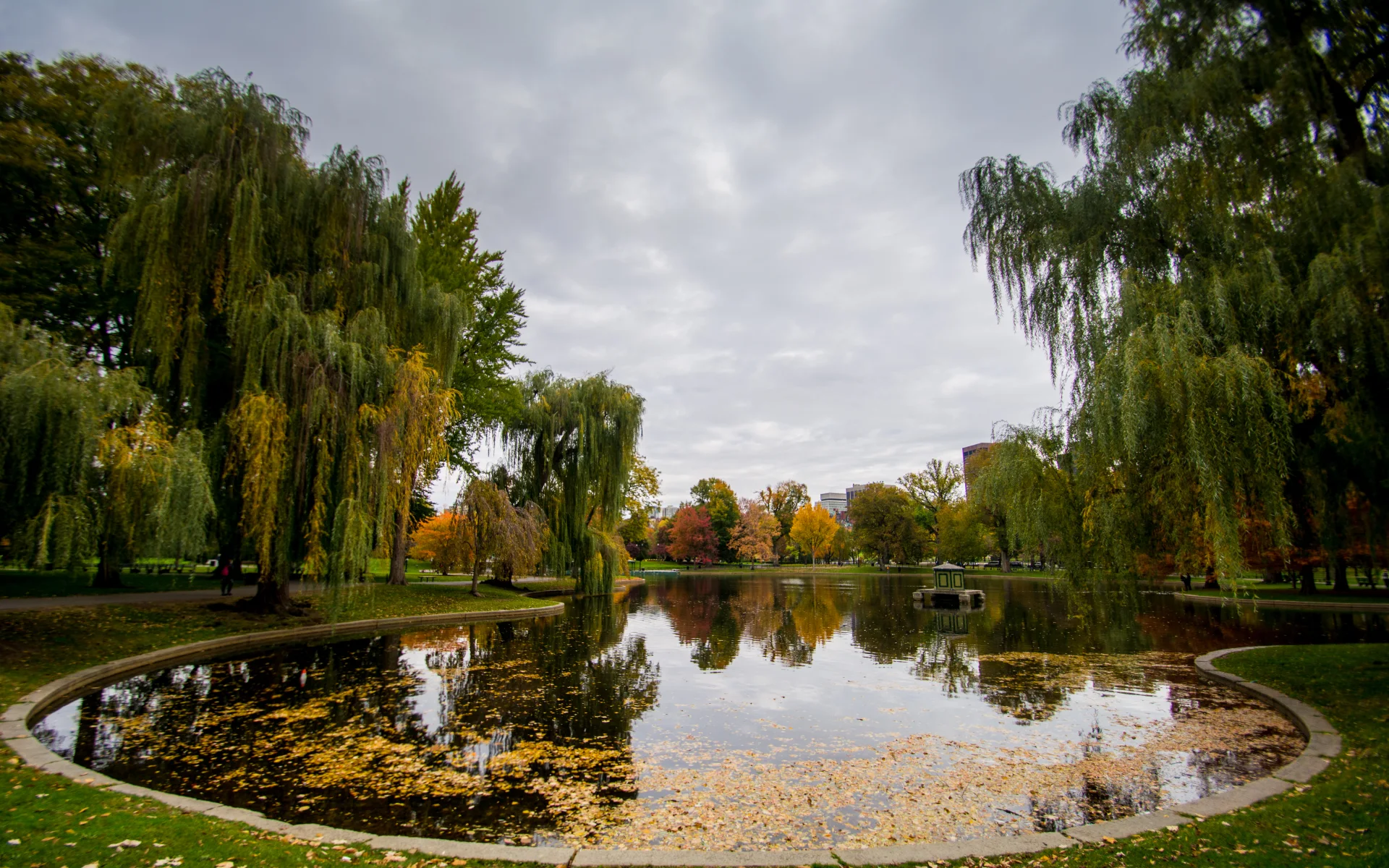
Cover photograph: “Boston Public Garden fall” by Erik Cooper, photographed 4 November 2016 and shared via Wikimedia Commons under CC BY 2.0. The original was centre-cropped to 16:10 and resized for responsive delivery; no landmark or scene element was generated or removed.
The oldest park, university and subway
Governor John Winthrop bought the land that became Boston Common in 1634 for £30, and the Common is the oldest city park in the United States. Harvard, across the Charles River in Cambridge, was founded in 1636 and is the oldest institution of higher learning in the country; it took the name Harvard College in 1639, after its first benefactor, the clergyman John Harvard. The Tremont Street subway opened on 1 September 1897 and is still the oldest subway tunnel in North America. The Boston Marathon was first held in April 1897, inspired by the revival of the marathon at the 1896 Athens Olympics, and it is considered the world's oldest annual marathon. Fenway Park opened on 20 April 1912 and is the oldest active ballpark in Major League Baseball.
The Freedom Trail and the argument for independence
The Freedom Trail is a 2.5-mile marked route across Boston and Charlestown. The National Park Service describes it as running past sites such as the Granary Burying Ground, the Old State House, Old North Church, Copp's Hill and USS Constitution, and it offers a free self-guided audio tour. Guided tours run seasonally through the NPS and private organisations. The route is not a straight timeline: the Tea Party, the Boston Massacre and Paul Revere's ride have accumulated patriotic shorthand, and the ranger programmes help separate the record from the legend.
Black Boston and the Black Heritage Trail
The African Meeting House on Beacon Hill, built in 1806, is the oldest surviving Black church building in the United States. William Lloyd Garrison founded the New England Anti-Slavery Society there on 6 January 1832, and abolitionists called it the "Black Faneuil Hall". The Abiel Smith School next door, built in 1834, housed the city's school for Black children. The Black Heritage Trail links these places with the homes of the free Black community that organised for abolition, equal education and civil rights.
Art, ideas and an unsolved theft
Harvard and MIT face each other along the river, with dozens of other colleges across the city, and the result is a young population and a serious book and laboratory culture. The Isabella Stewart Gardner Museum opened on 1 January 1903. On 18 March 1990, thieves disguised as police officers took 13 works worth an estimated $500 million; the case remains unsolved and the works have not been recovered.
From the harbour to the table
The North End is the old Italian quarter, with pastry shops and the Paul Revere House on the same blocks, while South Boston and Dorchester carry the Irish heritage that shaped the city's politics. Boston eats from the Atlantic: clam chowder, lobster rolls, oysters and the baked beans that gave the city its nickname. Make room for Cape Verdean, Dominican, Chinese, Vietnamese and Italian cooking as well, since one bowl of chowder is not the whole local table.
Walking the story in three days
Pick one history route each day instead of ticking off every plaque, because the sites are close together on the map but each needs an hour or more once you count security, interpretation and walking between them. Day one: the downtown Freedom Trail from the Common to Faneuil Hall and the North End, or the Black Heritage Trail on Beacon Hill; finish in the Public Garden or on the harbour edge. Day two: from the North End across the river to the Charlestown Navy Yard, where USS Constitution remains an active U.S. Navy ship. The NPS guidance says entry goes through security and adults need photo identification, so leave bulky items behind. Decide how you will return before you cross. Day three: one major museum, or Harvard Square and one university museum. The Gardner encourages timed tickets because popular times can sell out. The Boston city page shows how the districts connect.
Practical help: the T, access, weather and manners
Getting around. Boston's subway is the T. From Logan, the Silver Line serves the terminals and South Station, and Massport describes the free accessible shuttles to the Blue Line. The MBTA is rolling out Tap to Ride in stages, so confirm current coverage and check service alerts on the day. The centre is walkable, a day of sightseeing rarely needs more than one or two train rides, and a car is more trouble than it is worth.
Access and weather. Brick pavements, Beacon Hill's slopes and winter ice affect the route more than mileage does. The NPS accessibility notes flag stair detours and sites with limited access, including historic ships, so check each interior separately. Coastal wind makes the waterfront colder than Back Bay; the National Weather Service briefing helps before a long walking day.
Respect and timing. Check each site's hours before building a day around it, since churches, burial grounds and active government buildings keep their own schedules. Several Black Heritage Trail stops are private homes, so view them from the pavement. The North End is residential as well as historic. Churches and burial grounds have their own rules. For an emergency, call 911.
Boston's story is easier to read beside others. The New York first-time visitor guide covers the port that became the country's largest city, Philadelphia is the other cradle of independence, and what makes the United States special sets both in the wider country. The United States destination hub lists the rest.
Questions and answers
How many days are useful for a first visit to Boston?
One day gives a focused downtown history route. Two days allow the North End and Charlestown section of the Freedom Trail. With three days, add one major museum, Cambridge or a neighbourhood route rather than another checklist of historic interiors.
Can you walk the entire Freedom Trail in one day?
The official route is 2.5 miles, but entries, security checks, interpretation, uneven surfaces and the return from Charlestown make it a substantial day. Dividing the downtown and Charlestown sections usually produces a better visit.
Do first-time visitors need a car in Boston?
No for this itinerary. Walking, MBTA subway and buses, and selected ferries cover the useful areas, while narrow streets and parking make a car inconvenient.
Is the Freedom Trail step-free?
Much of the route follows public pavements with curb cuts, but the National Park Service identifies stair detours, uneven surfaces and historic interiors or ships with limited access. Check the exact site instead of assuming the red line is uniformly step-free.
Sources
New York City · 40.7128° N, 74.0060° W
This story belongs to Boston, United States. A country of home towns and large ideas, from Independence Hall and the first national park to jazz, skyscrapers and volcanic islands.