Bath Day Trip Guide: Roman History Without Rushing
A geographically sensible Bath day plan that connects Roman history, Bath Abbey and Georgian architecture while leaving time to understand the city.
Cover: AI-generated illustration. © ANUSHKA DAHANAYAKE (PVT) LTD.
Bath can be visited in a day, but only if you resist treating every honey-coloured façade as a separate attraction. The Roman core, medieval Abbey and planned Georgian streets tell one connected story about water, status, health and urban change. This route keeps that story intact while avoiding unnecessary crossings of a compact but occasionally steep city.
Check rail engineering work, attraction times and weather before departure. If you are travelling only to photograph the Royal Crescent and hurry back, you will miss the city's Roman, Georgian and spa histories.
Arrive by rail and start with the essential reservation
Bath Spa station sits at the southern edge of the centre. From the station, walk north toward the Abbey and Roman Baths in roughly ten minutes, allowing more time for crossings or mobility needs. Direct trains commonly link Bath with Bristol and London, but schedules and fares change; buy through an official rail retailer and check for planned disruption.
Drivers face central restrictions, traffic and parking costs. Park-and-ride can be useful for travellers approaching from the region, but a train is generally simpler for a city-only day.
Book the Roman Baths for the morning. Timed entry protects the rest of your schedule and lets you see the archaeological site before lunch. The museum explains the sacred spring, Roman temple and bathing complex through surviving structures, objects and reconstructions. Its visitor FAQ recommends allowing 90 minutes to two hours; use the longer end if you want to read the displays rather than skim the main pool.
The Roman Baths says 90 percent of the site is wheelchair accessible, with alternative interpretation for areas that cannot be reached. Descriptive audio, British Sign Language resources, tactile elements and visual planning materials are available. Confirm current arrangements directly when booking because historic buildings impose genuine constraints.
Late morning: Abbey and the city's Roman-medieval centre
Bath Abbey stands beside the Roman Baths, making it the logical next stop. Entry arrangements, services and tower tours vary. The main church has broad access, while the tower involves many steps and is a separate physical commitment. If a service is underway, visit quietly or return later; worship is not an inconvenience.
Pause in Abbey Churchyard and look at the meeting of periods around you: Roman archaeology below ground, medieval religious history, eighteenth-century façades and a modern city managing heavy visitor demand. The Pump Room represents Bath's later identity as a fashionable spa. Afternoon tea can be enjoyable, but it is not required to understand the site and may consume a large part of a short visit.
For lunch, move one or two streets away from the busiest queue. Independent cafés, markets and pubs offer more flexibility. Reserve only if a particular restaurant matters; otherwise let the day's pace determine the stop.
Afternoon: read the Georgian city on foot
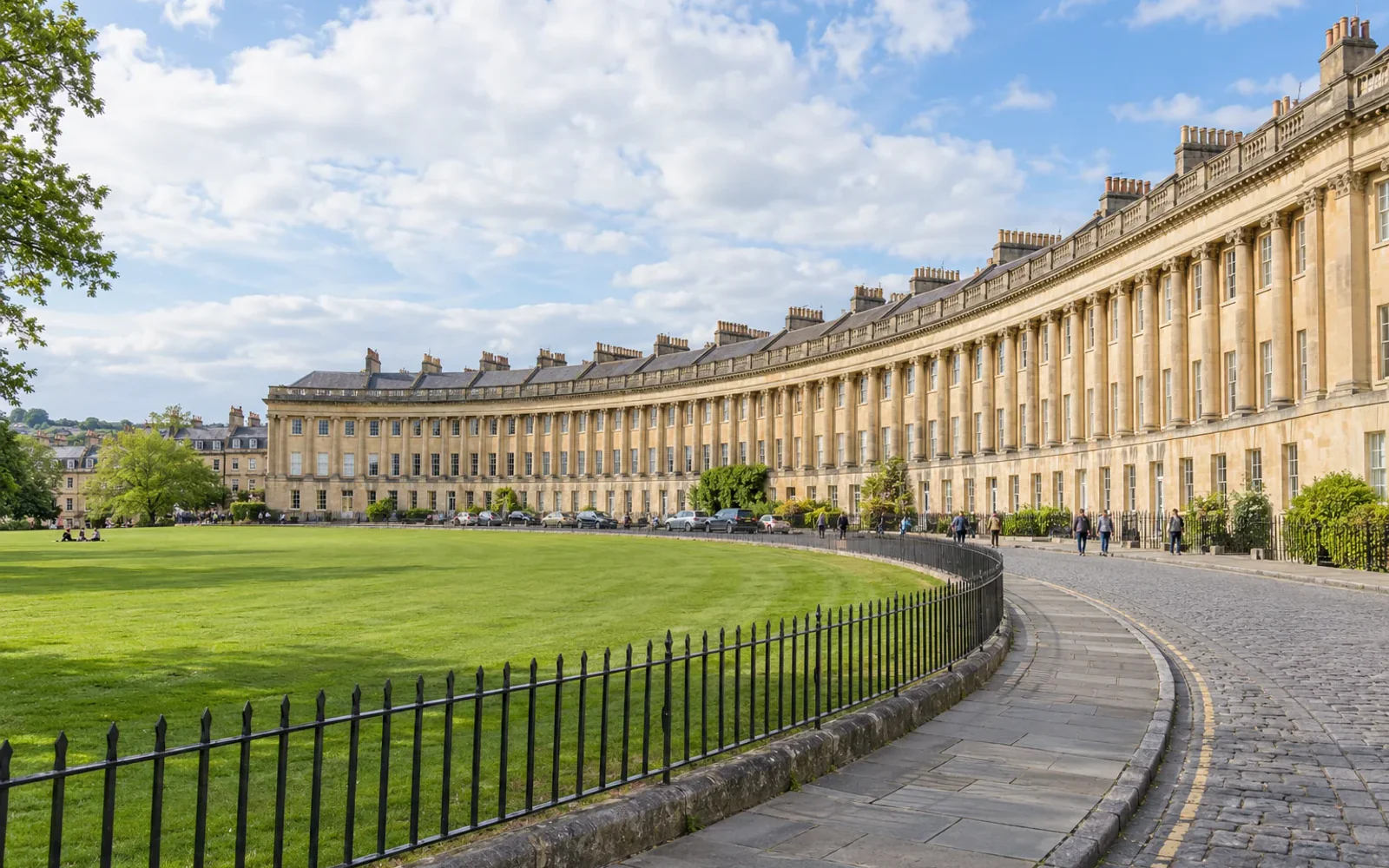
Walk north through the centre toward Queen Square, the Circus and Royal Crescent. This is a gradual climb. The sequence matters: architect John Wood the Elder planned Queen Square and the Circus, while John Wood the Younger completed the Royal Crescent. Together they show how classical ideas were adapted to create prestigious urban addresses.
These terraces are also homes. Stay on public paths, keep doorways clear and do not climb railings or stage photographs on private steps. At the Royal Crescent, the lawn creates space to understand the curve as a whole. No. 1 Royal Crescent interprets Georgian domestic life and is worth reserving if interiors are a priority.
From the Crescent, continue through Royal Victoria Park or return via quieter streets. The Jane Austen Centre appeals to literary visitors, but remember that Austen's relationship with Bath was complicated and the attraction is interpretation, not a preserved home. A focused museum visit is better than squeezing in three.
A quieter alternative: river, canal or art
If crowded architecture routes are not appealing, walk beside the River Avon around Pulteney Bridge, then continue toward the Kennet and Avon Canal. Towpaths can be muddy or narrow, and cyclists share some sections, so check conditions. The Victoria Art Gallery or Holburne Museum offers an indoor alternative in poor weather; verify days and hours before walking across town.
Do not combine the central itinerary, a long canal walk, a museum and spa session in one day. Choose one afternoon emphasis. Bath rewards observation—the changing stone colour, crescents aligned with terrain, and water infrastructure—more than box-ticking.
Spa time: decide before you travel
Visitors cannot bathe in the archaeological Roman Baths, which remain a museum of the sacred spring, temple and bathing complex. Thermae Bath Spa is a separate modern operation using thermal water. Book it independently, read health and age restrictions, and allow time to change. A spa session can replace the Georgian walk or extend an overnight stay; forcing it into a day trip usually makes every other stop hurried.
Accessibility and practical comfort
Central Bath is compact and largely pedestrian-friendly, but slopes, cobbles and listed buildings create uneven access. Bath Spa station has accessible facilities, and the official Accessible Bath guide lists transport, toilets and venue provisions. Some museums provide virtual or audio alternatives where upper floors cannot be reached. Contact attractions directly when a working lift or particular facility is essential.
Wear shoes suited to stone surfaces and carry a light waterproof layer. Summer weekends and Christmas market periods are busy; early weekday visits are calmer. In winter, daylight is short and wet stone can be slippery. Spring and early autumn often suit longer walks, though rain is possible in every season.
What this day should cost
The main costs are return transport, Roman Baths admission, meals and any second paid attraction. Walks around the Abbey quarter and Georgian streets are free. Rail and admission prices change by demand and date, so calculate using your exact travel day, not a generic budget. Booking the major ticket and retaining flexibility elsewhere protects both time and money.
Before the return train, allow at least twenty minutes to reach Bath Spa, find the platform and account for crowding. Check live departures before ordering a final drink or dessert. If disruption strands the day trip, rail staff or the operator's official app should be the first source of alternatives; unverified social posts often omit ticket acceptance and replacement-bus details.
Continue through the United Kingdom destination hub, use our London first-time visitor guide for a longer city stay, or explore Edinburgh in three days for another architecture-rich trip. For an industrial-city contrast, see the Birmingham guide.
Questions and answers
Is one day enough for Bath?
One well-planned day covers the Roman Baths, Abbey area and a Georgian architecture walk. Stay overnight if you want museums, spa time, gardens or a slower experience without fitting everything around a return train.
Should Roman Baths tickets be booked ahead?
Advance booking is sensible, particularly on weekends, holidays and summer dates. Use the official Roman Baths website for current timed entry, prices and access information.
Can you visit Bath without a car?
Yes. Bath Spa station is close to the compact historic centre, and most of this itinerary is walkable. Arriving by train usually avoids parking and traffic complications.
Can visitors bathe in the ancient Roman Baths?
No. The Roman Baths are an archaeological site. Bathing in the city's thermal water is offered separately at modern spa facilities, which require their own reservations and have different age and health rules.
Sources
London · 51.5074° N, 0.1278° W
This story belongs to Bath, United Kingdom. Four nations with their own pride, from Neolithic monuments and Norman fortresses to the first steam passenger railway between cities.