Brighton Day Trip or Overnight? Pavilion, Lanes and Downs
A decision-first Brighton guide comparing a focused rail day trip with an overnight stay that adds quieter streets, evening seafront time or the South Downs.
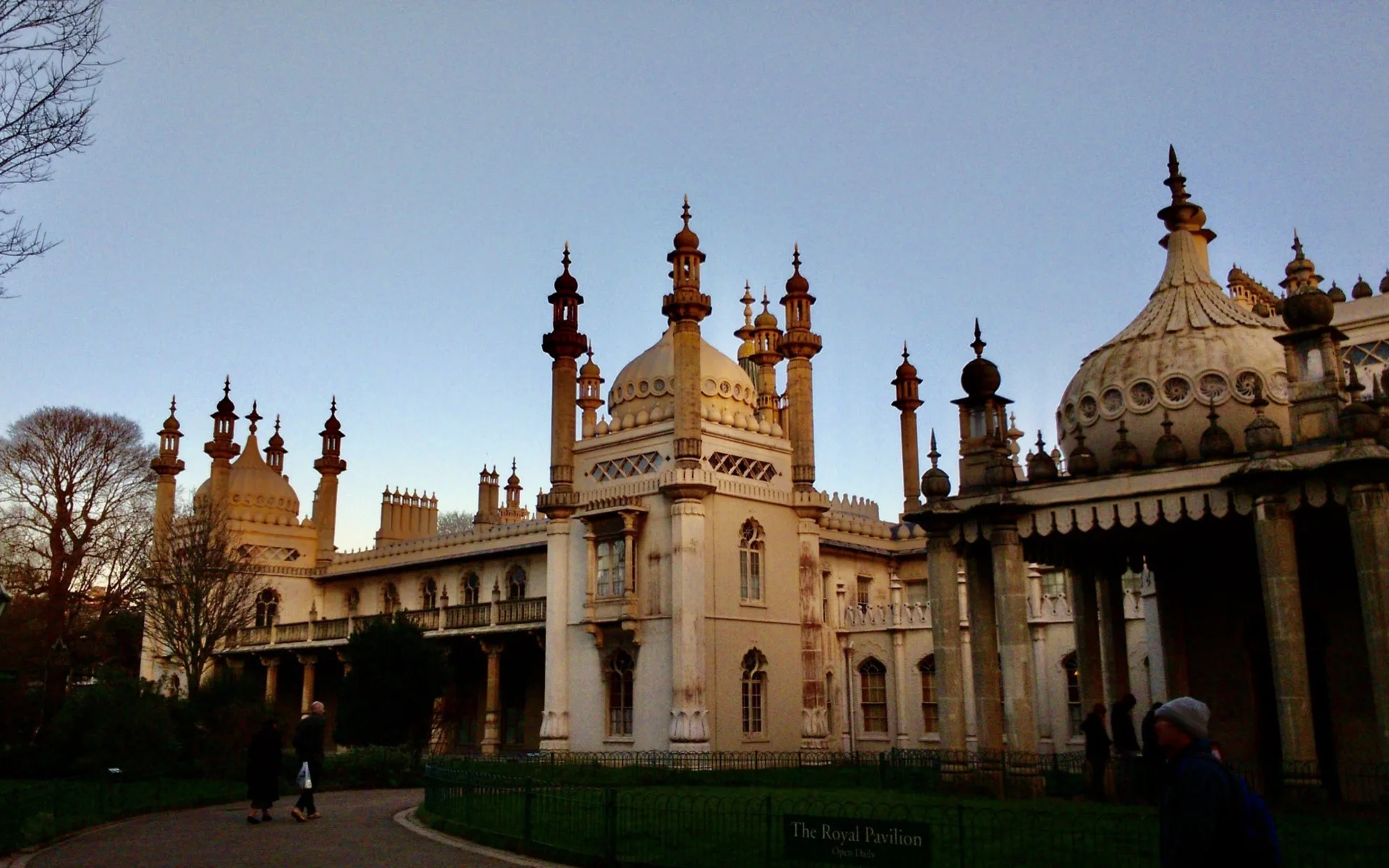
Choose a day trip when your priorities are the Royal Pavilion, Lanes and a seafront walk. Choose an overnight stay when you want a slower museum day, evening food and music, or a separate trip into the South Downs. Staying merely to repeat the same central loop adds cost without adding much understanding.
Cover photograph: “Brighton, Royal Pavilion” by Fanfwah, licensed CC BY-SA 4.0. Cropped to 16:10 and converted to WebP; no generative alteration.
Why Brighton matters: a fishing town remade by the sea cure
In the eighteenth century Brighton was, in the words of the Royal Pavilion's own historians, a decayed fishing town. What changed it was the sea itself. Dr Richard Russell, a physician from nearby Lewes, made its sea-water remedies famous, and the town's closeness to London turned it into a retreat for the rich and fashionable.
The most famous arrival was George, Prince of Wales. In the mid-1780s he rented a small lodging house overlooking a fashionable promenade, and after Parliament cleared his debts in 1787, the architect Henry Holland turned it into the Marine Pavilion. George became Prince Regent in 1811, and in 1815 he commissioned John Nash to transform the villa into the oriental palace of domes and minarets that still stands in the town centre. The interior was finally finished in 1823.
What happened next is a source of quiet local pride. Queen Victoria preferred other residences, and in 1850 she sold the Pavilion to the town of Brighton for more than £50,000. From then on, residents and visitors could walk through a royal palace for a sixpence admission. During the First World War the building became a military hospital, first for Indian Army soldiers wounded or taken ill on the Western Front, and it stayed a hospital until 1920. That chapter is now part of how the city tells its story.
So the town grew from a fishing settlement into a resort, a royal playground and a civic possession, and the seafront, the Lanes and the Pavilion are all pieces of that one history. The practical choice is how much of it to see in a single day.
The focused day-trip case
Brighton station sits uphill from the sea. Walk down Queens Road towards the centre, but leave luggage at a confirmed facility. Begin at the Royal Pavilion because it has defined entry arrangements and deserves more attention than a passing exterior photograph. The museum's official visit page holds current hours, tickets and accessibility details.
After the Pavilion, move through the Lanes selectively. These narrow streets are commercial, busy and easy to circle twice. Choose lunch, one shopping stretch and a direct line towards the seafront. Spend the afternoon walking east or west according to weather, then return uphill with enough time for the train.
What an overnight adds
An evening removes the pressure to treat the seafront as a quick backdrop. You can attend a performance, eat away from the busiest lanes, or walk a lit central section while public transport is still running. Check venue end times and your return route before committing.
The next morning can support Hove's calmer seafront and architecture, a deeper museum visit, or a bus into the South Downs. It should not become an overpacked sequence of distant viewpoints. The South Downs National Park provides current access and responsible-visiting guidance; weather and daylight should determine whether a countryside branch is sensible.
Compare the costs that change the decision
A day trip concentrates rail fare, admission and food. An overnight adds accommodation, evening transport and possibly luggage storage, but may permit cheaper off-peak travel or a less rushed ticket. Compare total cost and cancellation terms, not the headline room price.
Weekend and event periods can change both rail crowding and room rates. Check National Rail for planned engineering work and the official destination calendar instead of assuming the usual journey will operate.
Weather changes the best version
Strong wind can make the exposed seafront uncomfortable and may affect attractions. In poor conditions, build the day around the Pavilion and another confirmed indoor venue, then take a short sea view and save the long promenade for a better day. On a clear day, keep indoor time selective and walk west towards Hove or east towards the marina only if the return distance suits you.
Beach access is shingle, not sand. Wheelchair users and visitors with limited mobility should consult venue information and VisitBrighton's current accessibility guide, then confirm any seasonal equipment or assistance directly before travel.
Where an overnight base changes the experience
Near-station accommodation reduces the final climb and suits an early train, but the immediate area does not provide the full seaside atmosphere. The Lanes and seafront put evening activity close, though noise and weekend crowds may be a trade-off. Hove offers a calmer setting and a longer trip to central sights. Check the actual entrance, lift and late route before paying for a sea-view label.
Visitors with children should plan a warm indoor interval and promise only one or two paid attractions. The beach, pier and promenade are exposed, and excitement can mask fatigue until the uphill return. For sensory needs, ask venues about quieter times; the earliest slot is not always the calmest.
Food allergies and dietary requirements are best discussed with a chosen venue in advance. Busy independent kitchens may be unable to guarantee separation at peak times. One reservation near the final stop is more useful than crossing the centre for a highly rated list.
The practical verdict
Take the day trip if you can arrive in the morning, have three central priorities and face no major rail disruption. Stay overnight if evening culture, a quiet second morning or the Downs is part of the purpose. When weather is uncertain, choose flexible bookings rather than manufacturing an ambitious second day. Either way, the Pavilion interior, one food district and one stretch of sea are the core, and everything else is a bonus that the trains, weather and your energy can decide on the day.
Build the day trip backwards from the train
Choose the train you are realistically prepared to catch, then allow time for the uphill return to the station. The seafront-to-station walk can feel longer at the end of a windy day. Put the final stop in the North Laine, Pavilion area or another place from which the station route is obvious; a marina finish needs a confirmed bus margin.
Arrive early enough for the Pavilion booking and keep lunch flexible. A realistic day includes one major interior, one shopping or food district and one seafront direction. Adding the pier, marina, Hove, several museums and the Downs produces more transit than understanding.
Use the overnight for a separate second chapter
If staying, choose one purpose for morning two. Hove provides a flatter promenade, local streets and a quieter pace. The Downs provide landscape but require transport, suitable footwear and a forecast. Another museum provides depth when wind or rain makes the coast unpleasant.
Repeating the Lanes before checkout wastes the second morning. Store luggage through the accommodation only when it confirms the arrangement, and plan the route from storage to station.
Know what events change
Pride, festivals, conferences and major weekends can transform crowd levels, road access, accommodation and train demand. Use official event and council information, respect barriers and expect the usual bus stop to move. Book a stay because you want the event or can tolerate its effects—not because an old itinerary described a quieter weekend.
Outside peak periods, some seafront businesses reduce hours. Winter gives dramatic sea conditions but shorter daylight; never cross barriers or approach waves for a photograph. Summer provides long evenings but requires shade, water and realistic queue expectations.
Make the Downs branch independent
A South Downs excursion should have its own outward route, walk, weather threshold and return plan. It is not an extra stop between breakfast and a lunchtime train. Check the National Park guidance, local bus operator and path notices. Turn back when visibility, heat or wind exceeds the group's ability.
Visitors unable to use uneven paths can choose accessible viewpoints or remain in the city. Ask the intended venue or transport operator about boarding and surfaces; “countryside access” is not a single standard.
Brighton's predictable visitor errors
The North Laine district and the historic Lanes are separate areas, so name the right one when arranging a meeting point. Restaurant research done early saves queuing at every central venue. A shingle beach is steep and uneven underfoot, unlike a level sandy shore. The final train is safer with a known alternative service and a clear idea of ticket restrictions.
Most importantly, the visit is not measured by the number of attractions entered. The Pavilion's interior, a thoughtful meal and time beside the sea can justify the journey without adding a hurried excursion.
Browse the United Kingdom hub, compare a larger coastal capital route in our London first-time guide, add an inland heritage day with the Bath guide, or compare another waterfront city in the Cardiff first-time guide.
Questions and answers
Is one day enough for Brighton?
Yes for a focused route covering the Royal Pavilion, Lanes and seafront. Stay overnight if you want an unhurried museum visit, evening atmosphere or a separate South Downs excursion.
Why is the Royal Pavilion in Brighton famous?
It is the seaside palace of George IV. John Nash began turning a modest villa into an Indian-style palace in 1815, Queen Victoria sold it to the town in 1850, and in the First World War it served as a hospital for wounded Indian Army soldiers.
Can Brighton be visited accessibly?
Many central attractions publish access information, but gradients from the station, beach surfaces and historic buildings vary. Confirm lifts, accessible entrances and seafront access directly.
Sources
London · 51.5074° N, 0.1278° W
This story belongs to United Kingdom. Four nations with their own pride, from Neolithic monuments and Norman fortresses to the first steam passenger railway between cities.