Cardiff for First-Time Visitors: Castle, Bay and Welsh Culture
A two-day Cardiff route linking the castle and civic centre to the redeveloped bay, with useful Welsh-language, food, transport and event planning advice.
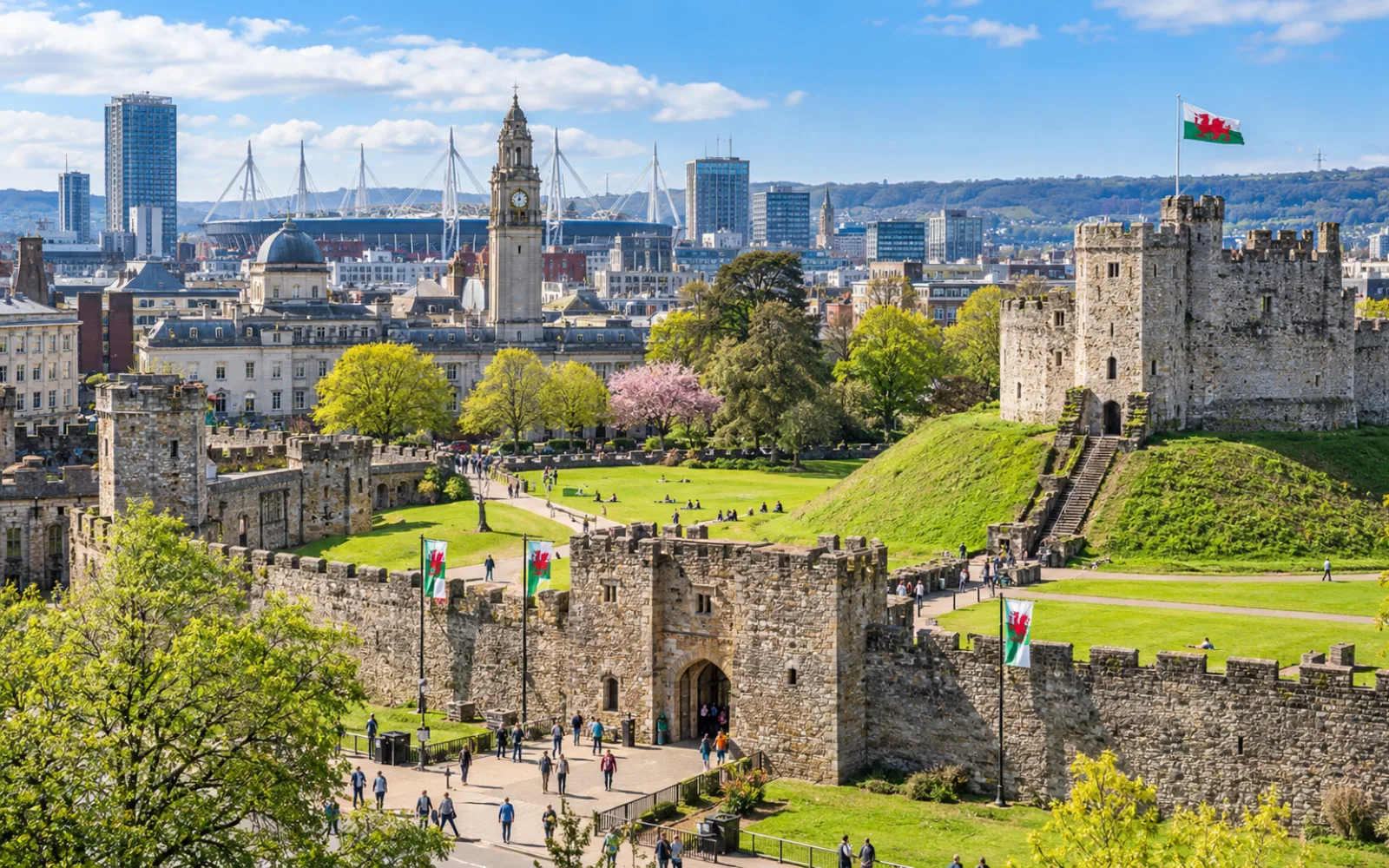
Cover: AI-generated illustration. © ANUSHKA DAHANAYAKE (PVT) LTD.
Cardiff is compact enough for a weekend yet carries several Welsh stories at once: a Roman and Norman castle transformed by Victorian wealth, a civic centre built during the coal-export era, a stadium in the middle of town and docks remade as Cardiff Bay. The most useful visit connects those layers instead of dividing the city into a castle day and a restaurant night.
Where to stay and how to arrive
Cardiff Central station is beside the southern edge of the centre. Hotels near the station suit early trains and stadium events; the civic-centre side is calmer and close to the museum; the bay gives waterfront evenings but requires a short train, bus or longer walk to central sights. On rugby and concert dates, central rooms and trains fill early and road closures alter normal routes.
Transport for Wales publishes rail information, while local buses cover the city and St Fagans. Do not assume a train branded for Cardiff stops at the bay: Cardiff Bay has its own branch connection. Contactless and ticket arrangements should be checked on the operator's current page. A car is not useful for the core itinerary.
Day one morning: the castle in context
Start at Cardiff Castle when it opens. The site includes Roman wall remains, the Norman keep and elaborate nineteenth-century interiors created for the Marquesses of Bute. The castle sells guided apartment tours as a ticket upgrade with limited places; ask at the ticket office about same-day availability. Compare official ticket inclusions, and allow extra time if climbing the keep; steep steps and exposed heights will not suit everyone.
Walk through Bute Park afterwards to understand how much green space sits behind the centre. Paths are generally straightforward, but rain changes riverside surfaces. Return through the arcades as well as the modern shopping streets. The Victorian and Edwardian arcades contain independent cafés, record shops and specialist retailers; they are working passages, so keep entrances clear when photographing.
Day one afternoon: civic Wales
Continue north to Cathays Park, where City Hall, the university and National Museum Cardiff form a formal civic group. The museum combines art and natural history and is a useful free anchor in poor weather. Check gallery closures and final entry. Trying to absorb every collection after the castle is unrealistic; choose Welsh art, geology or another priority.
The Principality Stadium is woven into the centre rather than isolated outside it. Tours require tickets, and event-day security can change nearby movement. If attending rugby, learn the kick-off time, reserve the return train and expect streets to be much busier after the final whistle. Enjoying Welsh sport does not require pretending expertise; asking genuine questions is welcome.
Day two: Cardiff Bay and the coal story
Travel to Cardiff Bay in the morning. The red-brick Pierhead, Senedd and Wales Millennium Centre represent different political and cultural eras. The Senedd is a working parliament, so public access, security and business days vary. Check official visitor details and behave as you would in any legislature. The Wales Millennium Centre offers performances and building visits; book the event, not merely the recognisable façade.
Walk around the basin towards the barrage only if time, weather and mobility allow. The full scale is greater than photographs suggest, and exposed wind can make it tiring. A short bay circuit plus one institution is enough. Interpretive material on Tiger Bay explains how seafarers and migrants created one of Britain's oldest multicultural dock communities; this history deserves more attention than television-location spotting.
Add St Fagans only with enough time
St Fagans National Museum of History lies outside the centre and merits at least half a day. Historic buildings from across Wales have been reconstructed in extensive grounds, and demonstrations vary. Check bus service, opening information and weather. It is a strong third-day choice, not a sensible late-afternoon extra after the bay. Outdoor surfaces and distances require access planning; Museum Wales publishes details.
Food, language and responsible choices
Try Welsh cakes from a bakery, seasonal Welsh produce, laverbread as part of a meal, or a local cheese, and do not hunt for one supposedly definitive dish. Cardiff's contemporary food is also Somali, Yemeni, Greek, Indian, Chinese and much more. The city was shaped by maritime migration. Tell restaurants about allergies and ask how a dish is prepared.
Welsh and English appear together on signs. Visitors are not expected to become fluent, but pronouncing Cymru or saying diolch with respect is better than joking about the language. Do not treat bilingualism as decoration. In the bay, support cultural venues and independent businesses, not only chain restaurants.
Weather, accessibility and budgeting
Cardiff can be rainy and windy in any season. Carry a waterproof and keep the museum as an indoor alternative. Castle stone, park paths and the barrage present different mobility demands; check official access pages and contact venues when step-free routes, seating or sensory information are required. The centre itself is compact but event barriers can create detours.
National Museum Cardiff and St Fagans have free general admission, while the castle, performances and stadium tour cost more. Build each day around one paid priority. Accommodation pricing is driven by fixtures and concerts more than by a simple high season, so search the exact event calendar before confirming non-refundable travel.
A balanced weekend
Day one works best as castle, park, arcades and one civic museum, followed by a booked performance or relaxed dinner. Day two belongs to the bay, with either the barrage or deeper dockland interpretation. A third day creates room for St Fagans. This pace leaves visitors with an understanding of Wales's capital, not a folder of disconnected landmarks.
Read our contrasting Bath day-trip guide, plan another capital with our Edinburgh guide, read what makes the United Kingdom special, or explore the United Kingdom hub.
Beyond the centre without overloading the trip
If staying three nights, choose one outward journey. Penarth is a short rail trip for a pier and coastal air, while Castell Coch is a different Victorian Gothic creation associated with the Marquess of Bute and requires separate transport planning. Neither should be marketed as an ancient fairytale castle without context. Hikers considering the Brecon Beacons, officially Bannau Brycheiniog, need a weather, route and return plan; it is not an improvised afternoon from the bay. Check Transport for Wales and the attraction or park authority directly, and leave enough daylight for the season.
Questions and answers
How many days do you need in Cardiff?
Two days are enough for the castle, centre, National Museum and bay. Add a third for St Fagans, a coastal trip or a major sporting event.
Can Cardiff visitors manage without a car?
Yes. The centre is compact, trains and buses reach Cardiff Bay, and local transport serves St Fagans. Check Transport for Wales and Cardiff Bus for current services.
Is Cardiff Castle worth booking?
It is worthwhile for visitors interested in Roman, Norman and Victorian layers. Ticket inclusions and guided areas vary, so compare options on the official site.
Will people mind if I do not speak Welsh?
No. English is widely used. Learning simple Welsh words such as diolch for thank you is appreciated, and bilingual signs are part of everyday public life.
Sources
London · 51.5074° N, 0.1278° W
This story belongs to Cardiff, United Kingdom. Four nations with their own pride, from Neolithic monuments and Norman fortresses to the first steam passenger railway between cities.