Halifax: Harbour, Citadel and the City That Rebuilt in 1917
Founded in 1749 on the Mi'kmaw harbour K'jipuktuk, Halifax carries the Citadel, Pier 21 and the memory of the 1917 explosion. This guide tells those stories first.
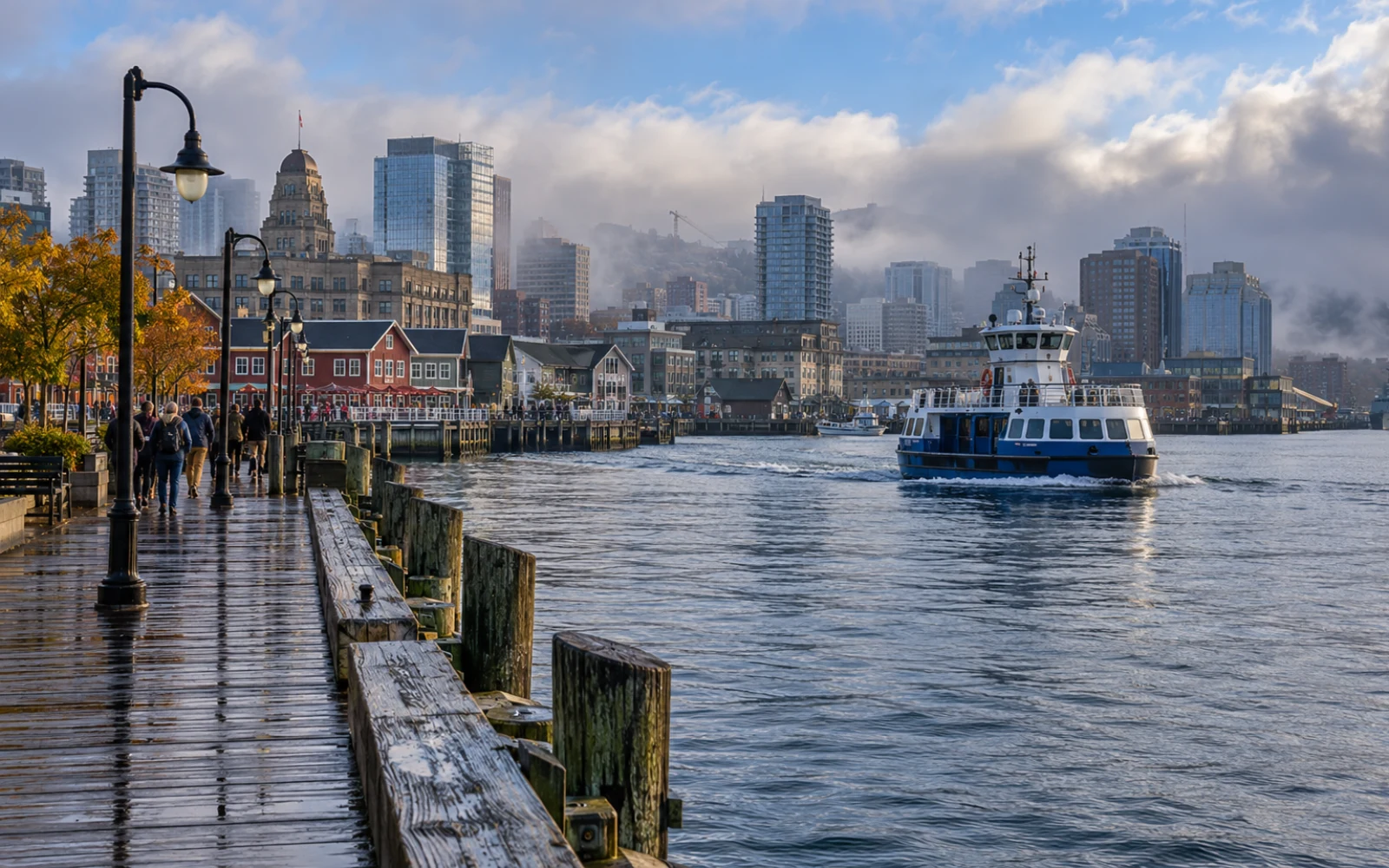
Cover: AI-generated illustration. © ANUSHKA DAHANAYAKE (PVT) LTD.
Halifax sits on one of the great natural harbours of the Atlantic, and nearly every chapter of its history was written on that water. The Mi'kmaq knew the place as K'jipuktuk, often translated as great harbour. On 21 June 1749, Governor Edward Cornwallis founded a British town on the peninsula and began fortifying Citadel Hill, the hilltop that still anchors the skyline. The harbour and the hill made the settlement a base for the British army and navy, and that military role shaped its streets and institutions for generations.
A harbour that shaped three centuries
The Halifax Common was granted for citizens' use in 1763 and is described as Canada's oldest public park. The Public Gardens followed in 1867, and were designated a National Historic Site in 1984. The gardens' Victorian layout of bedding, fountains and a bandstand sits only a few minutes from the harbour, which makes the contrast between civic calm and naval grit easy to see in one walk.
Seaborne arrivals changed the city again in the twentieth century. Pier 21 received immigrants from 1928 to 1971, with well over a million people passing through, and it opened to the public as a National Historic Site in 1999. Today it houses the Canadian Museum of Immigration at Pier 21, where personal testimony, suitcases and ship records stand in for statistics. Many Canadian families can trace their first night in the country to this building.
The explosion and the city that rebuilt
The event that defines Halifax happened on the morning of 6 December 1917. The French munitions ship Mont-Blanc and the Belgian relief vessel Imo collided in the harbour narrows, and the burning cargo of Mont-Blanc detonated in what was then the largest man-made explosion in history. About 2,000 people died and nearly 9,000 were injured. A railway dispatcher at nearby Richmond station, Vince Coleman, stayed at his post to warn incoming trains and sent his last message, "Munitions ship on fire. Making for Pier 6. Goodbye." Historians disagree on whether it stopped a specific train, but his name remains a symbol of duty across the province.
Africville, a community of roughly 400 Black Canadians beside the harbour, suffered damage and loss of life in the blast. The Africville Museum now tells how that community lived and why it was later demolished, and Nova Scotia's wider Black history, stretching from the Black Loyalists of the eighteenth century, deserves attention in its own right. The Maritime Museum of the Atlantic keeps the explosion, ocean liners and a Titanic exhibit under one roof, and the sea's grimmer side continues in Fairview Lawn Cemetery. Halifax was the port from which ships recovered the dead after the Titanic sank in 1912, and the cemetery holds more than a hundred of the victims in rows of near-identical granite markers. It also contains a mass grave for people killed in the 1917 explosion, which puts the city's two best-known disasters within a few paces of each other.
These layers explain why Haligonians speak of the harbour with a mixture of affection and gravity. It brought troops, cargo, refugees and newcomers, and it took lives on a scale few other Canadian cities have seen. A visit that begins at Pier 21 and ends at the Maritime Museum covers arrival, work and loss in a single afternoon.
Food and daily culture
Halifax is a working port, a university city and a pub town. Seafood is the draw, particularly lobster, scallops and chowder, and the waterfront markets sell local produce and craft goods that make an easy lunch. Visitors will also meet the donair, a late-night meat-and-sweet-sauce wrap that locals defend fiercely. Live music in small rooms remains central to evenings, and the Maritime custom of conversation with strangers is part of the charm.
A two-day route through the story
Day one. Walk the boardwalk, noticing that the waterfront remains tied to an active harbour. Keep shared paths clear, respect fenced working areas and dress for wind even when inland streets feel mild. Visit Pier 21, then climb Citadel Hill for the layout of the harbour and the fort. Parks Canada operates the site and sets seasonal hours, so confirm the programme before arrival. The Mont-Blanc and Imo story is easier to follow after the Maritime Museum, so put the museum before the cemetery if both are on the list, and allow quiet time at the cemetery without treating it as a photo stop.
Day two. Start at the Public Gardens when open, then choose the North End or another neighbourhood and leave the boardwalk behind. Ride the Halifax Transit Alderney ferry to downtown Dartmouth as transport. Check that the sailing serves Alderney Landing, since the Woodside ferry reaches a different terminal, and confirm accepted fare methods. The crossing gives a harbour perspective that explains the region's scale; stay for a meal or a local business so the trip is more than a photograph.
Weather, safety and money
Atlantic weather can switch between sun, fog, wind and rain within a day, and coastal excursions depend on forecasts, so consult Environment Canada before heading to Peggy's Cove or the beaches. Stay behind marked areas on wet coastal rocks, where waves can strike without warning. In the city, normal urban awareness is enough, though late-night waterfront streets deserve the usual care around pubs and ferry terminals.
The compact centre is walkable, and Halifax Transit buses and ferries fill the gaps. Restaurant tipping is customary, and prices for rooms and tours rise in summer and when cruise ships dock, so book Pier 21 and harbour tours early on those days. Accessibility varies by site; Citadel Hill's slopes, older museum buildings and uneven corners call for questions in advance, so ask each venue about lift access before travelling.
The best Halifax days leave space for an unplanned conversation, a ferry ride or a bench facing the water. Visitors who have read a little about 1749, 1917 and Pier 21 will notice more on each of those. Halifax rewards anyone who treats the harbour as a living workplace and a memorial. Read what makes Canada special, browse the Canada destination hub, compare another walled and historic city in our Quebec City winter guide, or balance a coastal trip with Toronto in three days.
Questions and answers
How many days do you need in Halifax?
Three days allow the waterfront, Citadel, major museums and Dartmouth. Add a fourth for a coastal excursion rather than compressing Peggy's Cove into a city afternoon.
Can you visit Halifax without a car?
Yes for Halifax, Dartmouth and many urban sights using walking, buses and ferries. A car or organised tour is useful for specific coastal communities with limited transit.
What is the best season for Halifax?
Late spring through early autumn offers the broadest visitor schedule, but Atlantic fog, wind and rain can occur at any time. Autumn is cooler and quieter; winter needs a weather-resilient plan.
Sources
Toronto · 43.6532° N, 79.3832° W
This story belongs to Halifax, Canada. The second-largest country by area, shaped by Indigenous nations, two official languages, newcomers from every continent and a national park system begun at Banff.