Quebec City Winter Itinerary: A Practical Three-Day Plan
A realistic three-day Quebec City winter plan with short outdoor loops, warm indoor anchors, transport choices and cold-weather decisions.
Quebec City is the cradle of French North America. Samuel de Champlain founded the settlement in 1608 on a cliff above the St Lawrence, the fortifications that grew around it make it the most complete fortified colonial town north of Mexico, and the city still speaks French in its streets, its food and its festivals. In winter that heritage turns outdoors: copper roofs under snow, a boardwalk above a frozen river and a carnival whose snowman is known across Canada.
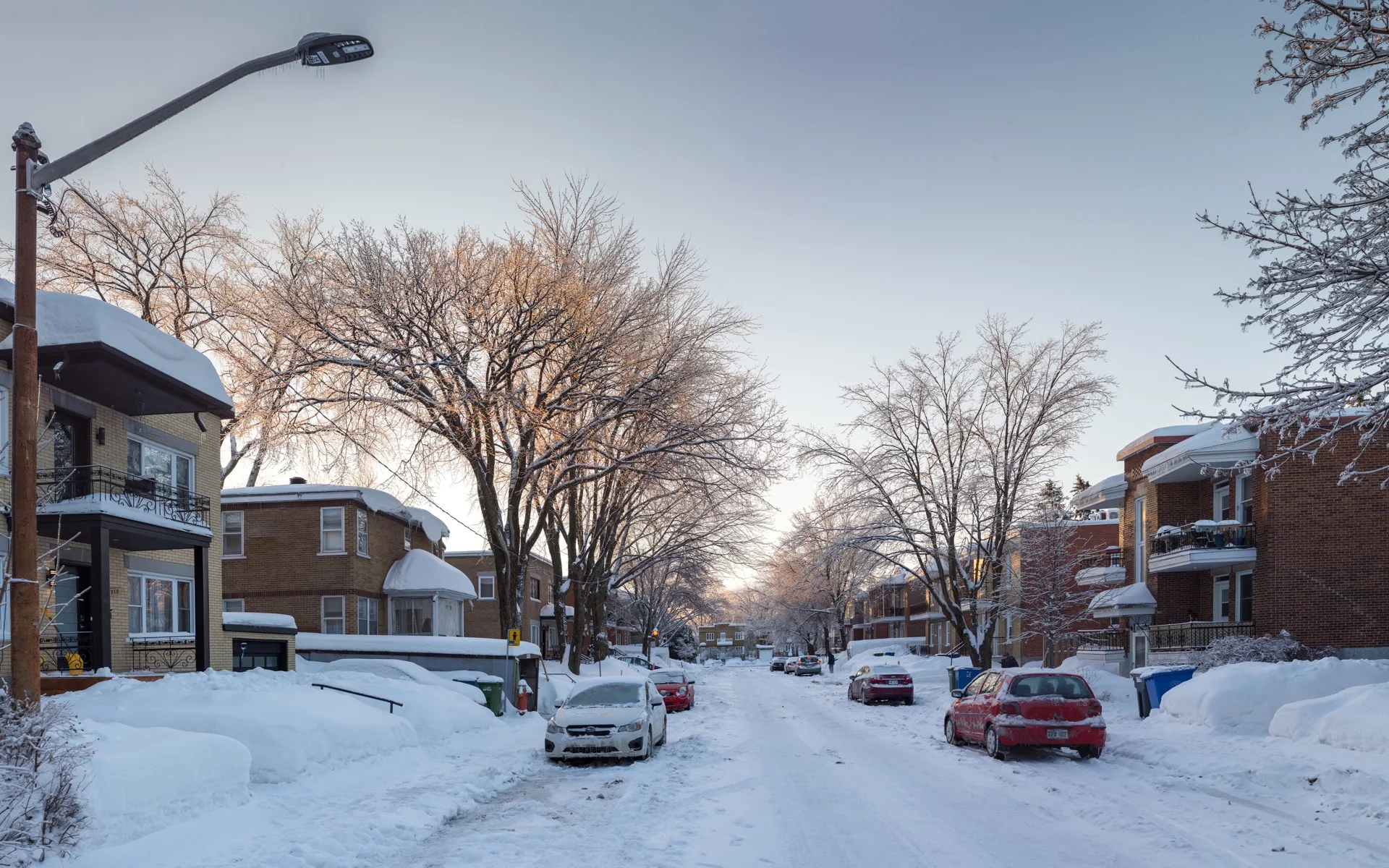
Cover photograph: Avenue Choquette in Vieux-Limoilou after snowfall, by Wilfredor/Wikimedia Commons, licensed CC BY-SA 4.0.
Before each winter day: make three checks
Check the official weather warning and wind-chill forecast, the RTC service alerts and the operating page for the day's main venue. Move the indoor anchor earlier when a warning, freezing rain or poor visibility is expected; a paid booking is never a reason to remain outside in unsafe conditions. For any regional drive, use Québec 511 for road conditions rather than assuming a clear city street means a clear highway.
Old Québec and its walls
UNESCO inscribed the Historic District of Old Québec in 1985, and the city's own heritage page notes that Québec was the first city in North America to earn the listing. Parks Canada's justification calls it, by a wide margin, the most complete example of a fortified colonial town north of Mexico. The Upper Town sits on the cliff with the Château Frontenac, Dufferin Terrace and the Notre-Dame de Québec Basilica-Cathedral; the Lower Town, with Petit-Champlain and Place Royale, lies at the river's edge. The two levels are joined by a funicular and by stairways.
The Lower Town, Petit-Champlain and the island
Place Royale in the Lower Town is where Champlain built his first habitation, and the narrow streets of Petit-Champlain, reached by the funicular or the Breakneck Stairs, hold boutiques and cafés in stone buildings that have stood for centuries. The Citadelle, a star-shaped fortress, is still garrisoned by the Royal 22e Régiment, and the Fortifications of Québec National Historic Site, run by Parks Canada, walk the city's defences. Île d'Orléans, across the bridge, is an island of farms, cider and villages that supplied the city for four centuries, and Montmorency Falls lies a short distance from the centre.
The battle that changed North America
On 13 September 1759 a British force under General James Wolfe defeated French troops under the Marquis de Montcalm on the Plains of Abraham, the plateau named for the landowner Abraham Martin. Wolfe died on the field and Montcalm the following morning, and the British victory led to the surrender of Québec. The Plains are now a park, and in winter they serve skiers, snowshoers and skaters. Read the museum interpretation to understand both French and British colonial power, as well as the longer Indigenous history of the river.
The Carnival and its snowman
The first large-scale Quebec carnival ran from 29 January to 3 February 1894, started by businessmen who wanted to brighten the dark months and attract visitors. It was relaunched in 1955, the year Bonhomme Carnaval first appeared, and the Winter Carnival is now held every February in front of an ice palace across from the Parliament Building. The size claims vary, but few dispute that it is among the largest winter festivals in the Western Hemisphere. The best time to visit for the Carnival is February, when the weather is also coldest. Dates and ticket rules change each year, so use the official calendar, not an old video.
French-Canadian food and language
Most residents speak French at home, and the cooking is French-Canadian: tourtière, pea soup and maple on nearly everything. Winter suits the cuisine, with heavy dishes designed for the cold, and the July Festival d'été fills the Plains of Abraham with music when the snow has gone. Food and language are as much part of the city's heritage as its walls.
A three-day itinerary of short loops
Day one: Upper Town. Begin inside the fortifications near Dufferin Terrace and walk only as far as wind and ice permit. Continue past Place d'Armes and the Basilica-Cathedral, then choose the Musée national des beaux-arts du Québec or the Musée de la civilisation for a substantial indoor visit. They lie in different areas, so do not fit both around a long outdoor route.
Day two: Lower Town. Descend by the funicular or a signed route to Petit-Champlain and Place Royale, where Champlain's settlement began, early when the streets are quiet. Businesses and homes share the district, so keep entrances clear when photographing. Make the Musée de la civilisation the warm anchor near the Old Port, then take an RTC bus or taxi to Saint-Roch for restaurants and shops that show contemporary Québec.
Day three: a weather-led choice. Choose the Plains of Abraham for skiing, snowshoeing or skating when conditions permit, or look at Montmorency Falls and the seasonal Hôtel de Glace, which is rebuilt each winter and does not operate year-round. Reach both by bus, shuttle or tour. Ice, spray and wind change access at the falls. Travellers unfamiliar with Canadian winters should shorten loops and move indoor plans forward when wind chill is severe.
For the rest of Canada, see the Canada overview, and follow the St Lawrence upriver to what makes Montreal special. Toronto and Banff without a car offer contrasts.
Dressing for the cold and moving around
Use a layered system with a moisture-managing base, an insulating middle and a wind-resistant waterproof outer layer, with insulated boots, mittens, a hat and face protection. Smooth-soled fashion boots are not safe on ice. Wind chill, not air temperature, describes exposed comfort, and frostbite can develop quickly on uncovered skin. Alcohol feels warming but is no protection against cold.
Old Québec puts historic streets at the door, but confirm vehicle access, luggage handling and stairs. Upper Town suits the Château, the fortifications and the Plains; Lower Town suits Petit-Champlain and the Old Port. The destination's accessibility guidance identifies the funicular as wheelchair accessible but warns that cobbles, stairs and steep links are difficult; check its operating status and plan Upper and Lower Town as separate blocks. RTC buses connect the airport, stations and central districts, and the centre does not require a car. French is the principal language; a polite "Bonjour" matters, though many tourism staff speak English. Reserve special restaurants during festivals, keep lunch flexible and ask about ingredients if you have allergies. Add a budget for taxis when ice makes a walk unwise, keep a charged phone and medication in an inner pocket, and return early if wind-driven snow reduces visibility.
Questions and answers
Is Quebec City worth visiting in winter?
Yes, if you prepare for genuine cold and snow. Historic streets, museums, food and seasonal activities create a distinctive trip, but outdoor time should be broken into manageable periods with warm indoor stops.
Do you need a car in Quebec City in winter?
No for Old Quebec and central neighbourhoods. Walking, the funicular, RTC buses and taxis cover a city visit. A car is useful only for some regional outings and adds winter driving and parking concerns.
What footwear is suitable for Quebec City winter?
Wear insulated waterproof boots with strong tread and warm socks. Ice can remain on hills and cobbles even when central pavements have been cleared; removable traction aids may help when conditions permit.
Is Old Quebec accessible in snow?
The city's hills, stairs, cobbles and snow can be difficult. Group Upper and Lower Town separately, use accessible buses or the funicular where suitable, and confirm current routes and venue entrances before setting out.
Sources
Toronto · 43.6532° N, 79.3832° W
This story belongs to Quebec City, Canada. The second-largest country by area, shaped by Indigenous nations, two official languages, newcomers from every continent and a national park system begun at Banff.