Helsingør for First-Time Visitors: Kronborg and the Øresund
A practical Helsingør plan looking beyond Hamlet to the strategic Øresund, maritime museum and a living ferry town facing Sweden.
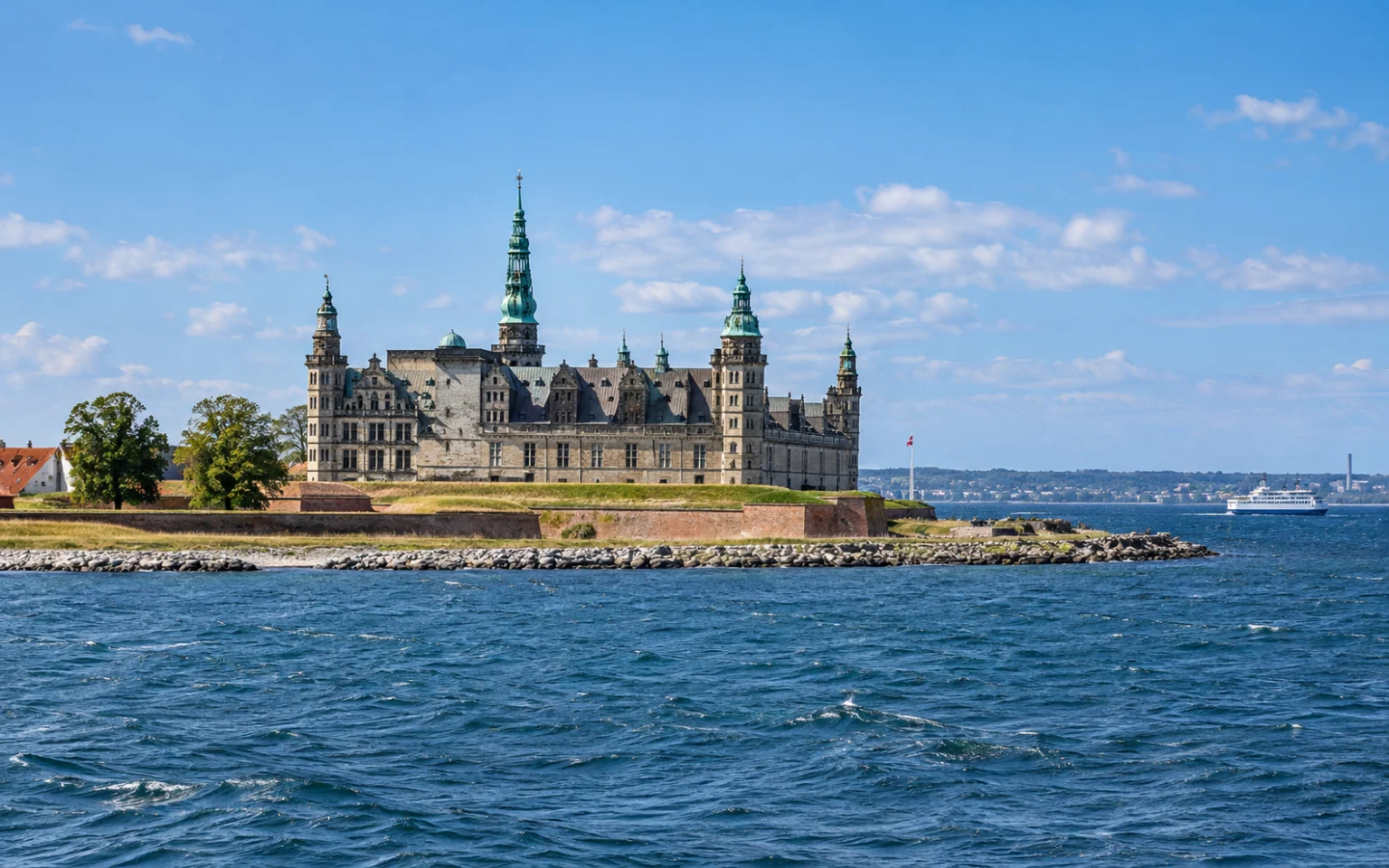
Cover: AI-generated illustration. © ANUSHKA DAHANAYAKE (PVT) LTD.
Helsingør occupies one of Denmark's most strategic positions: a narrow point on the Øresund facing Helsingborg in Sweden. Kronborg Castle made that geography powerful by guarding the entrance to the Baltic and collecting the Sound Dues. Shakespeare's Hamlet made Elsinore famous. But a useful visit joins the literary association to maritime trade, fortification and a living ferry town.
One full day works from Copenhagen. Stay overnight for quieter streets, a Sweden crossing or Louisiana Museum on a separate day rather than compressing everything.
Arrive along the coast
Direct trains run from Copenhagen toward Helsingør, following the northern coast. Check current engineering works and the last return. The station sits beside the ferry terminal and within walking distance of the old centre, Culture Yard, Maritime Museum and Kronborg.
That compact layout makes a car unnecessary. Drivers must still find legal parking and should not assume castle access includes a nearby space. Ferries to Helsingborg carry foot passengers and vehicles. But identification and border requirements apply even to a short crossing.
Stay near the station for transport convenience, in the old town for atmosphere or along the coast for a quieter break. Historic accommodation may have steps and no lift. Ferry and railway noise affect some waterfront rooms. So read the location carefully and do not choose on view alone.
Morning: reach Kronborg before the largest groups
Walk around the harbour to Kronborg when it opens. The route reveals the castle as sailors saw it: a fortress commanding a narrow international passage. UNESCO inscribed Kronborg in 2000 for its exceptional Renaissance architecture and its role in northern European history. A fortress called Krogen stood here from the early fifteenth century under Eric of Pomerania; Frederik II rebuilt it as a splendid Renaissance castle between 1574 and 1585, and ships paid the Sound Dues beneath its guns until the toll was abolished in 1857. That real story deserves as much attention as Hamlet.
Choose a guided introduction or use reliable interpretation to understand the Sound Dues, the great fire of 1629, rebuilding and military use. State rooms, chapel and underground casemates have different atmosphere and physical demands. The casemates are dark, uneven and cool. Visitors uncomfortable with confined spaces can skip them without losing the core history.
The castle currently closes on Mondays in November, so do not plan a November Monday interior visit. Hamlet performances and characters may appear seasonally. Confirm dates, because they do not run daily. Engage respectfully and remember that the castle is not evidence that fictional events occurred there.
Allow at least two to three hours. The grounds are exposed to wind, even in bright summer weather. Bring a layer and do not climb walls or cross barriers for a photograph.
Afternoon: maritime history in a former dock
The M/S Maritime Museum of Denmark occupies a striking underground building around a former dry dock near Kronborg. Its design keeps the castle's sightlines open while exhibitions explore Danish shipping, trade and life at sea. Give it at least ninety minutes. Maritime history here explains why Helsingør existed as more than a royal backdrop.
The modern building offers substantially better access than some castle interiors. But visitors should still confirm lifts and facilities. Sloping bridges and long galleries may require rest. Check temporary exhibitions and locker rules.
Use the Culture Yard or harbour for lunch, then walk through the old town around St Olaf's Church and narrow streets. Churches remain active. Enter quietly and accept closures. Residential lanes are not unrestricted sets. So avoid windows and doorways when photographing.
Decide whether Sweden belongs in the day
Ferries make Helsingborg visibly close. A return crossing can be enjoyable for the water perspective. But it introduces border documents, ticket cost and another timetable. If Kronborg and the maritime museum are priorities, adding Sweden may turn the day into transport instead of discovery.
With an overnight stay, cross on the second morning and explore Helsingborg properly. Check whether tickets require a booked departure and whether bicycles or mobility devices need special arrangements. Do not rely on duty-free shopping rules without current customs information.
Louisiana and the North Zealand coast
Louisiana Museum of Modern Art at Humlebæk lies on the rail line between Copenhagen and Helsingør. But it is a major destination, not a quick station stop. Combining it with Kronborg is realistic only for energetic visitors who accept less time at each. A separate day or overnight route is better.
North Zealand also offers beaches and castles, yet public transport works radially and does not connect every sight directly. Choose one extension. Cycling the coast requires confidence in traffic, wind and distance, plus lights for changing weather.
Seasons, tickets and costs
Late spring through early autumn gives long daylight and fuller performance schedules. July and August bring tour groups. Autumn suits museums and stormier Sound views. Winter offers quiet streets but short daylight and reduced activity. The waterfront is consistently cooler and windier than sheltered streets.
Budget for return rail travel, castle and museum admissions, meals and an optional ferry. Compare combination tickets only against what you genuinely plan to enter. Book special performances and guided tours ahead. Cards are widely accepted. But know bank fees and keep a backup.
Bakeries and supermarkets can reduce meal costs. A harbour lunch can be worthwhile for location, though prices may reflect it. Danish service charges are included and tips are optional. Carry tap water in a reusable bottle.
Accessibility, safety and etiquette
The station-to-castle route is fairly compact. But cobbles, wind, historic stairs and the casemates create barriers. Ask Kronborg which interiors are step-free and whether a companion arrangement applies. Confirm ferry boarding and the maritime museum's route for specific mobility equipment.
Helsingør is generally safe. Ordinary care is needed around stations, busy ferries and nightlife. Remain behind harbour barriers, supervise children at the water and follow staff instructions in the casemates. Wind can destabilise umbrellas and make exposed ramparts uncomfortable.
Respect worship, residents and working port operations. Do not block cycle lanes or ferry flows for photographs. Follow rules for drones and commercial photography around the castle. Quiet, direct courtesy is appropriate.
A workable family and rainy-day version
Families should decide whether the castle or maritime museum is the deeper visit and keep the other shorter. Kronborg's casemates can be exciting but are dark, cool and uneven. Children who dislike confined spaces need not enter. The maritime museum provides a reliable wet-weather anchor. The Culture Yard offers another indoor pause when its public areas are open.
In persistent rain, begin with the museum, take a proper lunch and use the clearest forecast window for the castle grounds. Waterproof shoes are more valuable than an umbrella on the windy waterfront. Keep ferry flexibility and avoid buying an inflexible crossing before knowing everyone's energy and the day's visibility.
Read what makes Denmark special, compare the cathedral and Viking ships of nearby Roskilde, continue through the Denmark destination hub, plan the rail connection with our Copenhagen first-time guide, or browse all countries for the next border-crossing journey.
Questions and answers
Is Helsingør an easy day trip from Copenhagen?
Yes. Direct coastal trains make a day trip practical, and the station, old town, maritime museum and Kronborg are close enough to combine on foot.
Is Kronborg really Hamlet's castle?
Shakespeare used Elsinore as the setting for Hamlet, although the play is fictional. Kronborg's actual significance came from controlling the entrance to the Baltic.
Can visitors add Sweden on the same day?
Frequent ferries cross to Helsingborg, but border documents and schedules must be checked. Adding Sweden reduces time for Kronborg and the maritime museum.
How accessible is Kronborg Castle?
The grounds and some areas are reachable, but historic stairs, cobbles, casemates and changing levels limit access. Ask the castle for a current route before visiting.
Sources
Copenhagen · 55.6761° N, 12.5683° E
This story belongs to Helsingør, Denmark. A small kingdom whose pride runs from a tenth-century rune stone to fairy tales, furniture and a kitchen revolution.