Copenhagen: Nyhavn, Tivoli, Kronborg and a Royal Harbour That Cycles
Nyhavn from the 1670s, Rosenborg's crown jewels, Tivoli from 1843, Kronborg and Noma: the dated story of Copenhagen's royal harbour, with practical visitor advice.
Copenhagen was a royal harbour long before it became a byword for bicycles and design. Kings built the city's canal, castle and fortress to command the Øresund strait, and Danes later turned that inheritance into a city known for a restaurant that changed cooking, an amusement park founded in 1843 and a cycling culture that grew from civic decisions. Its pride is quiet, and most of it can be found within a short walk of the harbour.
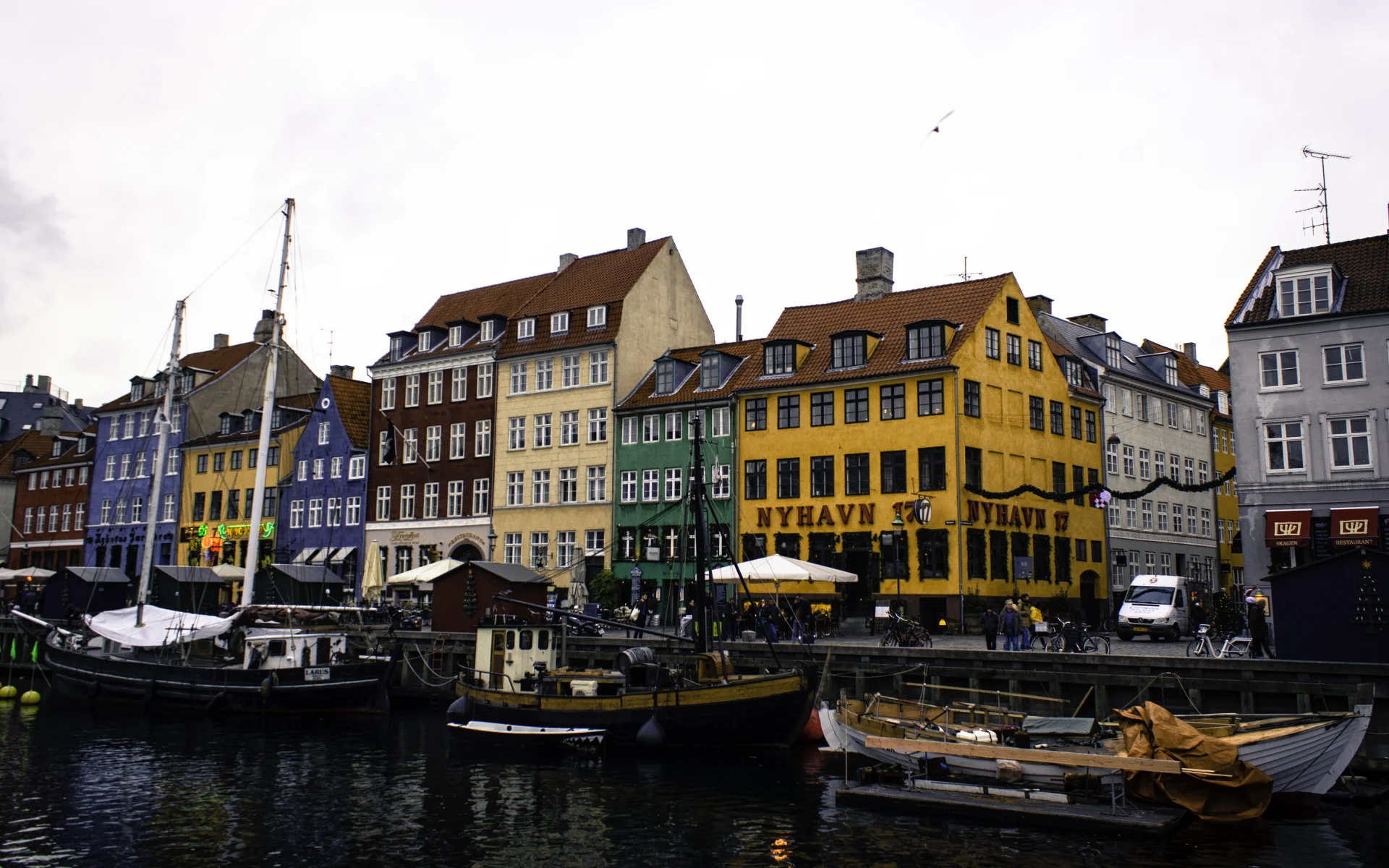
Cover photograph: Bene Riobó, “Nyhavn, Copenhague,” 9 November 2015, own work, licensed under CC BY-SA 4.0. The original was centre-cropped to 16:10 and resized for responsive delivery; no landmark or scene element was added or removed.
Nyhavn, Rosenborg and a king's ambitions
Nyhavn was dug between 1670 and 1675 under King Christian V by Danish soldiers and Swedish prisoners of war, as a gateway from the sea to the old city at Kongens Nytorv. For centuries it was a sailors' harbour, notorious for beer and sailors; when land transport replaced small coastal freight after the Second World War, it fell quiet, and it was revived in 1977 as a veteran ship harbour and pedestrianised in 1980. Hans Christian Andersen lived at No. 67 from 1845 to 1864 and at No. 18 from 1871 to 1875.
Rosenborg Castle began in 1606 as a country summer house for Christian IV in the Dutch Renaissance style and was complete by 1624. Danish regents lived there until about 1710, and its treasury displays the Crown Jewels and Danish Crown Regalia. The third-floor Long Hall, first planned as a ballroom and later called the Knight's Hall, holds the coronation chair and a large collection of seventeenth-century silver furniture. After Christiansborg Palace burned in 1794, Rosenborg was used again as a royal residence in the emergency, and it has been open to the public since 1838. It sits in the King's Garden, Kongens Have, the country's oldest royal garden.
Tivoli and the oldest amusement park claim
Tivoli Gardens opened on 15 August 1843, founded by Georg Carstensen, who had won a five-year charter to create it. It is described as the second-oldest operating amusement park in the world, after Dyrehavsbakken at Klampenborg, also in Denmark, and its wooden roller coaster Rutschebanen dates from 1914. Walt Disney is reported to have based his own park on Tivoli.
Kronborg, Hamlet and the Sound Dues
Forty-five minutes by train north, Kronborg in Helsingør began as a stronghold in the 1420s under King Eric of Pomerania, built to collect Sound Dues from ships passing through the Øresund. Frederick II rebuilt it between 1574 and 1585 as a Renaissance castle under the Flemish architects Hans Hendrik van Paesschen and Anthonis van Obbergen. UNESCO inscribed it in 2000. Shakespeare's Hamlet is set at Elsinore, the English form of Helsingør, and in Danish legend Holger Danske sleeps in its casemates until Denmark needs him. The Helsingør guide covers the town.
New Nordic cooking and Danish design
Noma, founded by René Redzepi and Claus Meyer, opened in 2003, held two Michelin stars from 2008 to 2020 and three from 2021, and was ranked the world's best restaurant by Restaurant magazine in 2010, 2011, 2012, 2014 and 2021, and with it a cuisine of local, seasonal and foraged ingredients took hold in the city. Everyday Copenhagen eats smørrebrød, open rye-bread sandwiches, and laminated pastries called wienerbrød. Danish design, from Arne Jacobsen chairs to Poul Henningsen lamps, is on show at the Designmuseum.
A city that cycles
Copenhagen's wide, separate bike lanes, bicycle traffic lights and car-free bridges such as Cykelslangen make cycling the default for many residents. The same thinking appears in the CopenHill waste-to-energy plant, whose roof carries an artificial ski slope and a hiking trail. Visitors who hire a bicycle should learn the lane rules, signal turns and keep to the right, and those on foot should watch for riders before stepping off the pavement.
Two days around the harbour
Day one: Kongens Nytorv and Nyhavn, Amalienborg, the Marble Church exterior and one interior such as Rosenborg or the National Museum; finish at Tivoli, Vesterbro or the old centre. Day two: Christianshavn's canals, then one neighbourhood such as Nørrebro or Vesterbro. A third day suits Helsingør or Roskilde. Christiania is a lived-in community, so follow the posted rules and do not photograph residents.
Practical help: transport, bikes and harbour water
From the airport. Copenhagen's metro and regional-train stations are at Terminal 3; the metro suits Kongens Nytorv and Nørreport, while regional trains often reach Central Station more directly. The airport is in zone 4, and the official ticket guide lists current options.
Tickets and harbour buses. A zone-valid ticket covers metro, bus, yellow harbour bus and train within its area, so buy it before boarding and keep it for inspection. The yellow harbour buses are ordinary public transport instead of narrated cruises, so choose a commercial canal tour if you want commentary, and check the direction of the route before boarding.
Cycling. The City's cycling rules say to keep right, raise a hand before stopping, signal turns and use lights after dark. A left turn means crossing straight ahead, stopping at the opposite corner and waiting. Move out of the lane before looking at a phone. Rent only if you can start, stop and signal confidently; wind, rain and darkness are sensible reasons to take the metro instead.
Harbour swimming. Swim only in designated harbour baths and zones. The City's harbour safety map says green water quality permits swimming and red means stay out, and designated zones may not have lifeguards.
Weather and money. Wind can make the harbour feel much colder than the forecast suggests, so carry a rain layer and keep a museum or café as an indoor switch in winter, when daylight is short. Cards and mobile payments are common, tap water is safe to drink, and a bakery breakfast leaves room in the budget for one deliberate meal.
Access and emergencies. All metro stations have lifts, and harbour buses are wheelchair accessible; see the accessible-transport guide. Call 112 for emergencies.
Denmark's other cities tell different stories. Aarhus has art and Vikings, Odense is Andersen's birthplace, and Ribe has medieval streets. The Stockholm guide covers the capital across the strait, what makes Denmark special frames the country, and the Denmark hub lists the rest.
Questions and answers
How many days does a first visit to Copenhagen need?
One full day can cover the historic centre and Nyhavn without rushing. Two days allow time for Christianshavn and one neighbourhood. Use a third day for a major museum, palace or a separate excursion rather than adding more brief stops.
Should every visitor cycle in Copenhagen?
No. Cycling works well for confident riders who understand local signals and lane etiquette. Walking and the integrated metro, train, bus and harbour-bus network form an excellent alternative.
Can visitors swim anywhere in Copenhagen harbour?
No. Swim only in a designated harbour bath, bathing zone or dipping zone, check the current water-quality flag and local rules, and remember that designated swimming zones may not have lifeguards.
Sources
Copenhagen · 55.6761° N, 12.5683° E
This story belongs to Copenhagen, Denmark. A small kingdom whose pride runs from a tenth-century rune stone to fairy tales, furniture and a kitchen revolution.