Ribe: Denmark's Oldest Town, Its Cathedral and the Wadden Sea
Ribe is the oldest town in Denmark, with a Viking-age market, a Romanesque cathedral and a coast that floods. This guide tells that story first, then plans two days with the tides.
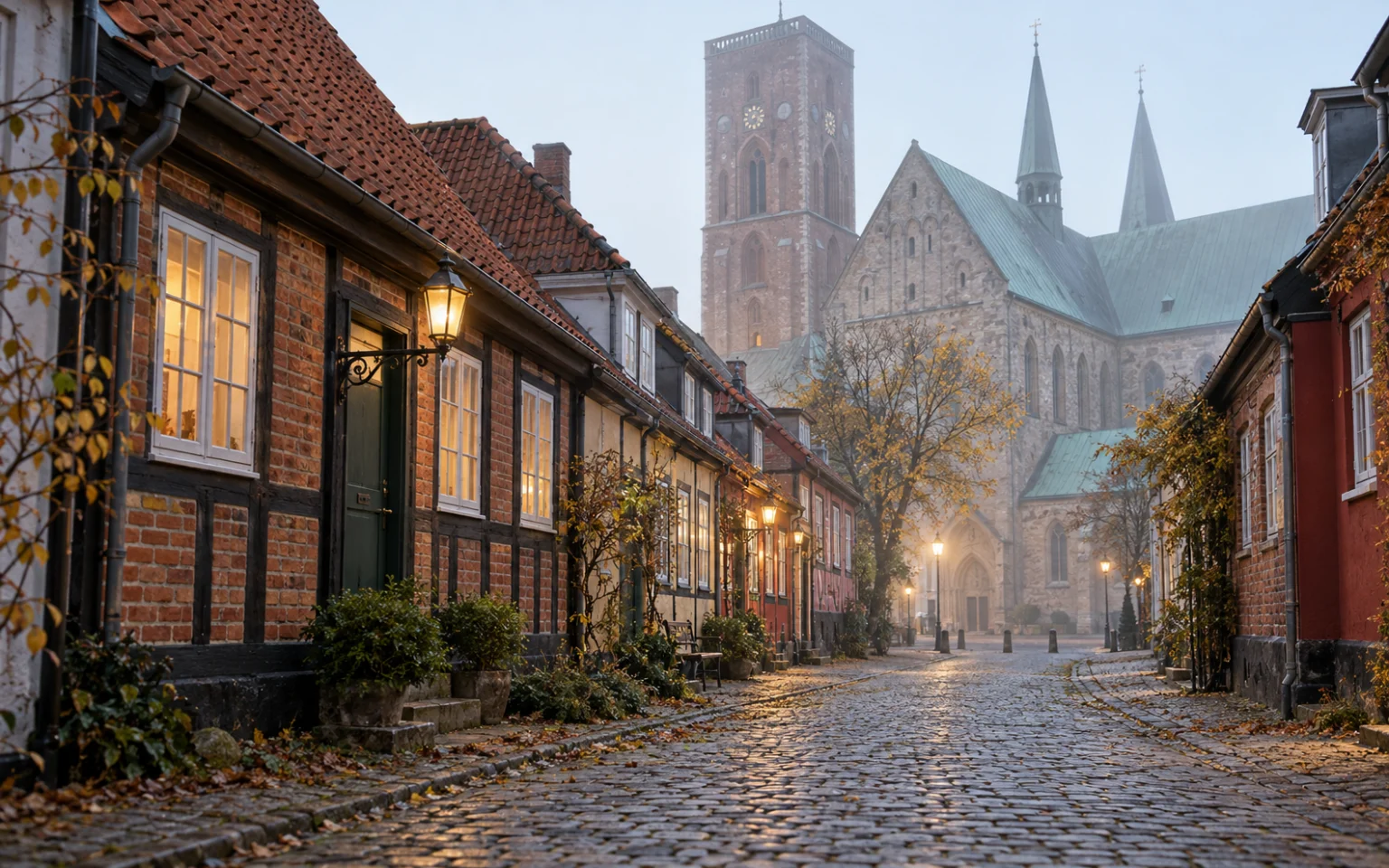
Cover: AI-generated illustration. © ANUSHKA DAHANAYAKE (PVT) LTD.
Ribe is described as the oldest town in Denmark, and the evidence lies in the ground as well as in the streets. By the early eighth century the site was a commercial centre, and many of the early coins known as sceattas that turn up across Denmark came from in or around Ribe. Its position near the North Sea coast made it a gateway between Scandinavia and the wider trading world of the Viking Age, and trade of that kind explains why a town could take root so early.
The Christian town
Around 860 the archbishop Ansgar asked for a church to be built in Ribe. The bishopric followed in 948, and in 1150 construction began on Ribe Cathedral, which dominates the low skyline and is often described as Denmark's oldest cathedral and one of its best-preserved Romanesque buildings. The Latin school linked to the cathedral, Ribe Katedralskole, has roots going back to at least 1145. The Reformation dissolved the Catholic diocese in 1536, but the cathedral remained a place of worship.
Visitors who stand inside the cathedral can see how medieval builders adapted Romanesque forms over time, and that continuous use is part of what makes the building significant. Check worship and event schedules before arrival, and treat it as an active church.
Castle, art and the slow town
Two other landmarks complete the old-town circuit. The ruins of Riberhus castle, once a royal stronghold on the edge of town, show that Ribe mattered to kings as well as bishops, and Ribe Kunstmuseum holds a collection of Danish art in a setting that suits the town's pace. Neither takes long, and both are best visited on a day when the weather is too poor for a coastal tour. The cathedral tower view can be restricted, so check access when planning. Visitors who dislike climbing can see the same skyline from the Ribe Å bridges.
Floods, borders and survival
Ribe lies on low ground, and its story is also a story of water. Storm floods have repeatedly struck the area, the most devastating being the Burchardi flood of 1634.
Borders shaped Ribe too. Until 1864 the town was an exclave of the Kingdom of Denmark, surrounded on three sides by the Duchy of Schleswig. The town therefore stood as a Danish outpost in a territory that was not.
Wadden Sea
The Wadden Sea lies a few kilometres west. UNESCO recognises it as the world's largest unbroken system of intertidal sand and mud flats, and Ribe is a gateway. Tides expose feeding grounds used by enormous numbers of migratory birds, then cover channels with surprising speed. The Wadden Sea Centre offers interpretation, and guided activities such as oyster trips, seal trips, bird excursions and mudflat walks have different seasons, clothing and physical demands. Never attempt a crossing based on an online route. Spring and autumn bring the great bird migrations, when the flats fill with feeding flocks. Fog, tidal channels and soft sediment create real danger.
Starling murmurations, known locally as the Black Sun, cannot be guaranteed. Migration timing, weather and the birds decide what appears. A responsible guide protects roosting and feeding space, so bring binoculars, keep a distance and control dogs as locally required.
Old streets and living history
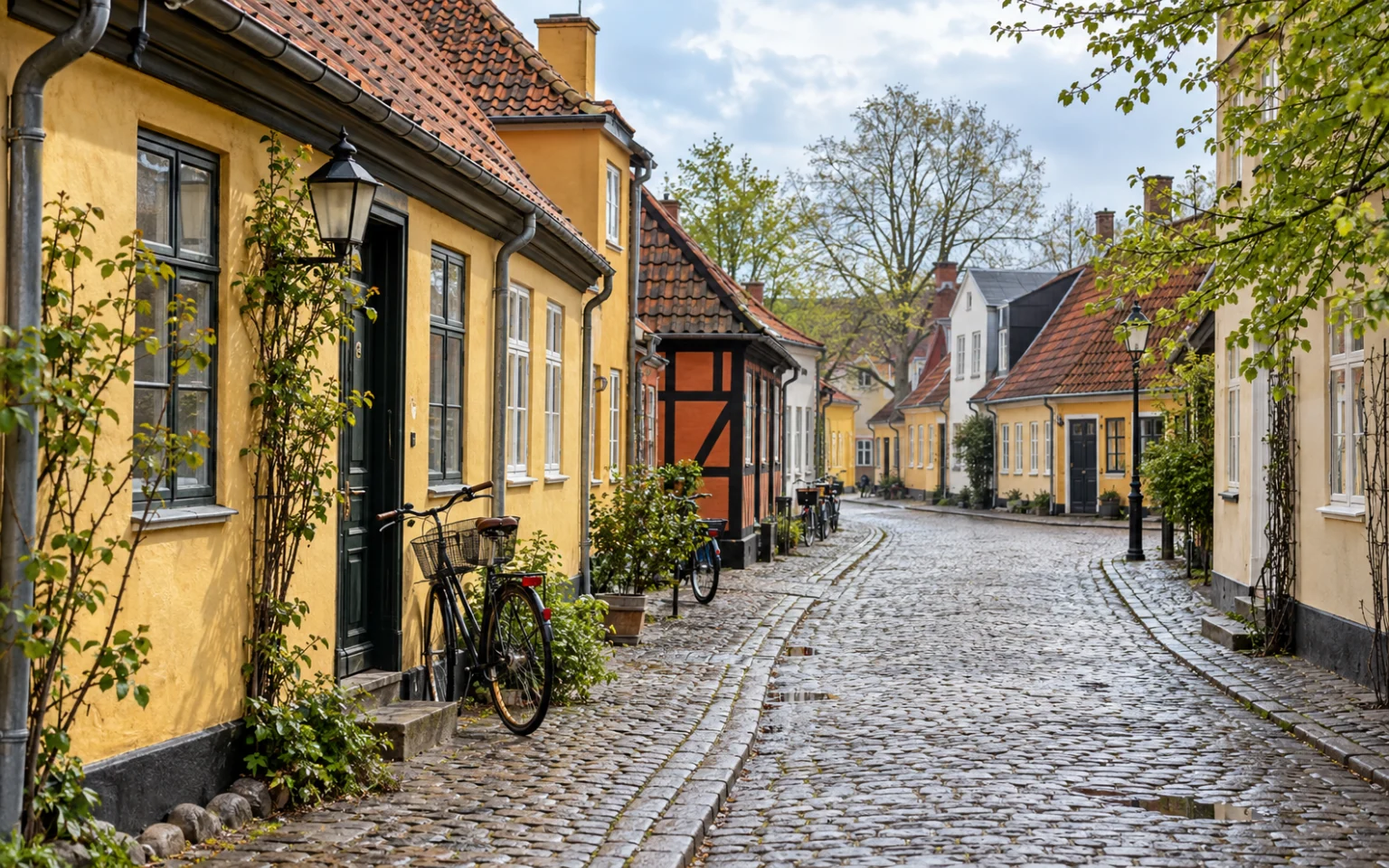
Half-timbered houses, drainage channels and irregular plots show how the town developed, and these are also homes. Do not photograph through windows, lean on façades or block doors. Wet or misty conditions can make Ribe beautiful and the cobbles slick. Ribe VikingeCenter outside the town offers reconstructed environments and seasonal interpretation, while Museet Ribes Vikinger uses archaeological material to tell the trading town's story. They are different experiences, so choose according to interest. Historical interpreters are educators, not costume props.
Two days built around the tide
Day one: cathedral and museum. Begin at the cathedral while the morning light is good, walk the public lanes slowly and then enter one museum. If visiting the Viking centre, allow transport time and several hours. Ribe's night-watchman walks are seasonal and popular, so check language, distance and accessibility, and reserve when recommended. Choose dinner deliberately. South Jutland specialities and seafood can be substantial, so ask what is seasonal. Quiet streets carry noise, so leave restaurants with consideration for residents.
Day two: the Wadden Sea. Do not assign the coast to an arbitrary afternoon. Find the guided experience first, note its meeting place and clothing instructions, and arrange the town programme around it, because cathedral and museum hours are more predictable than tide windows. Waterproof footwear must match the tour, since ordinary wellington boots can become trapped in deep mud.
Getting there, costs and etiquette
Regional trains connect Ribe with Esbjerg and other South Jutland routes. Some journeys require changes, so confirm the whole service and the last return. The station is a manageable walk from the old town, though cobbles and luggage make a short distance feel longer. A car is unnecessary in central Ribe, although tide tours often specify their own meeting and transport arrangements.
Spring and autumn are important migration seasons and often the richest periods for birdwatching, summer brings fuller schedules, and winter suits atmospheric walks with restricted museum hours and harsh coastal wind. Rain protection and warm layers are useful all year. Budget for rail travel, accommodation, one or two museum admissions, meals and a guided nature activity. Ribe's room supply is small, so book early in summer and during events. Service is included in restaurant prices and cards are normal.
Historic Ribe includes uneven cobbles, narrow pavements and old thresholds, so ask each venue about walking distance, surfaces and toilets. The town is generally safe, and coastal risks are more significant: tide, cold, wind and slippery banks. Follow guides, carry prescribed clothing and tell someone about independent shore walks. Photographers should bring protection from fine rain and salt, keep tripods off narrow streets and avoid flash around wildlife. Families need warm spare clothing even in summer, because an exposed child becomes cold quickly, and a calm backup plan is preparation rather than a lesser visit.
Continue through the Denmark destination hub, read what makes Denmark special, pair Ribe with Hans Christian Andersen's city in the Odense guide, or connect through the capital with our Copenhagen first-time guide.
Questions and answers
Is Ribe worth staying overnight?
Yes. An overnight stay leaves time for cathedral and Viking history, an evening walk after day visitors leave, and a tide-dependent Wadden Sea activity.
Can Ribe be reached without a car?
Yes. Regional trains serve Ribe, and the old centre is walkable. Some Wadden Sea nature experiences require a booked guide, bus connection or car.
Can visitors walk on the Wadden Sea mudflats alone?
Do not improvise a mudflat crossing. Tides, channels, fog and soft ground can be dangerous; use marked access or an experienced authorised guide.
How accessible is historic Ribe?
Distances are short, but cobbles, old thresholds and cathedral tower stairs create barriers. Confirm step-free routes, toilets and seating with individual venues.
Sources
Copenhagen · 55.6761° N, 12.5683° E
This story belongs to Ribe, Denmark. A small kingdom whose pride runs from a tenth-century rune stone to fairy tales, furniture and a kitchen revolution.