Oulu for First-Time Visitors: Cycling and Bothnian Coast
Founded in 1605 and long a tar port, Oulu is now a technology city and 2026 European Capital of Culture. Its history, islands and bicycle habits explained.
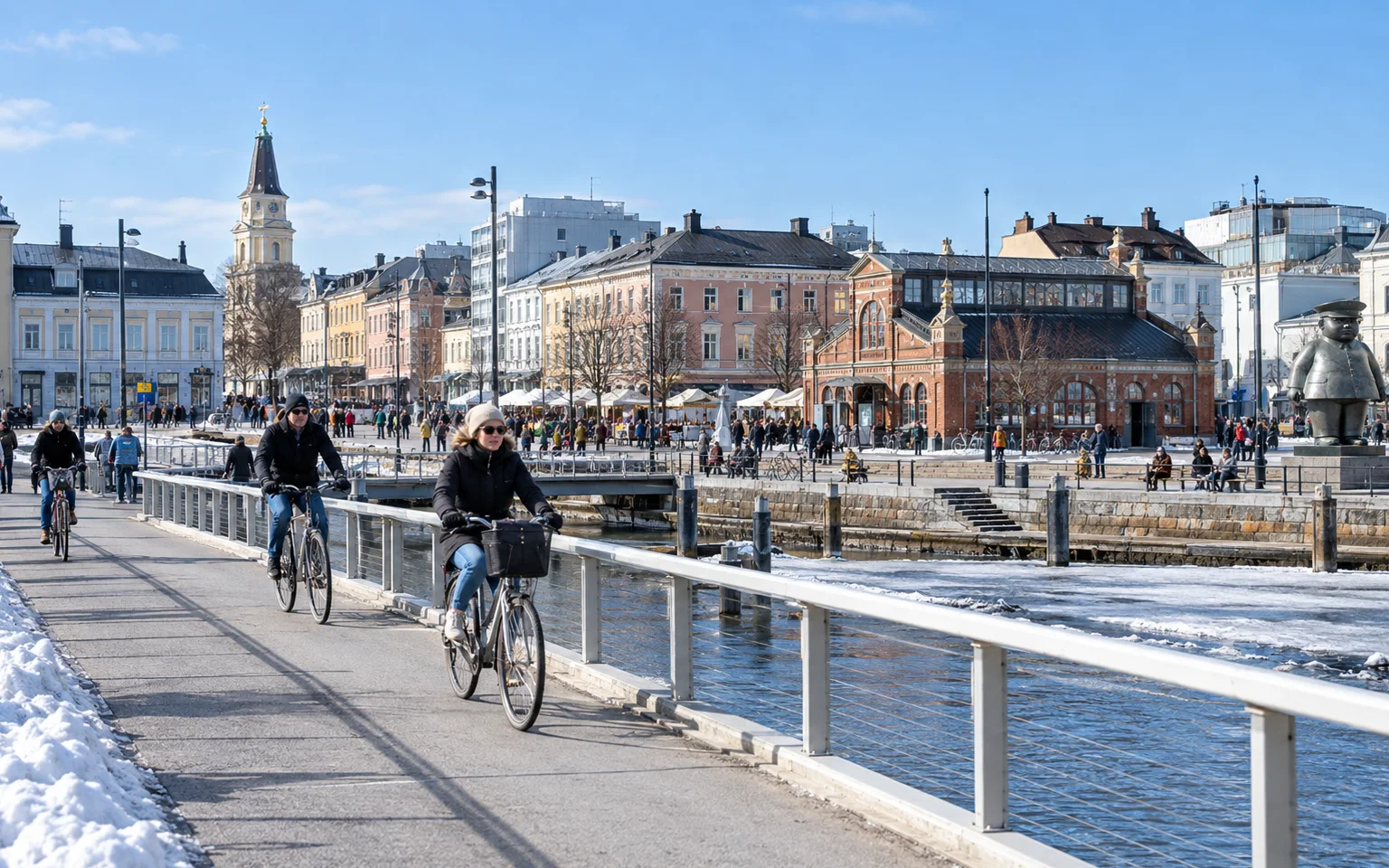
Cover: AI-generated illustration. © ANUSHKA DAHANAYAKE (PVT) LTD.
Oulu is a northern city where rivers meet the shallow Bothnian Bay, and its story runs through one sticky product: tar. Before it was a centre of telecommunications and wellness technology, it was a port that waterproofed the wooden sailing ships of northern Europe. Locals are proud of both chapters, and the city's present culture of cycling, design and experiments grows from that practical history.
Tar port on the river mouth
Oulu is now the regional capital of North Ostrobothnia and Finland's fifth-largest municipality, with about 217,000 residents, but it began as a Swedish crown foundation: King Charles IX of Sweden founded the town in 1605. The name comes from the Oulujoki river, with the most likely origin a Finnish dialect word for floodwater. Tar, essential for sealing ships' hulls and rigging, became one of northern Europe's most valuable exports, and Oulu grew into one of the region's busiest ports. Salmon fishing added to the trade.
A major fire in 1822 destroyed much of the centre, and it was rebuilt to a plan by Carl Ludvig Engel after the fire. The planned street grid of the centre dates from that rebuilding and replaced the town's earlier, informal growth. The city was also the site of a battle in the Finnish Civil War in 1918.
Pikisaari, an island district close to the centre, is where tar was once produced and ships were later built along its shoreline. Ships were built along the shoreline afterwards, so the island links the two ages of Oulu's economy, tar and shipbuilding. Today it is a residential district of wooden houses, studios and small businesses, and the Sailor's Home Museum in Matila House recreates a late-nineteenth-century sailor's home.
From radio to the Silicon Valley of the North
Oulu's present-day economy owes a great deal to a decision in the 1970s: Nokia established its first Oulu site then, initially concentrating on radio technology. The University of Oulu, known for information technology, supplied the engineers. Defence communications firm Bittium is headquartered in the city, and the concentration of engineering has earned Oulu the nickname "the Silicon Valley of the North". Wellness technology and IT remain the headline sectors, alongside older industries in wood processing, paper, chemicals and steel. The result is a city with a young, technical character, where a conversation at a café table is as likely to concern radio engineering or health sensors as fishing or forestry, and where the university is a central civic institution.
The same inventive streak appears in lighter forms. The Air Guitar World Championships have been held in Oulu annually since 1996, and the Toripoliisi statue at Market Square, unveiled in 1987 and made by sculptor Kaarlo Mikkonen, honours the market policemen of the early twentieth century with an affection locals enjoy explaining.
A cycling city
About one in five trips in Oulu is made by bicycle, supported by more than 950 kilometres of cycle routes, and cycling continues through the dark northern winter. Visitors can borrow the habit by renting a bicycle or joining a guided ride; ask locally about winter equipment. On shared paths, keep right, pass with space and signal without startling others; do not walk in a ski track or stop across the full cycleway for photographs, and drivers should leave bicycle crossings clear.
Capital of Culture, in the north
Oulu is one of the two European Capitals of Culture for 2026, sharing the title with Trenčín in Slovakia. Its programme is built on the idea of a "cultural climate change", bringing art into everyday public life across 38 municipalities of northern Finland. Works range from the Climate Clock public art series, including Superflex's Super Kello at Kiviniemi harbour in Haukipudas, to the Sámi opera Ovllá and the Tales of Tar route, which links authentic tar-trade locations with stories of the people who worked there. The title also carries an environmental message, because northern Finland is warming at up to four times the global average, a fact the Climate Clock works are designed to make the change visible. Check the programme at the Oulu2026 site because exhibitions and works end on different dates.
Two days that follow the story
Day one. Begin at Market Square and the brick Market Hall, checking renovation or opening information, then find the Toripoliisi statue without climbing on it. Walk or cycle to Pikisaari and treat it as the lived-in district it is: keep driveways open and ask before photographing people at work. Stop at the Sailor's Home Museum in Matila House to see how a late-nineteenth-century sailor's household was arranged.
Day two. Use the cycling network along the coast to Nallikari and the sea shore, or follow the river toward Koitelinkoski rapids on the Kiiminki River, about a half hour's drive from the centre, where Antti Laitinen's artwork You Are Here stands as part of the cultural programme. Winter visitors need proper footwear and layers for any outdoor day.
Practical notes for a subarctic coast
Oulu has a subarctic climate: cold, snowy winters and short, mild summers. Dress in layers and treat the Bothnian Bay as a serious environment. Do not walk on sea ice unless a local operator or official source confirms that it is safe, and stay off frozen rivers near the mouth where currents weaken the ice. In summer, wind and cold water can surprise swimmers at Nallikari; follow flags and lifeguard advice.
The compact centre is easy to cross on foot and by bus, and local ticketing is explained on the city transport site. Accessibility is generally good in the centre, but snow and ice in winter can make surfaces difficult; ask venues about step-free access in advance.
Oulu is most rewarding when you follow the story from tar and fire to chips and cycle paths: one cultural day, one moving outdoor day and a safe indoor fallback. Continue through the Finland destination hub, read what makes Finland special, contrast the Arctic interior in our Rovaniemi guide, or compare southern urban design with Helsinki.
Questions and answers
How many days are enough for Oulu?
Two days cover the centre, one major museum, a cycle route and Nallikari or another coastal district. Add time for the Koiteli rapids or a nature excursion.
Can visitors cycle in Oulu during winter?
Yes, many routes receive winter maintenance, but conditions and rider confidence matter. Use suitable tyres and lights, brake gently and choose walking or buses during difficult weather.
Can Oulu be explored without a car?
Yes. Trains arrive centrally, buses serve the airport and districts, and a large cycle network connects the compact city. Regional nature destinations require closer timetable checks.
Is Oulu worth visiting outside summer?
Yes. Winter shows the city's everyday cycling culture, spring brings sea ice and thaw, and autumn offers colour. Each season requires different clothing, daylight planning and coastal caution.
Sources
Helsinki · 60.1699° N, 24.9384° E
This story belongs to Oulu, Finland. A country that built its identity from stories and language before it had a state, now known for sauna, lakes, light and Lapland.