Lund Travel Guide: Cathedral, University and Quiet Courtyards
A thoughtful guide to Lund Cathedral, university life, Kulturen, botanical gardens and easy travel through southern Sweden.
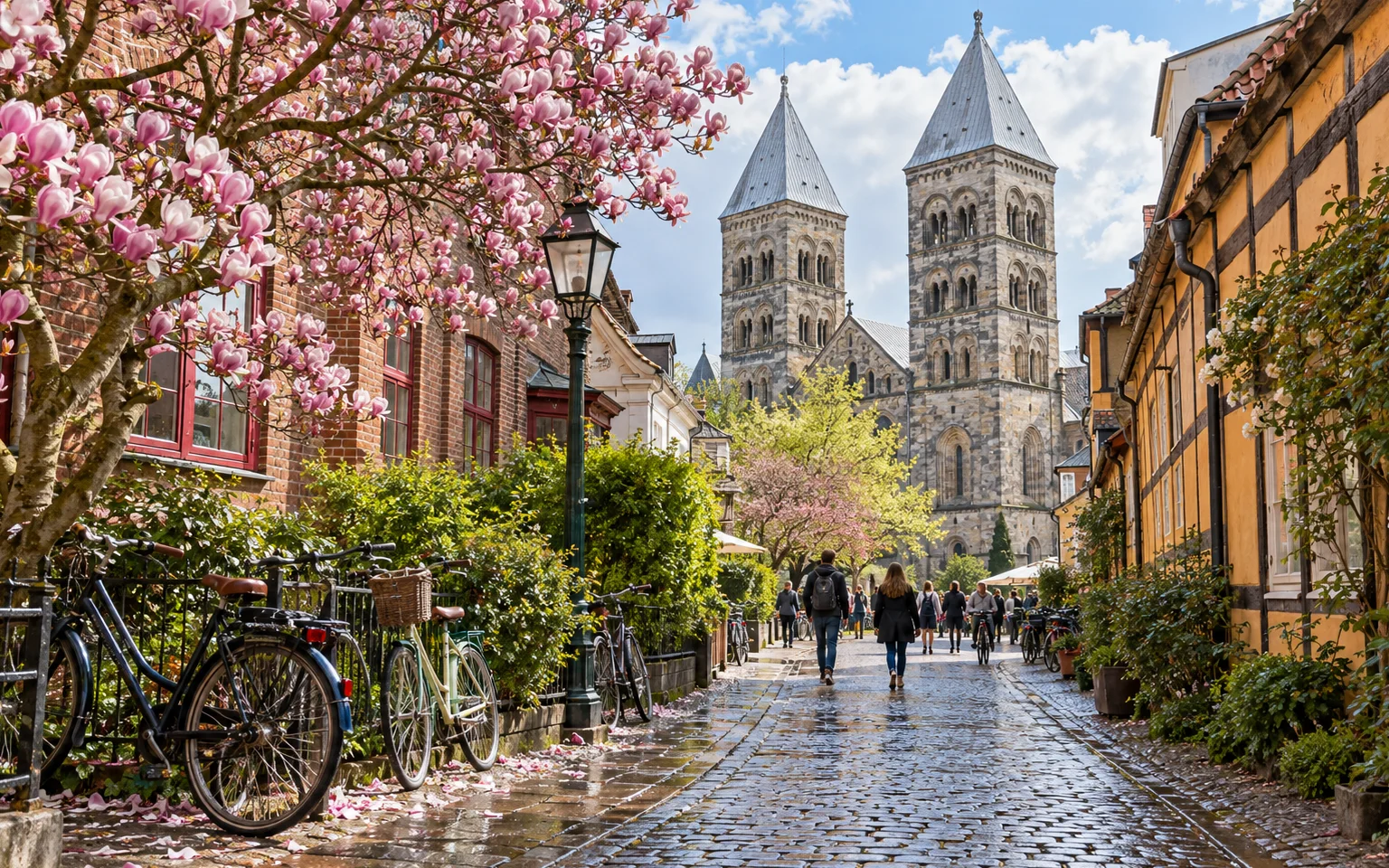
Cover: AI-generated illustration. © ANUSHKA DAHANAYAKE (PVT) LTD.
Lund is a small city with unusually deep institutions. A Romanesque cathedral stands amid a university founded in 1666, while Kulturen preserves buildings and material life from across southern Sweden. A short train ride from Malmö, it is often rushed as a half-day excursion; a full day or overnight stay better reveals courtyards, gardens and student rhythms.
What deserves your time
Lund Cathedral is the anchor. Its crypt, astronomical clock and changing chapels reward attention, but this is an active church. Consult service times, remain quiet and do not block worship. The clock's display attracts groups; arrive early rather than crowding in front. Architectural details become clearer after visiting the cathedral information displays.
Kulturen is an open-air museum and collection occupying historic buildings close by. It needs two or three hours, not a hurried lap. Uneven surfaces and old staircases affect accessibility, although selected routes and buildings may be adapted. The university area's libraries, courtyards and buildings are places of study; admire them without entering restricted rooms or photographing classes.
The Botanical Garden offers a free, restorative counterpoint. Greenhouses have specific hours, and spring blossoms or autumn colour make outdoor sections strongest. Skissernas Museum focuses on artistic process and public art, an original choice for rain. Do not overload the day merely because distances are short.
Getting there and around
Trains from Malmö Central to Lund Central run frequently; a fast service can take about 10 minutes, while other departures and engineering works take longer. Check Skånetrafiken for your departure and fare. Direct Öresundståg services also connect Lund with Copenhagen Airport via Malmö; consult the operator timetable when crossing the border. Ticket systems and zones cross regional boundaries, so buy for the complete journey. Lund Central is about ten minutes' walk from the cathedral.
The historic core is best walked. Local buses help reach outer research districts and accommodation. Lund has heavy bicycle traffic: stay out of marked lanes, check both directions and expect riders year-round. Rental cyclists need lights, a functioning lock and confidence around students who know the network.
Seasons and a two-day plan
April through June brings blossom, long daylight and academic energy. July is quieter because many students leave, although some university venues reduce access. August and September feel lively. Winter is dark, damp and sometimes icy but not reliably snowy. The cathedral and museums work well then, but gardens and cycling are less compelling.
Graduations, major university events and holidays affect rooms. “Siste April” celebrations around 30 April create crowds in Lund as well as Uppsala. Book intentionally, protect valuables and do not expect a tranquil park day.
Day one: start at the cathedral, continue to Kulturen and take lunch away from the busiest square. Walk the university quarter and Botanical Garden in the afternoon. Finish with a neighbourhood restaurant before returning to Malmö.
Day two: choose Skissernas Museum, the Historical Museum or more time at Kulturen, then walk residential lanes east of the centre. With good weather, cycle to nearby countryside on a mapped route. In rain, stay with museums and cafés. Malmö is the better evening extension than cramming several Skåne towns into one day.
Budget, food and sleeping
Lund's student character creates lunch choices, but accommodation supply is smaller than Malmö's. Compare a Malmö base plus the actual return train fare with a room in Lund for your dates. Graduation and university events can change availability quickly; check cancellation terms before committing to a non-refundable room. For meals, compare the displayed lunch special with an evening menu, and do not budget from an old online price range.
Look for Scanian produce, pastries, open sandwiches and vegetarian student-oriented meals. University nations may restrict access based on student membership or events, so do not build dinner around one without checking. “Dagens lunch” provides value, while cards are standard. Reserve weekend dinner if a specific place matters.
Stay near the station for luggage and early trains, around the centre for atmosphere, or outside the core for parking. Central streets are quiet by big-city standards but student events can create isolated noise. Ask about bicycle storage if touring.
Accessibility, safety and etiquette
Modern station routes and many central pavements are accessible, but cobbles, crypt stairs and old museum buildings create barriers. Contact venues for exact step-free entrances, hearing support, toilets and lift coverage. Benches appear in parks but less consistently in historic lanes.
Bicycle conflicts, slippery winter paving and petty theft during festivals are more realistic concerns than violent crime. Lock bikes through the frame and remove lights or bags. Use reflectors after dark and let buses and cyclists follow their priority lanes.
Respect the city's dual identity as heritage destination and workplace. Keep voices low in libraries and the cathedral, ask before entering university courtyards marked private, and avoid photographing identifiable students without consent. Slow observation is the point: Lund's value lies in connections between learning, faith, architecture and ordinary routines.
Families should schedule Kulturen before children tire, then use the Botanical Garden as an unstructured break. Travellers with sensory needs may prefer weekday mornings; cathedral clock crowds and student celebrations are noisy. Monday closures vary by season, so verify every priority venue and keep the garden or a self-guided architecture walk as fallback.
Combining Lund with wider Skåne
Malmö pairs naturally with Lund because trains are frequent and the cities contrast, but treat them as separate days if museums matter. Helsingborg, Ystad and Copenhagen need longer travel. Buy correct regional zones before boarding and never assume a city bus ticket covers the international bridge. On trains, leave accessible spaces free and keep bags out of aisles.
For a rural cycle, ask a rental shop about surfaces and wind, and do not copy a car route. Wear visible clothing, use a helmet and carry an accepted lock. Agricultural machinery needs passing room. In summer, pack water and sun protection; in shoulder seasons, rain gloves transform comfort. Return before dark unless equipped for night riding.
Reservations still matter for special exhibitions, concerts and weekend meals. Check the university calendar and cathedral music schedule: a concert can offer more than another hurried attraction. Balance it with silence in the crypt or garden, remembering that the least congested itinerary is often the most rewarding.
Carry a reusable bottle and a small rain layer even on bright days. Station lockers can help day visitors, but check dimensions and closing access before leaving valuables. If catching an evening train, return to the platform area early during student events because bicycles and crowds slow the final streets.
Read our Sweden guide and compare destinations on the Sweden places page.
Questions and answers
Is Lund an easy day trip from Malmö?
Yes. Frequent trains link Malmö Central and Lund Central; a fast service can take about 10 minutes, but check Skånetrafiken for the actual departure. The cathedral, university quarter and Kulturen are walkable from the station.
How long should you spend in Lund?
One full day covers the main historic core. Stay two days for Kulturen, botanical gardens and a slower university-city rhythm.
Is Lund Cathedral free to enter?
General entry is normally free, but services, concerts and special visits affect access. Check the cathedral's current information.
Can you cycle safely in Lund?
Cycling infrastructure is extensive, but busy student traffic requires predictable riding, hand signals, lights and attention at crossings.
Sources
Stockholm · 59.3293° N, 18.0686° E
This story belongs to Lund, Sweden. Bronze Age carvings, a walled Hanseatic town, a prize founded by an inventor's will and a public right to walk through the forest.