Malmö Travel Guide: Old Town, Seafront and Sustainable Design
A grounded guide to Malmö's medieval core, Western Harbour, multicultural food and easy rail connections across the Öresund.
Cover: AI-generated illustration. © ANUSHKA DAHANAYAKE (PVT) LTD.
Malmö is more than Copenhagen's convenient neighbour, though the two are closely bound: the city was Danish until the Treaty of Roskilde moved Scania to Sweden in 1658, and since 1 July 2000 the Öresund Bridge has put the Copenhagen guide within a short train ride. Sweden's third-largest city places a medieval core, a castle, immigrant-shaped food streets and one of Scandinavia's best-known sustainable waterfront districts within an easy cycle or bus ride. Its scale rewards observation: brick warehouses beside canals, sea swimmers facing Denmark and bakeries where a Syrian breakfast can follow Swedish fika.
Old centre and modern waterfront
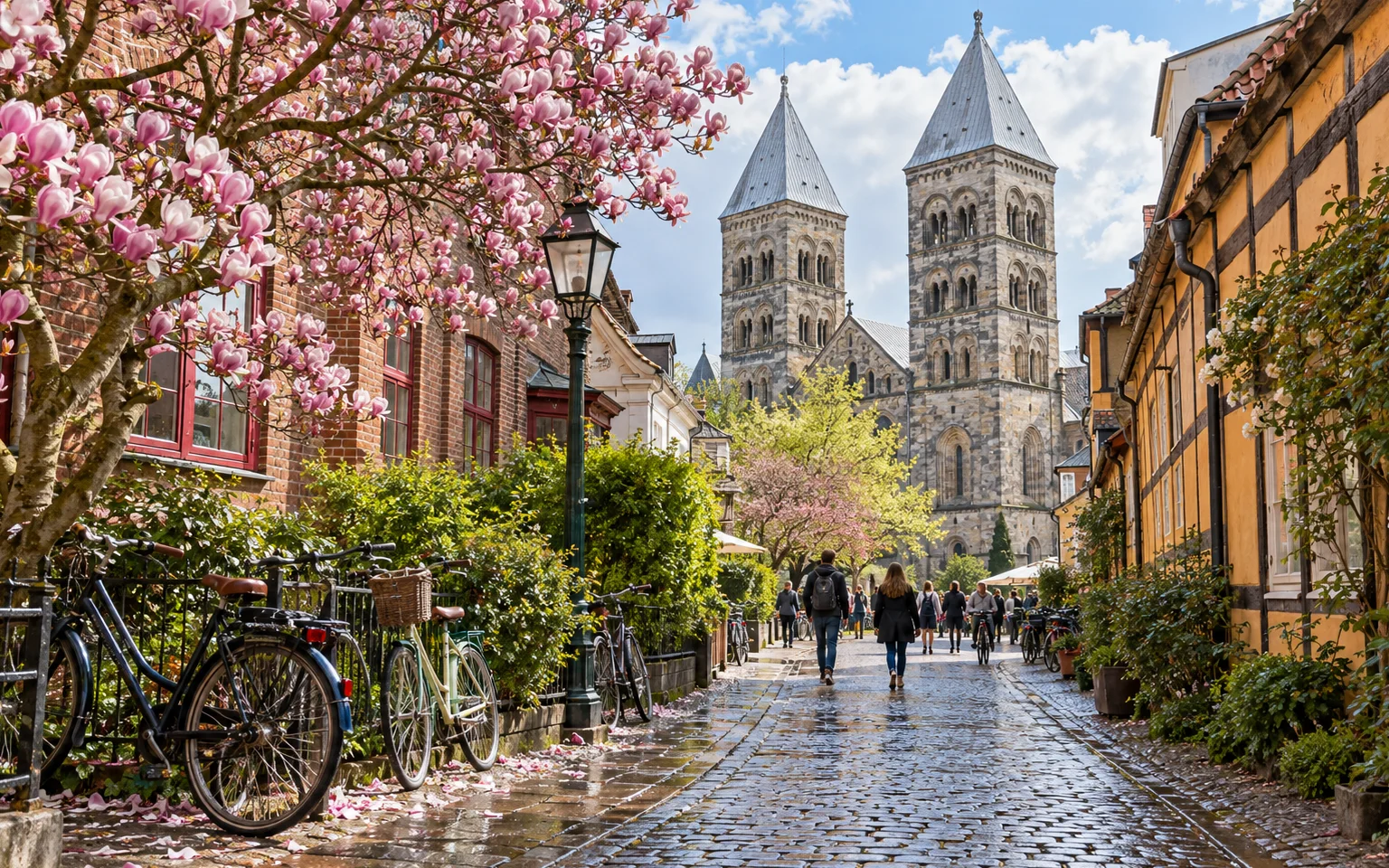
Gamla Staden surrounds Stortorget and Lilla Torg. St Peter's Church preserves medieval paintings, while Malmöhus combines a Renaissance fortress with city, art and natural-history collections. Kungsparken and Slottsparken make a green route around the castle. Lilla Torg is attractive but priced for position; nearby lanes often offer calmer meals.
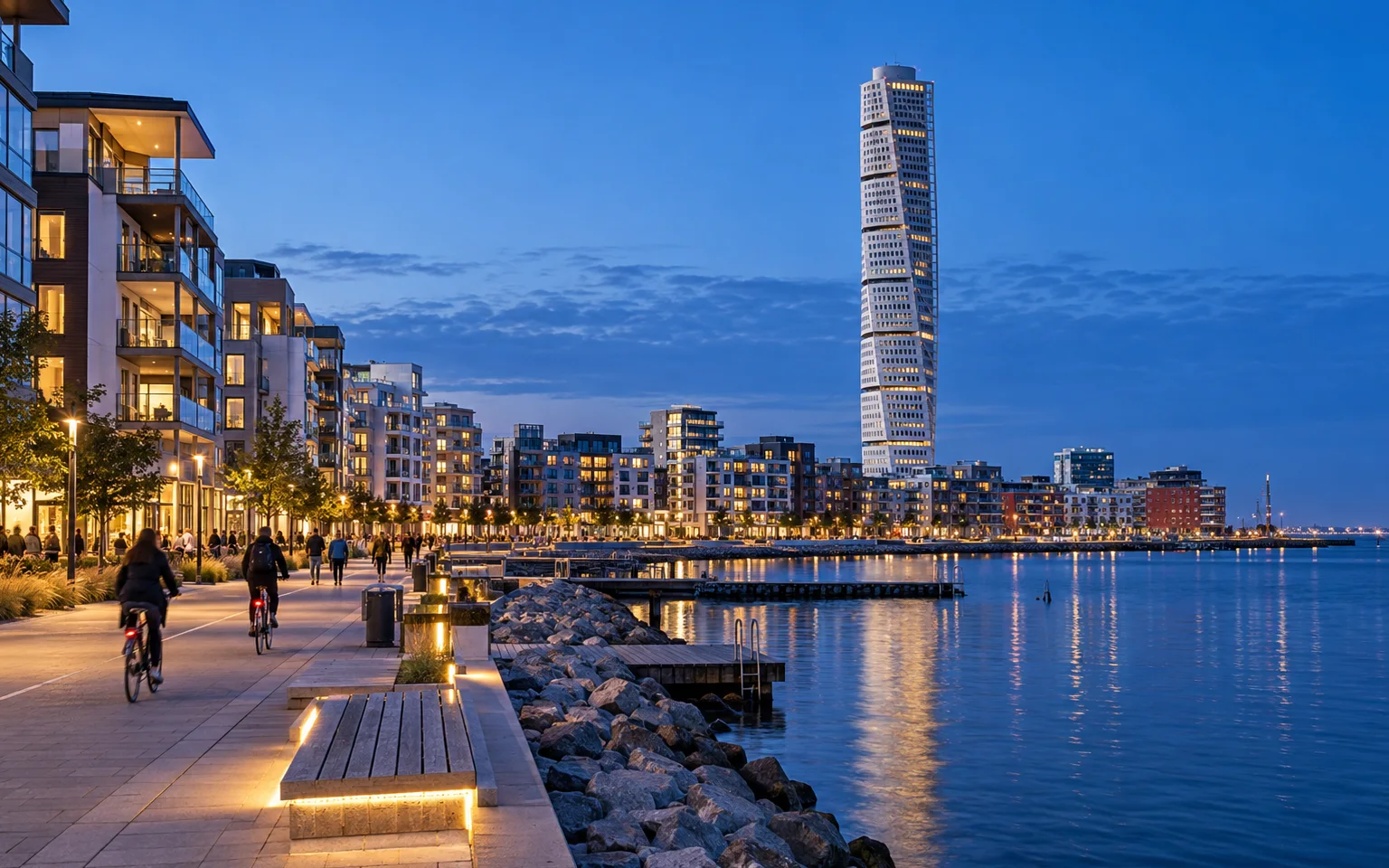
Västra Hamnen was redeveloped from industrial waterfront. Turning Torso, Santiago Calatrava's twisting 190-metre tower completed in 2005, is its visible marker, but the public promenade, energy-conscious housing and sea-bathing culture provide the reason to stay. Ribersborg beach and its cold-bath house, a Malmö institution since 1898, lie farther west. Möllevången, south of the centre, is a working neighbourhood known for produce and restaurants shaped by communities from the Balkans, Middle East and Asia. Visit respectfully: this is daily life, not a themed attraction.
Getting there and around
Öresundståg trains link Copenhagen Airport, Copenhagen Central and Malmö Central directly. Check the exact stations and departure: the airport-to-Malmö leg is shorter than the journey from Copenhagen Central, and planned rail works can change evening services or require a replacement bus. Border identity checks can be introduced, so carry a valid passport or accepted identity document. Trains also connect Malmö with Lund and Gothenburg. From Malmö Airport, bus is normally simpler than rail because the terminal is outside the network.
Skånetrafiken runs buses and regional trains; its app has current fares and disruptions. Malmö Central, Triangeln and Hyllie stations form a useful spine. Most central places are walkable, while protected cycle routes make a rental practical. Signal before turning, keep right and do not walk in cycle lanes. Buses are sensible for mobility limitations or bad weather.
Seasons and expectations
May and June bring long days, flowering parks and comfortable cycling. July and August suit the waterfront, though sea wind makes mild days cool. September offers fewer crowds. November through March can be grey, damp and windy; museums, restaurants and design shops still make a coherent break, but sunset comes early. Pack a wind-resistant rain layer in every season.
Malmöfestivalen and major events fill rooms. Summer rates are also influenced by Copenhagen because travellers base themselves across the bridge. Book flexible accommodation and compare both cities. Winter rail disruption and bridge wind restrictions are uncommon but possible; leave margin before a flight.
A practical two-day itinerary
Day one: begin at St Peter's Church before groups, cross Stortorget and explore the Form/Design Center near Lilla Torg. Walk through Kungsparken to Malmöhus and choose museum sections and skip reading everything. Continue to Möllevångstorget for dinner, checking daytime market days.
Day two: walk or cycle from Centralstationen through Västra Hamnen, pausing at the waterfront so that Turning Torso is more than a photo stop. Continue to Ribersborg; reserve the bathhouse if desired and understand changing and sauna customs. Return through Slottsparken. In poor weather, substitute Moderna Museet Malmö and cafés.
Lund is the easiest third-day trip. A fast Malmö Central–Lund Central train can take about 10 minutes, but stopping patterns and rail works change the trip; check Skånetrafiken's journey planner before setting out. Give its cathedral, university quarter and Kulturen open-air museum several hours rather than forcing Lund into a packed Copenhagen day; the Lund first-time visitor guide sets out a full route.
Food, costs and neighbourhoods
Malmö's strongest meals are often casual. Falafel is a local institution; compare busy neighbourhood counters and not just one famous name. Look for Scanian dishes, herring, baked goods and seasonal produce. Ask whether lunch specials include salad, bread or coffee. Dietary needs are widely understood, but clarify allergens explicitly.
Room and meal prices change with Copenhagen demand, Malmö events, weekends and booking lead time. Compare actual dates for a bed or room in at least two neighbourhoods, then price the rail transfer, local transport, meals and any paid museum or bathhouse separately. Attractions and transport publish current fees online. Cards dominate; tip by rounding or adding modestly for good table service, not by importing a compulsory percentage.
Stay near Centralstationen for early trains, Gamla Staden for atmosphere, Triangeln for transport, or Möllevången for food and evenings. Västra Hamnen is quiet and attractive but may feel removed after restaurants close. Check late bus access before choosing a cheap outer address.
Accessibility, safety and etiquette
Modern streets, low-floor buses and newer stations make much of Malmö accessible. Cobbles, castle thresholds and beach surfaces remain obstacles. The municipality and attractions publish access details; confirm lifts and accessible entrances on the day. Ribersborg's pier can be very exposed, and winter ice changes otherwise easy routes.
Use routine precautions at the station and around nightlife: keep valuables closed, do not leave phones on café tables and lock bicycles through the frame. Swim only in suitable conditions and learn the bathhouse's separated or mixed sessions before arriving. Swedes queue, let passengers leave first and value moderate noise. English is widely spoken, while “hej” and “tack” are appreciated.
One overlooked pleasure is Malmö's park sequence. Starting near Malmöhus, walkers can cross Kungsparken, Slottsparken and Pildammsparken with only short street sections. It creates a low-cost half-day for families and travellers who need breaks. Public toilets are not everywhere, so mark facilities before setting off. In spring, allergy sufferers should prepare for tree pollen; in winter, choose gritted main paths over waterside shortcuts.
Travellers crossing to Denmark should check roaming, payment currency and ticket conditions. Sweden uses kronor, Denmark uses kroner, and choosing a card terminal's home-currency conversion often gives a worse rate than paying locally. A regional rail ticket is not automatically a Malmö city pass. Read zones, validity and bicycle rules before travel, especially during peak commuter periods.
Planning for different travellers
Families can combine Malmöhus's collections with Kungsparken, avoiding a museum-only day. Architecture travellers should take the waterfront slowly and look beyond Turning Torso to canals, courtyards and bathing infrastructure. Solo visitors will find main routes busy into evening, but should still share a return plan when swimming or cycling beyond the centre. In winter, schedule the coast around daylight and museums after dark. In summer, carry sun protection: a cool sea breeze can disguise exposure. Save the Skånetrafiken itinerary offline, because a dead phone can also mean losing an app ticket.
Public drinking water is reliable, so refill a bottle. Toilets are easiest in museums, stations and larger libraries; do not assume every small café offers one to non-customers. Carry a compact lock even for a short bicycle stop and photograph the hire bike before departure to document its condition.
Explore our Sweden guide and compare destinations on the Sweden places page.
Questions and answers
Is Malmö worth visiting from Copenhagen?
Yes. Direct trains link Copenhagen Central and Malmö Central, but journey times and evening services vary; check Öresundståg's timetable, especially during rail works. Malmö offers a walkable old centre, modern waterfront and distinctive food scene.
How many days do you need in Malmö?
Two days cover Gamla Staden, Malmöhus, Möllevången and Västra Hamnen. Add one day for Lund or the Skåne coast.
Do you need Swedish cash in Malmö?
Rarely. Cards and mobile payments dominate, and some businesses do not accept cash.
Is Malmö safe for visitors?
Visitor areas are generally safe. Use normal city awareness at night, secure bicycles properly and follow current local advice.
Sources
Stockholm · 59.3293° N, 18.0686° E
This story belongs to Malmö, Sweden. Bronze Age carvings, a walled Hanseatic town, a prize founded by an inventor's will and a public right to walk through the forest.