Odense: Andersen's Birthplace and Denmark's Oldest Stories
A 988 letter, a martyred king and the author of The Little Mermaid shaped Odense. This guide tells the city's story first, then plans two days with Andersen's house at the centre.
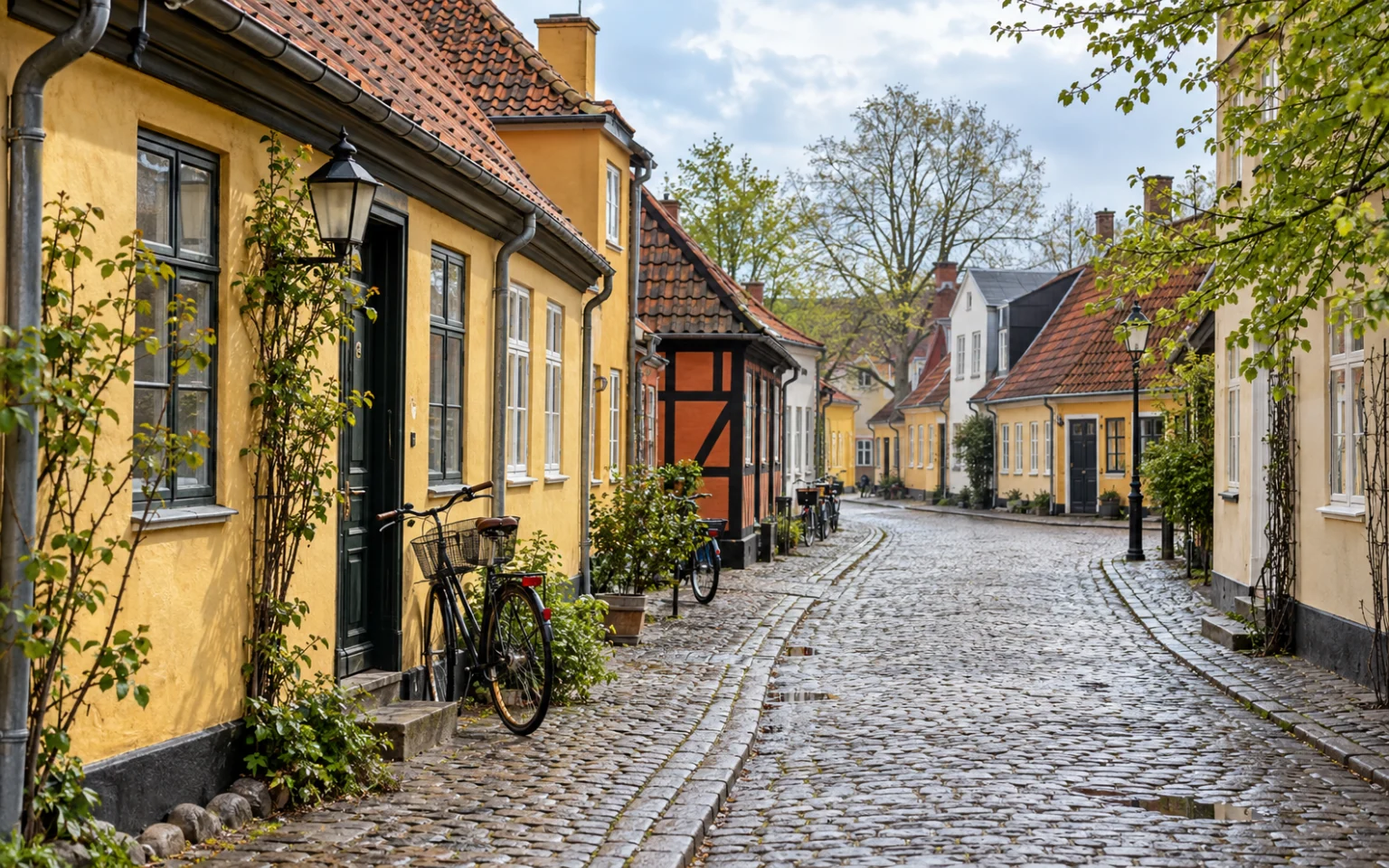
Cover: AI-generated illustration. © ANUSHKA DAHANAYAKE (PVT) LTD.
Odense is the third-largest city in Denmark and the capital of Funen, and its story is older than its fairy-tale fame. The name first appears in a letter from Emperor Otto III in 988, which makes it one of the earliest recorded towns in the country, and the city celebrated its thousandth anniversary in 1988. The name is connected to the Norse god Odin.
A martyr, a cathedral and the first printed book
In 1086 King Canute IV was killed by rebellious peasants in Odense, and the king was soon venerated as a saint. He was canonised around 1100, and St Canute's Cathedral, the city's main church, stands as a monument to that history. The Reformation ended the Catholic bishopric in 1536, but the building remains a major medieval church, and visitors should treat it as an active place of worship.
Odense also has a claim to cultural firsts. In 1482 Johann Snell printed a prayer book in the city, considered the first book printed in Scandinavia. Odense Teater was founded in 1796, and between 1796 and 1806 a canal linked the harbour to Odense Fjord, giving the town a route to the sea. The railway across Funen in 1865 made the city a major junction, and by 1900 it had about 35,000 inhabitants.
The shoemaker's son who wrote fairy tales that travelled the world
Hans Christian Andersen was born in Odense in 1805, the son of a poor family, and the city has treated him as its centrepiece ever since. The 200th anniversary of his birth was celebrated in 2005, and in 2025 the city marked 150 years since his death. H.C. Andersen's House was rebuilt to designs by the Japanese architect Kengo Kuma and reopened in 2021. The new museum interprets his stories alongside his life, and the nearby old quarter of low houses and cobbled lanes gives the setting of his childhood. Odense is a UNESCO Creative City of Literature, and the city's bookshops, libraries and events reinforce the title.
Industry, music and rail
Odense also made things. The Odense Steel Shipyard opened in 1919 and closed in 2012, and the city's postwar story included a university founded in 1966 that is now part of the University of Southern Denmark. The Danish Railway Museum, established in 1975, holds historic rolling stock and can absorb several hours. In August 1943 a general strike in Odense helped end Danish collaboration with the occupiers. Brandts, a former textile complex, now anchors art and cultural spaces west of the core, and Odense Zoo, founded in 1930, remains a family favourite. The decades also had their symbols: in 1935 the city built a tall tower called Odinstårnet, which a Nazi-linked group destroyed in 1944. The railway and shipyard era explains why Odense feels like a working city with a literary reputation, and not only a museum of one author.
Funen beyond the city
Funen is often called the garden of Denmark, and the island's manor houses, orchards and small towns reward visitors with more time. Travellers with a spare day can build a Funen route around smaller towns, manor landscapes and the coast, but avoid changing accommodation every night merely to claim coverage. Odense makes a practical rail base, and a car becomes useful only when rural stops are the priority. The Great Belt Bridge, opened for rail in 1997 and road in 1998, tied Funen to Zealand and made day trips from Copenhagen easy.
Two days with the stories
Day one: Andersen in context. Start at H.C. Andersen's House with an advance time-slot booking; VisitOdense says tickets must be booked ahead. Andersen's childhood home is separate from the main museum and has different access and opening arrangements, so decide whether the second interior adds value. Continue to St Canute's Cathedral and the area around the former monastery. Enter quietly, avoid services unless attending respectfully and accept temporary closures. Spend the evening in the centre rather than chasing distant sights, and choose a Brandts exhibition, an independent shop or a relaxed dinner.
Day two: city life and one deeper choice. Begin at the Danish Railway Museum if transport history appeals, or visit Brandts and walk beside the river at Munke Mose. In the afternoon follow part of the river corridor, visit Odense Zoo according to interest, or reach the open-air museum Den Fynske Landsby, which interprets rural Funen. Verify opening days, since outdoor museums often run reduced schedules outside summer. Egeskov Castle, south of the city, is a popular excursion, but public transport may require a train, bus and walk, so plan the journey before committing a day to it.
Getting there, costs and etiquette
Intercity trains link Copenhagen, Odense and Aarhus, placing the station within walking distance of the historic core. The station connects with the Odense Letbane light rail and buses; check tickets under current regional rules before travelling. The centre works well on foot, while bicycles open green corridors, so keep right, signal clearly and leave cycle lanes before stopping.
Late April to June brings fresh gardens, July and August the fullest attraction schedules and highest demand, and winter works for indoor culture with short daylight. Wet cobbles can be slippery, so carry a waterproof layer and shoes with grip. Accommodation and restaurant meals reflect Danish prices, so control costs with a bakery breakfast and one deliberately chosen dinner. Look for smørrebrød, Funen smoked cheese when available and seasonal produce, and ask about allergens clearly. Service is included, so tipping is optional. Compare combined attraction products with individual admission, because a pass saves money only when its sites match the pace of the trip.
Modern museums and light rail offer useful accessibility, but cobbles, historic homes and outdoor museums vary, so contact venues about entrances, lifts and toilets. Keep belongings close around stations and nightlife streets, lock bicycles and supervise children at river edges. Respect residential lanes in the old quarter, and do not photograph through windows or block doorways.
Continue through the Denmark destination hub, read what makes Denmark special, or pair Odense with the Copenhagen first-time guide for the next stage of a trip.
Questions and answers
Is Odense a day trip from Copenhagen?
It can be, because direct trains cross to Funen, but an overnight stay allows the Andersen museums and old quarter to be experienced after day visitors leave.
Are Andersen attractions only for children?
No. The main museum uses architecture, objects and storytelling to examine the writer's life and work for adults as well as families.
Do visitors need a car in Odense?
No for the city centre. Trains, light rail, buses, walking and cycling cover most needs; a car is useful for some rural Funen estates and villages.
When is the best time to visit Odense?
Late spring through early autumn offers gardens and long daylight. Winter is quieter and museum-friendly, but opening hours shorten and outdoor plans need flexibility.
Sources
Copenhagen · 55.6761° N, 12.5683° E
This story belongs to Odense, Denmark. A small kingdom whose pride runs from a tenth-century rune stone to fairy tales, furniture and a kitchen revolution.