Linz Guide: Kepler, Linzer Torte and Digital Arts
Linz moves from Roman Lentia and Kepler's laws to a 1653 torte recipe, a 134.8 m cathedral tower and the Ars Electronica digital arts festival.

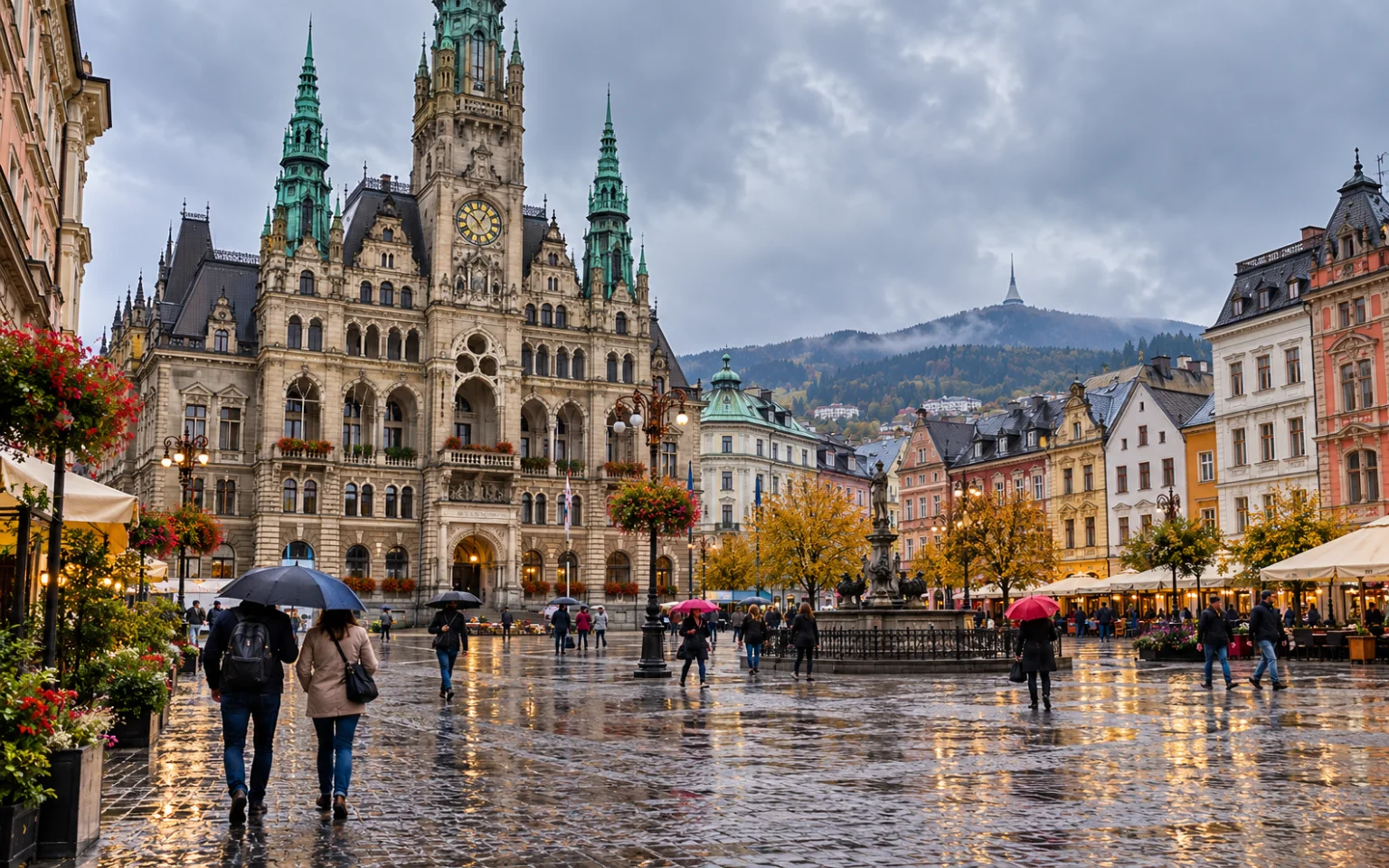
Cover: AI-generated illustration. © ANUSHKA DAHANAYAKE (PVT) LTD.
Linz began as the Roman fort of Lentia in the first century, and its name appears in its present form in a document of 799. The city received its rights in 1324. Its place in science comes from Johannes Kepler, who taught mathematics here and on 15 May 1618 discovered the third of his laws of planetary motion. Music followed: Mozart composed his Linz Symphony and Linz Sonata during a three-day stay in November 1783, and Anton Bruckner worked as organist at the Old Cathedral from 1855 to 1868.
The city's most famous cake has an equally specific record. The Austrian agriculture ministry points to a recipe from 1653 in the cookery book of Countess Anna Margarita Sagramosa of Verona as the oldest known cake recipe named after a place. Linzer Torte is a spiced, nut-based pastry with a lattice top over jam. The claim is a narrow one, about the oldest recipe named after a place, not about the oldest cake of any kind. The Mariendom, built between 1862 and 1924 in Gothic Revival style, rises 134.8 metres and is described as the tallest church in Austria.
Linz is also the home of digital culture on a scale few cities attempt. Ars Electronica held its first festival in September 1979, became annual in 1986 and launched its Prix in 1987. The Ars Electronica Center opened in 1996, and the city is recognised by UNESCO as a City of Media Arts. Linz was European Capital of Culture in 2009, and the Lentos Art Museum was built in 2003, so the riverbank now carries two illuminated modern buildings facing each other across the Danube. The Pöstlingbergbahn, built in 1898 and described as the steepest mountain rail of its kind in the world at 10.5 per cent, adds a historic engineering counterpart on the hill.
Industry and memory belong to the same story. Voestalpine was founded as the Reichswerke Hermann Göring during the Second World War, and the Mauthausen concentration camp was established east of Linz, with three of its sub-camps inside the Voest complex. Responsible interpretation of the postwar investment in culture connects industry, forced labour and public memory, and museums and documented sites provide that context. Avoid treating politically charged architecture as a neutral backdrop.
Two days: river, museums and one outer anchor
Start at Ars Electronica Center on the north bank, but check its ticket and opening page first, since regular hours run Tuesday to Sunday and it closes on Mondays. Demonstrations run at scheduled times, and a good visit asks how technology affects society instead of treating screens as an arcade. Allow two to three hours, and review the current programme because exhibits change and some experiences need staff or a reservation. Families should choose demonstrations by age and language. Cross the Nibelungen Bridge on the pedestrian side to Hauptplatz, the old cathedral and Landstrasse, then walk the river to Lentos and see how its illuminated facade answers Ars Electronica after dark.
On day two choose one anchor. Lentos suits modern art, Nordico covers social and regional history, and voestalpine Stahlwelt lies outside the centre with distinct tours, security rules and conditions. The Mariendom stands farther south, remains an active church and rewards visitors interested in stained glass and scale, though tower experiences have their own schedules and physical requirements. Pöstlingberg offers a hill and pilgrimage-church setting by its steep tram when operating. Weather can remove the Pöstlingberg views, and the Grottenbahn is a family attraction with seasonal schedules, so check both before riding up. Mural Harbor tours interpret legal large-scale works in a working port, so use the authorised tour. Do not combine a lengthy industry tour, Pöstlingberg and a major museum in one day.
Where to sleep, what to spend and how to behave
The centre offers maximum convenience, the station area helps early trains, and Urfahr on the north bank suits Ars Electronica and Pöstlingberg. Read late-arrival details before choosing a cheaper outer room. Admissions, accommodation and any specialist tour are the main expenses, while Hauptplatz, Danube views and most public streets cost nothing. Book festival periods early. Linz is a working industrial and university city, so ask before close photographs in markets or demonstrations, keep church visits quiet and follow staff instructions around technical exhibits. Operational port and industrial areas are not shortcuts or photography sets. If arriving on a Danube cruise, verify the landing point and the time ashore, since not every ship docks beside Hauptplatz. Cyclists share river paths with pedestrians, and tram tracks need care.
Seasons, cards and getting around in one place
Linz Hauptbahnhof lies south of the centre on the main rail corridor, and trams run to Hauptplatz and across the Danube. The centre is walkable, but industrial sites and Pöstlingberg need planned transport. The Linz-Card includes listed museums and core-zone buses and trams, and the Pöstlingbergbahn is included only with the two- and three-day versions, so compare it with your exact plan.
Spring and early autumn favour river walking. The Ars Electronica Festival usually falls around early September, but dates need checking, and it adds accommodation pressure. River flooding can close promenades after heavy rain, so obey barriers. The Danube has strong currents, so use only authorised swimming places.
Linzer Torte contains nuts, so anyone with a nut allergy should avoid it instead of relying on a visual check. Upper Austrian menus also include dumplings and hearty meat dishes, and tap water is drinkable. Modern museums and low-floor trams generally support accessible visits, but bridge gradients, old thresholds and interactive exhibits vary, so ask each venue about entrance, seating and sensory conditions. Ars Electronica can be noisy, and families should choose a few demonstrations. Call 112 in an emergency, and keep children back from tram platforms and the Danube edge, where the current is strong even on calm days.
Continue through the Austria destination hub, compare the capital in the Vienna guide, follow the river west with our Wachau Valley guide, or browse all country guides.
Questions and answers
Is Linz worth visiting for two days?
Yes, particularly for digital culture, modern art and Danube urban history. Two days allow Ars Electronica, one additional museum and time on both riverbanks.
Can Linz be visited without a car?
Yes. Trams connect the main station, centre and many outer areas, while central sights sit along walkable river routes.
Which Linz museum should a first-time visitor prioritise?
Choose Ars Electronica Center for interactive technology and society, Lentos for modern and contemporary art, or the voestalpine museum for industrial history.
What is the Linzer Torte?
It is a lattice-topped tart associated with Linz, typically made with a nut-rich spiced pastry and jam. Recipes vary, and visitors with nut allergies should avoid it.
Sources
Vienna · 48.2082° N, 16.3738° E
This story belongs to Linz, Austria. A country whose best-known exports are carried in the head: a carol, a waltz rhythm, Mozart and an hour over one coffee.