Manchester for First-Time Visitors: The First Industrial City and Its Firsts
Manchester through its firsts, from the 1830 railway to the 1948 Baby computer and the suffragettes, with music, football and a practical two-day route.
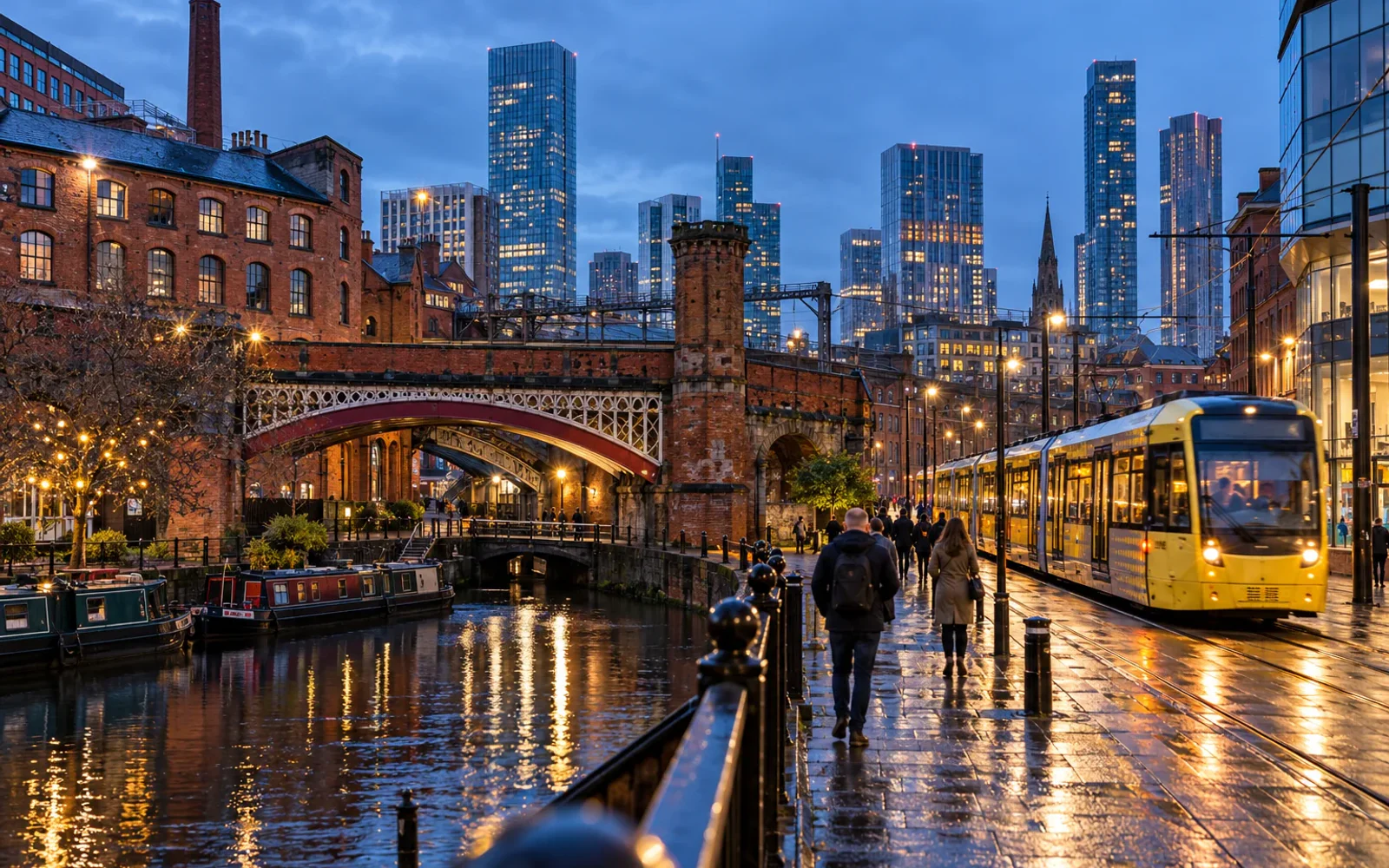
Cover: AI-generated illustration. © ANUSHKA DAHANAYAKE (PVT) LTD.
Manchester is the city where several modern habits began: the timetabled passenger railway, the stored-program computer and the organised campaign for votes for women. Its cotton warehouses and canals made it the engine of the Industrial Revolution, and the same confidence later produced a music scene that Britain still measures itself against. Mancunians carry that record with a dry humour and a refusal to wait for London's approval.
The railway that started in Liverpool Road
The Liverpool and Manchester Railway, the first inter-city passenger line, opened on 15 September 1830, and its Manchester terminus at Liverpool Road survives. Historic England describes it as the oldest surviving passenger railway station building in the world, and it forms part of the Science and Industry Museum, which also interprets textiles, computing and the city's role in industrial change. Passengers boarded there only until 1844, when the line was extended to a new station at Victoria, and the building is listed Grade I. What makes it unusual is that the original terminus survives at all, in the middle of a modern city. The Liverpool end of the line is explored in what makes Liverpool special.
The Baby and a city of ideas
On 21 June 1948 the Manchester Baby, a small experimental machine at the University of Manchester, ran its first program, becoming the first electronic stored-program computer. Its memory held only 1,024 bits on a Williams-Kilburn tube, and the program found the highest factor of an integer in roughly fifty minutes. It led directly to the Manchester Mark 1. The city's habit of political argument is older. On 16 August 1819 soldiers charged a crowd gathered at St Peter's Field to demand parliamentary reform, an event remembered as Peterloo, and on 10 October 1903 Emmeline Pankhurst and her daughters founded the Women's Social and Political Union at their home at 62 Nelson Street, a group more militant than the law-abiding suffrage societies before it. The crowd at Peterloo is estimated at 60,000 to 80,000 people, and Emmeline Pankhurst's family later linked her own activism to that history. The People's History Museum keeps these campaigns in view, and the John Rylands Library, commissioned by Enriqueta Rylands from Basil Champneys and opened to readers on 1 January 1900, shows what cotton money built.
Cotton, warehouses and the new city
Cotton made Manchester. By the nineteenth century its mills and warehouses drove the Industrial Revolution, and the red-brick warehouses of Ancoats and Castlefield now hold flats, studios and restaurants. The Northern Quarter's independent shops, record stores and street art occupy streets that once traded textiles, and the restored canals of Castlefield have become one of the city's favourite places to walk. The arch of Chinatown and the curry houses of Rusholme, along the road locals call the Curry Mile, record the later waves of migration that gave the city its food. Few British cities let visitors read their economic history from the buildings so directly.
Music and football
Joy Division and New Order, The Smiths, the Stone Roses and Oasis all came from Greater Manchester, and venues from basement rooms to arenas still fill every week. Manchester United and Manchester City are followed across the world, stadium tours run on days without a match, and the National Football Museum in the centre covers the wider history of the game.
What to look for on the street
Walk Deansgate and the Rylands library, then look at the Town Hall and the red-brick warehouses; the buildings record the Victorian city's confidence. The People's History Museum explains the campaigns for the vote and for workers' rights, and the Pankhurst Centre, in the family's former home, keeps the suffrage story close to where it began. Evenings are for music: the same streets that produced Joy Division and The Smiths host small rooms every night of the week.
Two days around the story
Day one: Castlefield to the library. Begin in Castlefield, where canals, viaducts and warehouses show the infrastructure behind cotton, and walk the Bridgewater Canal towpath carefully; it is uneven and shared with cyclists. Continue to the Science and Industry Museum, because gallery restoration can close buildings and the museum's visit page lists what is open. Use the free city-centre buses to St Peter's Square, then choose Manchester Art Gallery or the John Rylands Library, which is a working research library, so confirm access first. In the evening, try the Northern Quarter or Ancoats for small music rooms, buy tickets from venues or recognised agents, and plan the journey home before the last song.
Day two: choose football, neighbourhoods or the waterfront. Old Trafford and the Etihad lie in different directions and belong to rival clubs, so do not attempt both tours. Reserve on the club's official website. Without a match interest, take the tram to Salford Quays for The Lowry and the Imperial War Museum North, or south to Chorlton and Didsbury for a residential side of the city. Chinatown, the Gay Village and Ancoats each reflect another chapter of migration and reinvention, and independent restaurants gain more from a thoughtful meal than from a quick photograph. A curry in Rusholme is a Manchester habit worth keeping.
Weather, events and getting about
Rain is common but not constant, and a packable waterproof plus one indoor anchor for each day covers it. Canal edges and tram tracks stay slick after a shower. Matches, concerts and Pride can raise hotel prices and crowd the trams, so check the city calendar before booking. Manchester Piccadilly, Victoria and Oxford Road stations serve different routes, so confirm the station on a rail ticket. Transport for Greater Manchester publishes live journey information and accessibility details, and the free city-centre buses are wheelchair accessible; lift outages and old buildings can still affect a journey, so contact venues when step-free entry matters. Several leading museums and galleries have free general admission, while tours, football and special exhibitions cost more. Tell restaurant staff about allergies, since a label such as vegan does not guarantee freedom from cross-contamination.
The United Kingdom overview and what makes the United Kingdom special place the city in the wider country, Bath offers a contrasting heritage day, and the Edinburgh first-time guide suits a northern extension.
Questions and answers
How many days do you need in Manchester?
Two full days are enough for the centre, one major museum, a neighbourhood and either football, music or art. Add a third day for a match, a longer cultural programme or a Greater Manchester excursion.
Can you explore Manchester without a car?
Yes. The centre is walkable, free city-centre buses connect major stations and districts, and Bee Network trams and buses reach neighbourhoods and stadium areas.
Do football stadium tours need advance booking?
Usually yes, especially at weekends and around fixtures. Check the club's official site because match days, events and maintenance can change tour schedules.
What should visitors do when it rains in Manchester?
Use the Science and Industry Museum, Manchester Art Gallery, People's History Museum, John Rylands Library or another substantial indoor venue. Keep a waterproof layer because showers may pass quickly.
Sources
London · 51.5074° N, 0.1278° W
This story belongs to Manchester, United Kingdom. Four nations with their own pride, from Neolithic monuments and Norman fortresses to the first steam passenger railway between cities.