Oxford for First-Time Visitors: Colleges, Museums and Quiet Streets
A practical Oxford day or overnight plan focused on one college, one museum and the living university behind the famous stone façades.
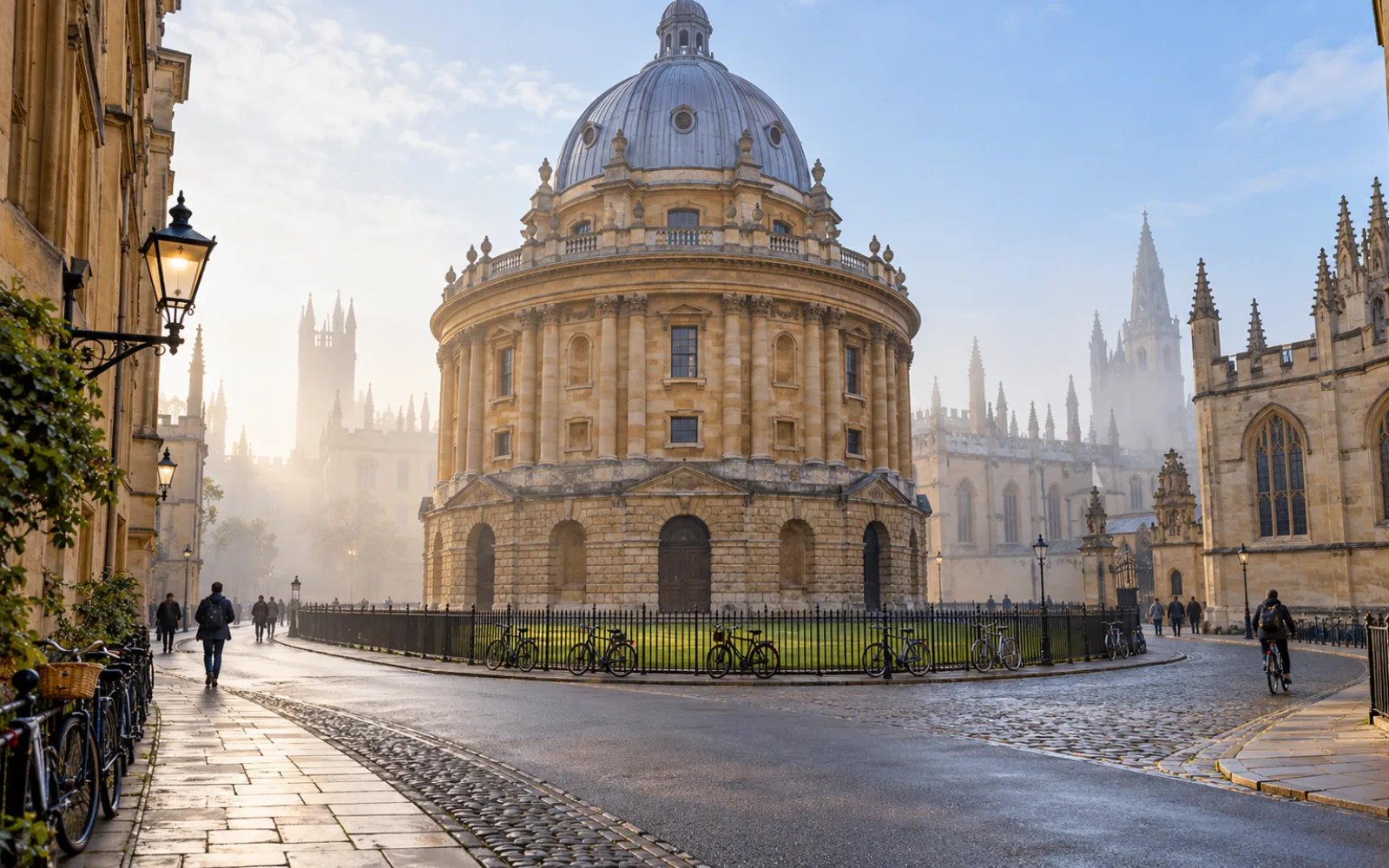
Cover: AI-generated illustration. © ANUSHKA DAHANAYAKE (PVT) LTD.
Oxford is not a single historic campus. The university consists of colleges and departments woven through a working city, alongside residents, hospitals, businesses and two universities. That distinction improves a visit: doors may close for teaching, students are not performers, and the best day balances architecture with collections and ordinary streets.
Arrive without a car
Oxford railway station is west of the centre, roughly a 15-minute walk from Carfax. Coaches often use Gloucester Green. Service patterns, rail engineering and return queues change, so check the operator before travel. Driving into the centre creates parking and access problems; Oxfordshire's park-and-ride network is a more practical option for motorists.
For an overnight stay, the centre maximises early access but costs more. Jericho offers restaurants and canal proximity; east Oxford provides a more lived-in city and diverse food but requires bus planning. Check luggage arrangements because many historic buildings have stairs and no lift.
Morning: see the university as a system
Start around Broad Street before group tours peak. The Bodleian Libraries, Sheldonian Theatre, Bridge of Sighs and Radcliffe Square sit close together, but interiors have separate tickets and rules. Two dates anchor the square: the library reopened under Sir Thomas Bodley's name on 8 November 1602, and the Sheldonian, built in the 1660s for Archbishop Gilbert Sheldon, was Christopher Wren's first complete architectural commission. Book a Bodleian tour if library history matters: the Old Library and Radcliffe Camera require the appropriate tour ticket, while Weston Library exhibitions are free. All library guided tours involve stairs, so check access before paying. Do not assume a film location photograph grants entry.
Choose one college after checking its official visitor page that morning. Christ Church offers major architecture and cathedral history but can consume time and budget. New College, Magdalen, Balliol or another open college may provide a calmer experience. Opening can change for exams, services and private events without regard to a day-trip itinerary. Respect closed gates, avoid photographing students closely and keep voices low near libraries and chapels.
Afternoon: one museum, not four
Oxford's museums are substantial. The Ashmolean, which opened in 1683 and is widely regarded as Britain's first public museum, covers art and archaeology; the Museum of Natural History and Pitt Rivers sit together but have distinct collections; the History of Science Museum occupies a compact historic building. Pick one cluster based on genuine interest and verify opening. Free general admission does not mean a rushed visit is costless in energy.
Allow lunch beyond the busiest square. Covered Market traders, independent cafés and Cowley Road restaurants reflect a city broader than formal dining halls. Ask about allergens and reserve only where necessary. If weather is good, replace a second museum with a walk through University Parks, Christ Church Meadow or beside the canal. Rivers can flood and paths become muddy, so follow closures.
Punting without unrealistic expectations
Punting can be enjoyable, but it is seasonal, weather-dependent and more physical than it looks. Compare a chauffeured trip with self-hire, listen to safety instructions and do not stand for photographs while the boat is unstable. Busy water requires courtesy. Never enter closed stretches or treat the riverbank as a picnic bin.
Visitors with only a day should not add Blenheim Palace. It is outside Oxford, has its own substantial grounds and deserves a separate half-day or day with transport planning. Likewise, a Cotswolds coach tour is not an “extra stop” after museums.
Costs, booking and timing
College fees, library tours and punting add quickly, while major museums can be free. Select one paid interior and one free collection. Reserve the paid priority, but keep the rest flexible because college access changes. Summer, graduation, open days and December events affect rooms and pavements. University term can make the city feel more authentic while also reducing visitor access.
An early weekday or overnight gives a quieter Radcliffe Square. In winter, low light shortens outdoor time but museums are strong; in spring, gardens and meadows improve. Rain is possible in every month, so carry a waterproof so the itinerary does not depend on a sunny day.
Accessibility and ethical visiting
Historic colleges combine steps, narrow passages and protected surfaces. Access varies by college and sometimes by route within it. Contact the exact venue when a step-free entrance, accessible toilet, seating or hearing support is essential. Museums publish access information, but temporary lift outages still matter. Cobbling and crowded lanes can be tiring for wheels and walking aids.
Oxford faces pressures from housing cost and visitor congestion. Walk in small groups, leave cycle lanes clear and do not stop in doorways. Students and residents owe visitors neither portraits nor explanations. Buy from local businesses, refill water where possible and use public transport. These modest choices help the centre remain a place to live and study.
A coherent day
A useful first visit is Broad Street and Radcliffe Square, one pre-checked college, lunch, one museum and an optional meadow walk. The plan is intentionally selective. Oxford becomes clearer when visitors understand why spaces exist, not when they photograph every archway. An overnight adds an evening concert, theatre or pub and a quiet morning before coaches arrive.
Plan another historic city with our Bath guide, read what makes the United Kingdom special, compare a larger cultural itinerary in our London guide, or browse the United Kingdom hub.
Books, gardens and evening culture
Book lovers should distinguish the Bodleian's visitor tours from Blackwell's commercial bookshop and college libraries that are not normally public. Browse without blocking stairs or photographing customers. The Oxford Botanic Garden is a ticketed university collection with seasonal value; it can replace a second museum. Check last entry because garden closing may be earlier than expected.
An overnight makes room for a concert, theatre performance or public lecture. University events may be free but require registration and can be intended for specialist audiences. Read the listing; an academic building is not automatic entertainment. Pubs with literary associations are popular and small; buy something, avoid occupying tables only for photographs and remember that famous writers did not all meet in every room claimed by a tour.
Families and visitors with limited time
Children often gain more from the Natural History Museum's large specimens and an outdoor meadow break than from several chapel interiors. Check family trails and school-holiday crowds. Pushchairs meet cobbles, steps and narrow doors, so a compact route matters. A half-day visitor should choose the central university walk plus either one college or one museum, not both at speed.
If the return train is fixed, arrive at the station with a buffer. The pedestrian route narrows near the centre and weekend pavements become congested. Rail disruption can make a coach a useful alternative, but compare destination and refund conditions before switching. Ending early enough to travel calmly is better than missing the final booking for one more tower photograph.
Questions and answers
Is one day enough for Oxford?
One day is enough for a coherent centre walk, one college and one museum. Stay overnight for quieter mornings, an evening performance or a longer riverside walk.
Can visitors enter every Oxford college?
No. Colleges set their own hours, fees and closures around teaching, exams and events. Check the individual college on the day.
Should I drive into central Oxford?
Usually no. Rail, coach and park-and-ride services are more practical because central road access and parking are restricted.
What is the best way to avoid crowds in Oxford?
Arrive early, stay overnight, visit on a weekday outside peak summer where possible and explore beyond Radcliffe Square after seeing the essentials.
Sources
London · 51.5074° N, 0.1278° W
This story belongs to Oxford, United Kingdom. Four nations with their own pride, from Neolithic monuments and Norman fortresses to the first steam passenger railway between cities.