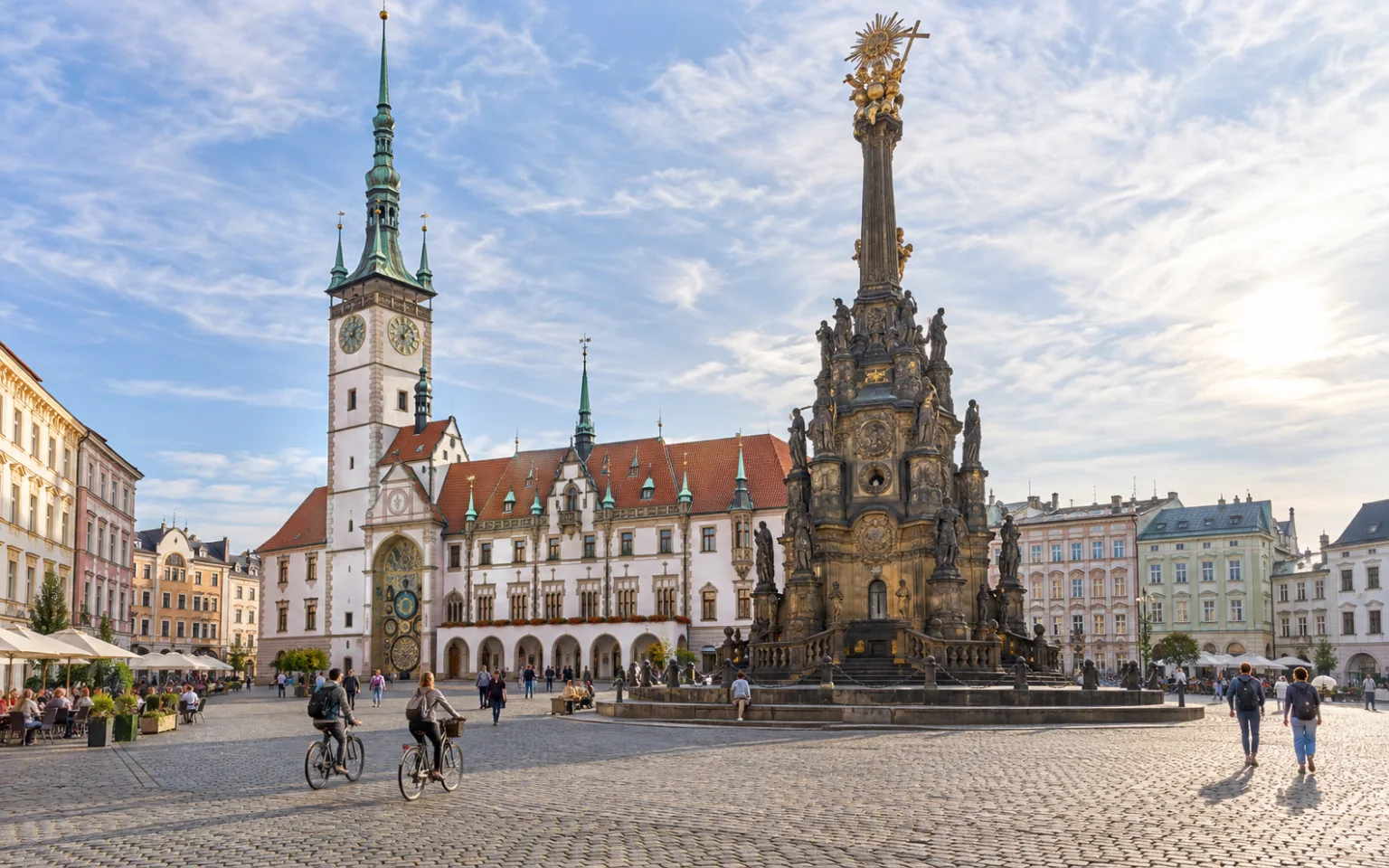
Plzeň: The Birthplace of Pilsner, Škoda and a Great Synagogue
In 1842 a brewer in Plzeň made a golden lager that spread worldwide. This guide tells the story of Pilsner, Škoda, the synagogue and the liberation first, then helps plan two days.
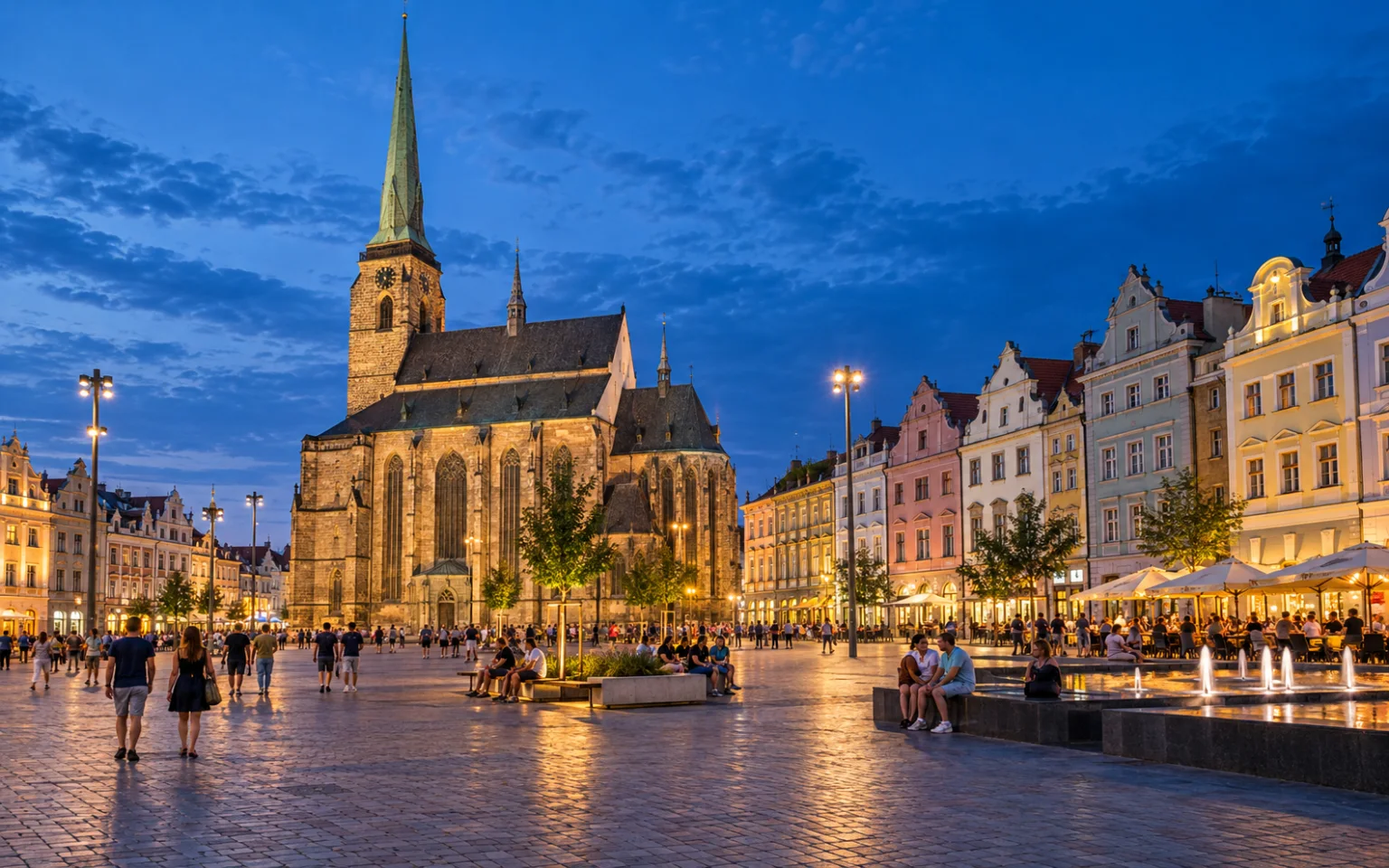
Cover: AI-generated illustration. © ANUSHKA DAHANAYAKE (PVT) LTD.
Plzeň, known to the world as Pilsen, was founded as a new town in 1295 by King Wenceslaus II, and the great square at its centre belongs to that medieval plan. Brewing was already part of the city by 1307, when the first written mention of beer-making appears. That tradition reached a turning point on 5 October 1842, when the Bavarian brewer Josef Groll produced the first batch of what became Pilsner, a pale golden lager. The Citizens' Brewery in which he worked had been founded only three years earlier, in 1839, as a city-owned enterprise.
Print, war and the old city
Older chapters sit beneath the beer story. A castle was first recorded here in 976, and in 1476 the city's first printing press produced the Statuta, described as the oldest book printed in Bohemia. During the Thirty Years' War Mansfeld's troops took the city in 1618 and imperial forces recaptured it in 1621. In 1634 the general Wallenstein fled Plzeň on 23 February, and he was assassinated in Cheb two days later. In 1989 the historic centre was protected as an urban monument reservation, and the University of West Bohemia, founded in 1991, and the Catholic diocese, established in 1993, gave the city institutions to match its industrial weight.
The beer that changed the world
Groll's beer combined soft local water, Bohemian hops and bottom fermentation into a clear, golden drink that stood apart from the dark beers of its day. The city registered "Pilsner Bier" as a brand name in 1859 and the Pilsner Urquell trademark in 1898, the name meaning "original source". The style spread across Europe and beyond, and countless "pilsners" are brewed far from Plzeň. Locals take pride in the fact that the original is still made here, and the brewery's cellars show how the lagering process works. Pilsner is a protected local story but not the whole of Czech brewing, and independent pubs may serve different foam levels by design, so order clearly and do not assume a glass is badly poured. Visitors avoiding alcohol can still study the history, raw materials and rail distribution that helped the style spread.
The beer helped fund a city of industry and civic pride. In 1869 Emil Škoda founded the Škoda Works, which grew into a major industrial firm, and the city's first tram line followed in 1899. The industrial skyline and workers' districts that visitors pass between the station and the square come from this period.
A cathedral, a synagogue and a liberation
At the centre stands St Bartholomew's Cathedral, begun in the Gothic period, whose tower is the tallest church tower in Czechia according to the official city guide, at about 102 metres. Nearby, the Great Synagogue was built in 1892 and 1893 and is described as the second largest in Europe after the one on Dohány Street in Budapest. Most of the Jewish population was deported to Theresienstadt in January 1942, and the building stands as both a monument and a reminder.
Allied air raids hit Plzeň on 17 and 25 April 1945. On 6 May 1945 the US 16th Armored Division liberated the city, and the Patton Memorial Pilsen tells that story today. The following chapter, the currency reform and the Plzeň uprising of 1 June 1953, is also remembered by the city as an early protest against the communist regime. Present these events with care, since liberation, post-war displacement and later memory are connected but not interchangeable.
In 2015 Plzeň was a European Capital of Culture, which gave the city DEPO2015, a former transport depot now used for exhibitions.
Two days around beer and the square
Day one: the square and the towers. Begin on náměstí Republiky. The cathedral tower climb involves nearly 300 steps, so treat it as a physical activity, carry little and do not block the narrow route. Walk the whole perimeter of the square to see Renaissance and Baroque façades and the town hall. Continue to the Great Synagogue, check concert and visitor schedules, and dress respectfully, because security procedures at Jewish sites are normal. Choose the Patton Memorial or the West Bohemian Museum in the afternoon. Finish with dinner in the centre; traditional dishes are substantial, modern cafés and vegetarian kitchens broaden the choice, and lunch specials are often better value than restaurants facing the square. Tell staff about allergies and never guess ingredients. Beer halls may charge for snacks or bread placed on the table.
Day two: brewery and industrial city. Reserve an official Pilsner Urquell tour in your preferred language, since a Czech-language departure is not an English tour. Tastings are age-restricted and optional, so eat first, drink water and do not drive afterwards. The historic cellars are cool all year, so bring a layer. Afterwards, walk along the Radbuza, visit DEPO2015 when exhibitions are scheduled, or take children to the Techmania Science Center. The Loos interiors, apartments designed by Adolf Loos for local clients, are visited on specific guided routes, so book the correct language and meeting point.
Getting there, costs and etiquette
Plzeň's main station lies east of the centre and within walking distance of the square and the brewery, with direct trains from Prague. Engineering work can change journey times, so check the arrival point before choosing accommodation. Trams, trolleybuses and buses use timed tickets, and contactless terminals aboard vehicles are described in the official information. Stay around the square for atmosphere, near the station for early departures, or in Bory for a quieter base.
Spring and autumn suit city walking, summer brings events and hot paving, and winter suits museums and cellars. The square, the riverside and the cathedral interior at published free periods cost nothing, while the tower, synagogue and museums charge separately. Pay in koruna, decline dynamic currency conversion and tip roughly ten percent for good service. Check the bill, and do not feel obliged to match a local drinking pace, as alcohol-free beer is widely available.
Read what makes Czechia special, explore the Czechia destination hub, browse more country guides, pair Plzeň with Liberec for a second industrial city, or begin in Prague.
Questions and answers
Is Plzeň worth visiting if you do not drink beer?
Yes. The historic centre, cathedral tower, Great Synagogue, design heritage and museums make a strong visit without alcohol. Brewery tours also explain industry and engineering.
How many days are enough for Plzeň?
One full day covers the square and one major tour. Two days allow the brewery, synagogue or museums and a slower neighbourhood walk.
Can Plzeň be explored without a car?
Yes. Trams, trolleybuses and buses serve the city, while the centre and brewery are walkable from the main railway station.
Is the brewery tour accessible?
Routes include industrial and historic spaces, so access differs. Contact the brewery before booking for current lift, step, hearing and mobility arrangements.
Sources
Prague · 50.0755° N, 14.4378° E
This story belongs to Plzeň, Czechia. Two historic lands, Bohemia and Moravia, with castles on almost every hill, a UNESCO puppet-theatre tradition and a lager that spread worldwide.