Whistler Without a Car: Village, Gondolas and Seasonal Trail Choices
A car-free Whistler plan that separates village transport, lift access and valley trails so seasonal closures do not undo the whole stay.
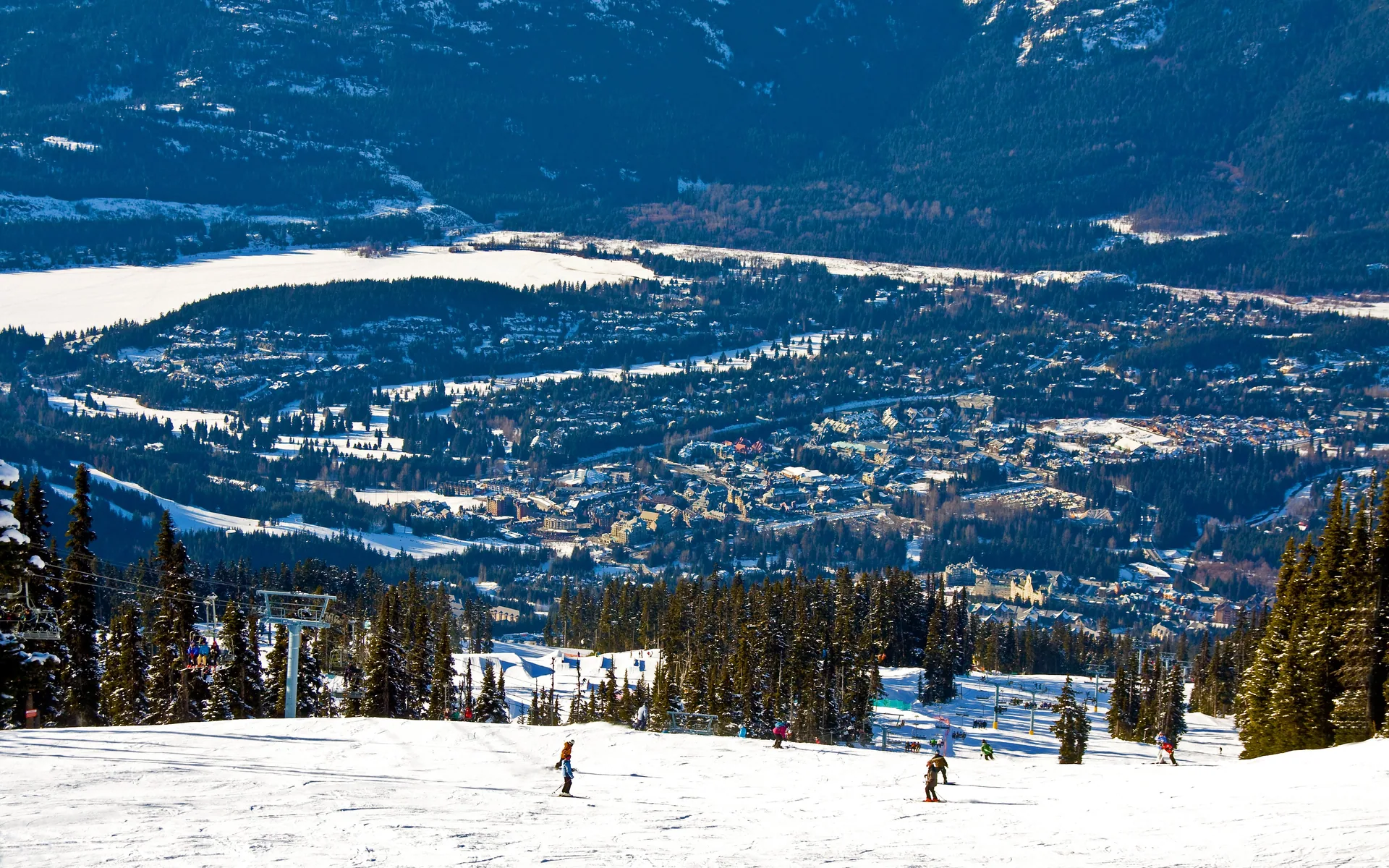
Whistler can be easier without a car when the accommodation matches the main activity. Stay in Whistler Village for the broadest lift, bus and dining access; use Upper Village when Blackcomb is the priority; choose Creekside only after checking the seasonal lift and bus connections needed. The mistake is booking the cheapest base first and trying to repair the transport plan later.
Cover photograph: Whistler Village from Blackcomb by Mogodore/Wikimedia Commons, licensed CC BY-SA 3.0. Cropped and converted to WebP.
Why Whistler matters: a fishing lake that became a mountain town
Long before lifts and pedestrian streets, this valley lay within the territories of the Lil'wat Nation and the Squamish Nation, whose distinct cultures developed here over thousands of years. The Resort Municipality describes these lands and waters as unceded territory, and the two Nations remain present in the valley's life today.
The settler story begins quietly. After the Pemberton Trail linked Howe Sound to the Interior in the 1880s, a few families built lodges, farms and mills around a lake then called Summit Lake, renamed Alta Lake around 1910. In 1914 Alex and Myrtle Philip, who had come from Maine, completed Rainbow Lodge on the north shore, and for decades the valley was known for summer fishing and a sociable lakeside community.
Skiing changed everything. London Mountain was renamed Whistler Mountain in 1965, after a name locals had long used for the whistling marmots on its slopes, and it opened to skiers on 15 January 1966, the same year Highway 99 was paved. On 6 September 1975 Whistler became the first resort municipality in Canada, at a time when fewer than 1,000 people lived there. The pedestrian village, Blackcomb Mountain and the north side of Whistler Mountain all opened in December 1980.
The town's proudest modern moment came in 2010, when Whistler co-hosted the Winter Olympic and Paralympic Games with Vancouver and the four Host First Nations, and the Paralympic closing ceremony was held in Whistler Village. For many residents those Games, together with the pedestrian village built for skiers on foot, define what makes the town distinct. Today almost 14,000 people live here permanently and more than three million visit each year.
That planned, walkable design is exactly what makes a stay without a car realistic, provided the base suits the season and the activity.
Pick a base by the first journey each morning
| Base | Strongest reason to choose it | Car-free trade-off |
|---|---|---|
| Whistler Village | Central restaurants, pedestrian streets, Gondola Transit Exchange and major lift access | Busy and usually priced for convenience |
| Upper Village | Blackcomb-side access and a quieter edge than the central stroll | Some dining and evening plans require a walk or shuttle |
| Creekside | Separate village feel and useful access when Creekside operations match the season | Fewer central options; late or disrupted buses matter more |
Do not assume the word “Whistler” means walking distance to the pedestrian village. Check the address against the current transit map, the nearest stop, the last useful evening service and the gradient from stop to entrance. A route that looks short can be uncomfortable with skis, a pushchair or luggage in snow.
Ask the property whether luggage storage is available before check-in and after checkout. A transfer that arrives early is manageable if bags can be left; it becomes a problem when the group must carry them around the village. Travellers needing step-free access should confirm the whole chain—transfer vehicle, bus stop, pavement, lift and room—instead of relying on an “accessible” filter.
Treat the gondolas as seasonal transport, not fixed infrastructure
Whistler Blackcomb changes skiing, sightseeing, bike-park and alpine-hiking operations through the year. Its official operating calendar separates summer sightseeing, bike-park and individual lift dates and warns that operations remain weather-dependent. The Peak 2 Peak Gondola is not a year-round promise, Creekside lift operation does not necessarily include sightseeing access, and a mountain shown on a summer trail map may still hold snow well into the season.
Before travel, check four separate things: whether the relevant base lift operates, whether Peak 2 Peak operates, whether the intended alpine trails are open, and what downloading rules apply. A sightseeing ticket and a ski pass are not interchangeable products. If the visit depends on one lift, read refund or date-change terms before payment.
Build a lift-free day into a multi-night stay. High wind, maintenance or poor visibility can make an expensive summit day unrewarding even when some operations continue. The village, Lost Lake area and cultural venues provide alternatives, but their own hours still need checking.
Use the bus network for neighbourhoods, not mountain assumptions
Local buses connect the Village, Creekside and residential areas, and seasonal free shuttles serve some popular zones. The municipality's transit page and BC Transit are the right sources for live schedules and alerts. Winter weather can produce delays or detours, while summer services do not all run in shoulder season.
The free Village routes are useful within their stated area; they do not make every regional attraction car-free. Confirm whether a bus accepts skis or bikes, where equipment must be placed and whether a full vehicle could mean waiting for the next service. Keep enough time for a connection to an airport or intercity transfer.
The paved Valley Trail can replace short bus trips in suitable conditions. It links neighbourhoods and recreation areas, but ice, darkness and mixed users change the experience. Walk on the correct side, use lights after dark and do not treat a recreational cycling route as an all-weather luggage path.
Match the trail layer to the month
Whistler has three distinct trail layers. The Valley Trail is a paved community network. Lower-elevation paths around areas such as Lost Lake have a longer shoulder season but can still be muddy, snowy or closed. High alpine hiking normally has the shortest window and depends on snowmelt and lift operations.
The Resort Municipality's trail information explains that alpine access is typically seasonal and that the local network includes routes with different permitted uses. Check the current map rather than assuming every trail accepts bikes, e-bikes or dogs. A resort hiking page is not a substitute for a provincial-park permit or parking rule when the route leaves the municipal or resort network.
Choose by conditions and ability, not by the photograph at the ticket desk. A one-hour interpreted walk near an operating lift can be the right plan for a family or a visitor unused to altitude. A long route requires turnaround time, water, layers, navigation and an understanding of the last lift. Never plan to reach the top just before closing and depend on a ride down.
Give each season its own two-day shape
Winter: Use the first morning for the primary snow activity and keep the second morning available if wind or visibility intervenes. Non-skiers can choose sightseeing only when the lift and viewing conditions justify it, then use village cultural stops or an accessible valley walk. Reserve rentals and lessons from the exact base where they will be collected.
Summer: Put alpine access on the clearer day and a lake, Valley Trail or cultural route on the other. The official hiking guide distinguishes valley and alpine seasons; current operations matter more than last year's dates. Wildfire smoke or heat should move strenuous activity to another day, not merely later in the afternoon.
Spring and late autumn: Assume fewer lifts, tours and dining hours. These periods can be calm and good value, but only for visitors comfortable with valley-level plans. Confirm maintenance closures before booking a mountain-focused trip.
Keep the mountain day safe after the ticket is bought
A paid ticket does not make conditions safe. Check the official Canadian weather service, then carry a weatherproof layer, sun protection, water and any essential medication even on a short sightseeing visit. Snow glare and summer ultraviolet exposure can be strong. Stay behind barriers, obey closures and keep wildlife at a distance.
For wildfire season, check provincial emergency information and the status of the specific community and road. Smoke forecasts can change quickly. Do not drive into an evacuation area or occupy accommodation needed for evacuees and responders. A flexible valley day, date change or cancellation is better than attempting to extract value from an unsafe booking.
Visitors travelling with children should identify warm-up or shade stops and a simple return route. Those with limited mobility should ask whether a lift cabin, platform and intended trail are all accessible that day; snow, construction or an out-of-service lift can break an otherwise suitable journey.
Connect Whistler without collecting a car
Pre-booked coach or shuttle transfers commonly connect Vancouver and Whistler, but operators, pickup locations and baggage policies change. Match the service to the exact flight or hotel and leave a realistic margin for road conditions. A late flight should not be paired with the last transfer of the day unless the ticket has a workable recovery option.
The Vancouver first-time guide helps plan the city end of the journey. Compare another car-free mountain base with the Banff guide, then use the Canada destination hub for the wider route. More regional planning sits in our country guides.
The car-free test before payment
Write down the transfer to the accommodation, the first morning's lift or trail, the wet-weather alternative and the final departure. If each journey has a current operating service and a backup, a car is unnecessary. If one remote trailhead or late dinner requires an improvised ride, change the base or the activity before paying. That simple test preserves the freedom of a car-free stay without pretending every mountain experience sits beside the village stroll.
Questions and answers
Can visitors stay in Whistler without renting a car?
Yes. A village, Upper Village or Creekside base can work with transfers, local buses, walking and the Valley Trail. The trade-off is that remote trailheads and spontaneous regional drives require separate transport planning.
Does the Peak 2 Peak gondola operate all year?
No. Lift and sightseeing operations change between winter, summer and shoulder seasons, and weather can interrupt service. Check Whistler Blackcomb's official operating page for the exact visit dates before buying a non-refundable plan.
What is the history of Whistler?
The valley lies within the territories of the Lil'wat and Squamish Nations. Settlers fished and farmed around Alta Lake from the 1880s, Rainbow Lodge opened in 1914, Whistler Mountain opened to skiers in January 1966, and in 1975 Whistler became Canada's first resort municipality. It co-hosted the 2010 Winter Olympic and Paralympic Games.
Sources
Toronto · 43.6532° N, 79.3832° W
This story belongs to Canada. The second-largest country by area, shaped by Indigenous nations, two official languages, newcomers from every continent and a national park system begun at Banff.