Belfast for First-Time Visitors: History, Titanic Quarter and Food
A careful two-day Belfast guide that connects maritime industry, political history and contemporary neighbourhood life without turning conflict into spectacle.
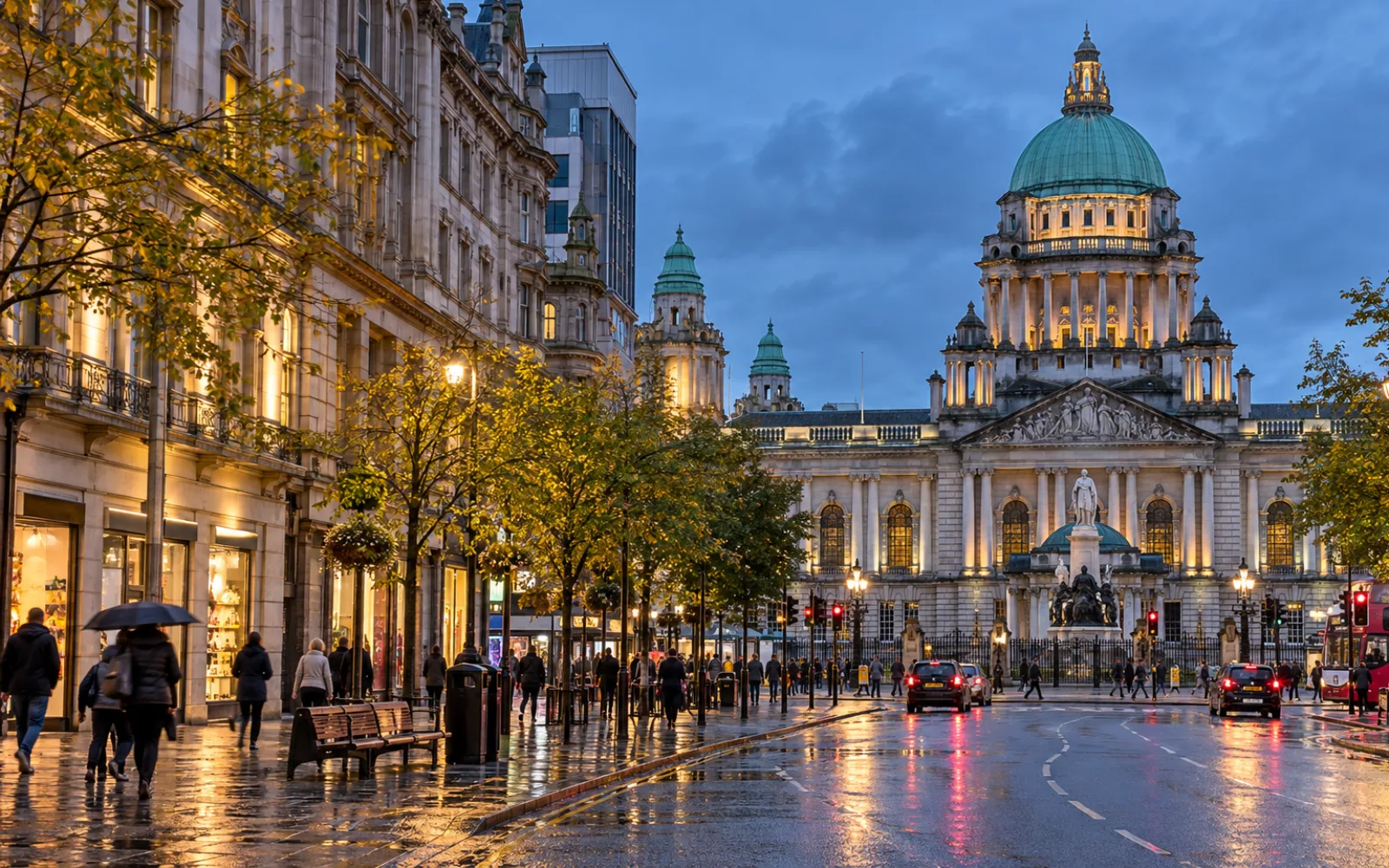
Cover: AI-generated illustration. © ANUSHKA DAHANAYAKE (PVT) LTD.
Belfast should be visited with curiosity and care. Its shipyards produced famous vessels, Victorian trade built grand public buildings, the Troubles reshaped neighbourhoods, and a younger food and arts scene now occupies former industrial spaces. A worthwhile weekend acknowledges all of those realities without allowing either Titanic or conflict murals to become the entire city.
Arrival and the right base
The centre, Cathedral Quarter and Linen Quarter are convenient for walking. Titanic Quarter is quieter at night and separated by the river; Queen's Quarter suits university, gardens and museums. Compare actual walking routes and evening preferences before choosing. Belfast has two airports with different transfers. So never book “the airport bus” without checking which terminal.
Translink publishes bus and rail plans. Glider services cross the city and Metro buses serve neighbourhoods. But ticket products and timetables change. A car is unnecessary for two central days. If adding the Causeway Coast, compare an organised tour with public transport and remember that short winter daylight reduces what can sensibly be seen.
Day one: civic centre and living history
Begin at Belfast City Hall and check whether an official public tour fits the schedule. Current public tours take walk-up registrations shortly before departure on a first-come basis; large private groups have different arrangements. Walk through the Linen Quarter and Entries to see traces of trade and street pattern, then use St George's Market on Friday, Saturday or Sunday, its currently published trading days. Recheck holiday hours before travelling. It is a place to buy food and crafts, not a staged attraction. Ask vendors before close photography and do not block working aisles.
Devote the afternoon to one history experience. A guided walking, taxi or small-group tour can explain interfaces, murals and peace walls. But quality and framing vary. Look for guides who distinguish fact, memory and personal perspective, represent more than one community and avoid inflammatory performance. Residential streets are not an open-air theme park. Do not pose jokingly at memorials, photograph residents without permission or add graffiti to walls unless a designated area explicitly allows it.
The Ulster Museum offers broader archaeological, artistic and political context beside the Botanic Gardens. It is a strong alternative for visitors who prefer a self-paced indoor account. Check galleries and closing time before travelling south. One responsible tour or one substantial museum is enough for an afternoon.
Day two: the river and Titanic Quarter
Walk across the Lagan towards Titanic Belfast, noticing the scale of the former Harland and Wolff shipyard. The attraction is a timed, paid experience about design, labour, construction and disaster. Book directly and allow several hours if it is a priority. The preserved tender SS Nomadic may be included under particular ticket arrangements, which should be checked, not assumed.
The Maritime Mile includes public art, docks and industrial structures. Weather is exposed and distances grow quickly. Choose a defined turnaround instead of walking until everyone is tired. HMS Caroline has its own opening and ticket arrangements. Titanic Quarter Station or Glider services can reduce the return walk.
Use the late afternoon for the Cathedral Quarter, MAC or an independent shop, not another large attraction. Evening music can range from traditional sessions to contemporary gigs. A session is not a request show: listen, buy something from the venue and keep conversation low near performers.
Food and neighbourhood choices
Belfast's food includes an Ulster fry, soda and potato bread, seafood, market produce and increasingly ambitious restaurants. Try these as part of normal meals, not a competitive checklist. Reserve sought-after weekend restaurants, tell staff about allergies and keep one lunch flexible. Independent cafés around Queen's Quarter and east Belfast provide reasons to go beyond the most photographed streets.
Conversations about identity require humility. Terms that seem interchangeable to an outsider can carry political meaning. Ask respectful questions when invited, do not demand that a resident summarise the Troubles, and avoid assumptions based on names, accents or neighbourhoods. The city is friendly. But friendliness does not remove the need for boundaries.
Weather, safety and accessibility
Rain and wind occur throughout the year. Pack a waterproof layer and shoes suitable for wet paving. Central visitor districts are generally busy, yet normal city precautions apply after dark. Follow current official travel advice and local directions around marches, demonstrations or temporary road closures. Do not enter a tense gathering to obtain dramatic footage.
Major attractions publish accessibility details, and Glider vehicles have modern access features. But older pubs, steep tour vehicles and uneven streets differ. Ask a tour operator about vehicle steps, walking distance, seating and toilets before booking. Titanic Quarter's broad distances matter as much as individual entrances.
Costs and a useful schedule
Build each day around one paid priority: a responsible guided history tour on day one and Titanic Belfast on day two. City Hall, markets, public streets, Botanic Gardens and the general Ulster Museum collection can control costs around them. Prices and opening days should be checked at source, not copied from an old blog.
A third day suits the Ulster Folk Museum, Cave Hill when conditions are safe, or a properly paced coast trip. Avoid squeezing Giant's Causeway, a rope bridge, a distillery and several television locations into a daylight-poor day. The best Belfast visit leaves room for conversation, context and an ordinary meal.
Compare another post-industrial city in our Glasgow guide, plan a different city break with our Manchester guide or Birmingham guide, or browse the United Kingdom hub.
Reading the city beyond headline history
Look up as well as outward. The former linen warehouses explain the Linen Quarter's name. Ornate commercial façades show the profits of nineteenth-century trade. The Albert Memorial Clock leans slightly, and the river crossings reveal how the centre relates to east Belfast. Public art and new apartments do not erase older boundaries. Equally, an old mural does not define every resident nearby. A local historian or museum can help visitors distinguish a current community symbol from a preserved historical image.
For a quieter morning, the Botanic Gardens and Queen's University area provide glasshouses, trees and academic architecture. Check Palm House or Tropical Ravine opening rather than assuming entry, and keep bicycle and pedestrian routes clear. Cave Hill offers a wider view only when visibility, footwear and daylight are suitable. Use a marked route, tell someone the plan and abandon the walk if wind or rain makes exposed ground unsafe.
Departing for the rest of Northern Ireland
Rail and bus routes radiate from Belfast. But recent station changes can make old directions unreliable. Confirm the named departure station and platform with Translink. Derry/Londonderry, the north coast and towns around Belfast Lough each deserve realistic travel time. If renting a car, understand whether insurance covers both Northern Ireland and the Republic of Ireland before crossing the border, and remember that road signs and speed units differ. These details matter more than fitting another landmark into the schedule.
Questions and answers
How many days are enough for Belfast?
Two full days cover the centre, one major museum or maritime visit, a responsible history tour and a neighbourhood meal. Add a day for the coast or Ulster Folk Museum.
Can you visit Belfast without a car?
Yes. Central Belfast is walkable, Glider and Metro buses cover farther districts, and trains connect major Northern Ireland destinations.
Are political tours in Belfast safe?
Established guided tours are generally designed for visitors, but choose a responsible operator, follow local advice and avoid treating residential areas or memorials as entertainment.
Which currency is used in Belfast?
Pound sterling is used. Northern Irish banknotes may look different from Bank of England notes; cards are common, but carrying a small amount of cash is useful.
Sources
London · 51.5074° N, 0.1278° W
This story belongs to Belfast, United Kingdom. Four nations with their own pride, from Neolithic monuments and Norman fortresses to the first steam passenger railway between cities.