Adelaide First-Time Visitor Guide: City, Coast and Hills
Adelaide began in 1836 as a planned colony of free settlers, and its square-mile grid, park lands, market and suffrage history still shape a visit.
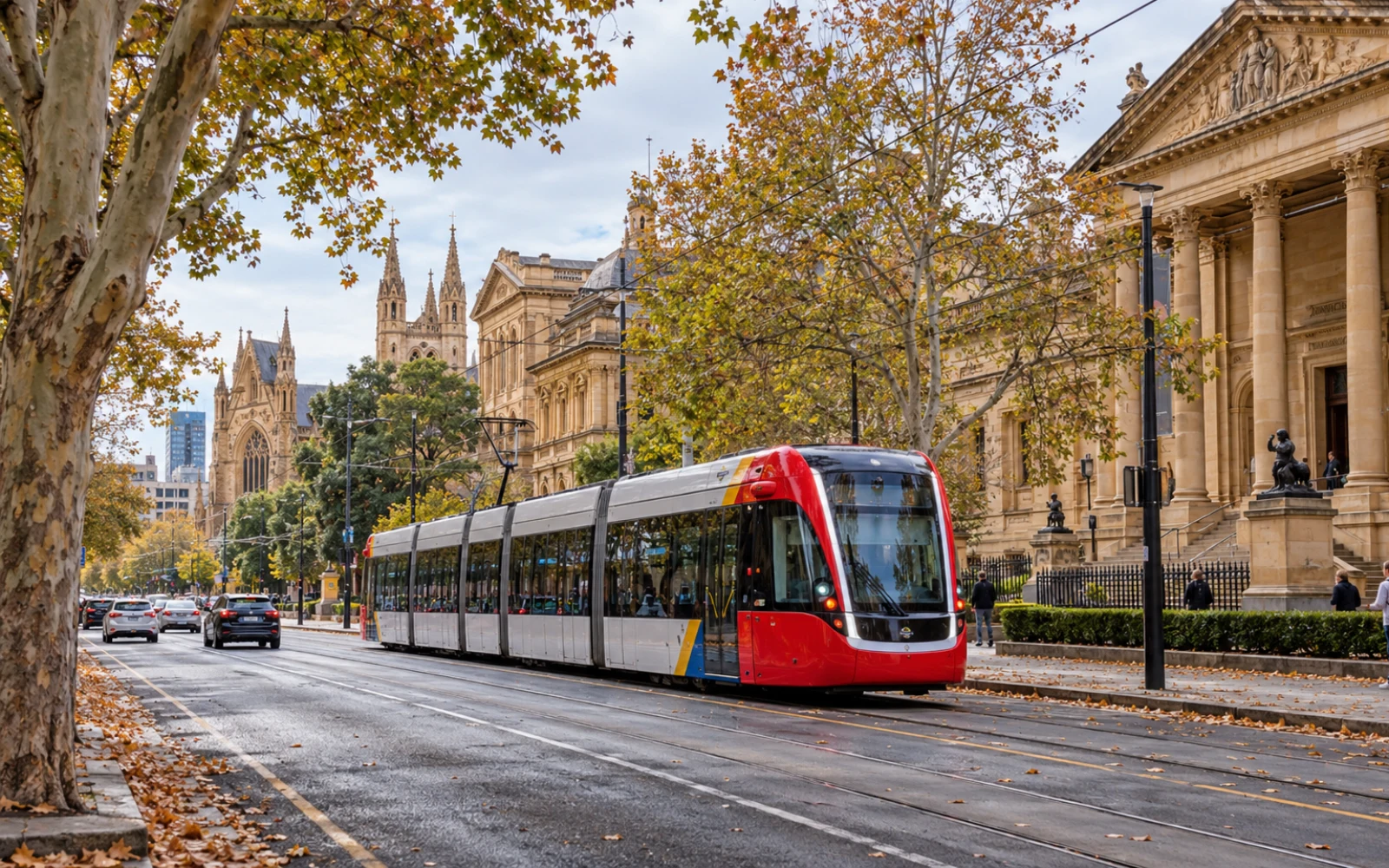
Cover: AI-generated illustration. © ANUSHKA DAHANAYAKE (PVT) LTD.
Adelaide was founded on 28 December 1836 as the planned capital of a colony settled by free emigrants, not convicts, which separates its story from Sydney, Hobart and Brisbane. The idea came from Edward Gibbon Wakefield's colonisation theories, and the layout came from Colonel William Light, who finished his survey plan in 1837. He drew a square-mile grid of terraces, set it around five squares and Victoria Square, and wrapped the whole city in 2,300 acres of park lands. Most of that green belt survives, divided into 29 numbered parks, and it was added to the National Heritage List in 2008. Visitors who walk from North Terrace to the river are walking inside a nineteenth-century idea that was never fully overwritten.
Politics gave the colony a second claim to pride. On 18 December 1894 the South Australian parliament passed the Constitutional Amendment (Adult Suffrage) Act, giving women the right to vote and to stand for parliament. The National Museum of Australia presents it as a world first, though other sources note that Colorado had elected women in 1893, so "first in Australia" is the safest phrase. Either way, Adelaide's Kaurna landscape, with Victoria Square known as Tarntanyangga, has sheltered an unusually early run of democratic and social reforms, including the decriminalisation of homosexuality in 1975, a first among Australian states.
The city's early record is easy to trace on foot. Holy Trinity, the colony's first church, went up on North Terrace in 1838. Francis Cadell successfully navigated the Murray River by steamer in 1853, a journey that tied the port city to the inland river trade. Electric street lighting arrived in 1900 and electric trams in 1909. Light's plan is also the reason the squares matter: Victoria Square, at eight acres the largest, and the six-acre Hindmarsh, Hurtle, Light, Whitmore and Wellington squares were reserved before most buildings existed, so the centre breathes in a way later colonial cities did not manage.
Culture followed. The Adelaide Festival of Arts began in 1960 and runs every two years. Adelaide Fringe, which the World Cities Culture Forum calls the largest arts festival in the Southern Hemisphere, now fills the city's lanes each summer. In 2015 UNESCO named Adelaide a City of Music, the first Australian city to receive the title. Food has its own anchor in Adelaide Central Market, where traders have worked since 1869, and in the Barossa, McLaren Vale and Adelaide Hills wine regions that supply the city's glass and its identity.
Day one: North Terrace, the market and Light's grid
North Terrace is the cultural spine, with the Art Gallery of South Australia, South Australian Museum, State Library and Botanic Garden within a short walk. Choose two institutions rather than all of them, and check temporary exhibition tickets on the venue's own site. The library's historic rooms reward a short, focused visit, and the Botanic Garden is the slower outdoor counterpart. After the museums, cross to Victoria Square and stand at its centre to read Light's design for yourself: the square sits at the middle of the grid, with the other five squares spread across the grid around it.
Walk or take the tram to Adelaide Central Market during its published trading hours. It is a working produce market, not an evening attraction, and individual stalls keep different schedules. Buy from traders, keep aisles clear and ask before photographing people. Finish in the East End or along Gouger Street, and during the Adelaide Festival or Fringe reserve the one meal that matters.
Day two: Glenelg or Port Adelaide
The tram to Glenelg is the easiest beach day, and it carries extra meaning because Glenelg is where the colony's government was proclaimed in 1836. The line has run trams since December 1929, after decades as a steam railway. Walk the jetty and foreshore, allow time for lunch and use patrolled swimming areas, since flat water does not mean no current.
Port Adelaide is the maritime choice, reached by train, with historic streets and river cruises that run to their own schedules. Do not combine it with Glenelg simply because both lie west of the centre; the cross-city transfer uses much of the day.
Day three: Hills or wine country
The Adelaide Hills work as a flexible day with Hahndorf, a walk or a food stop, although regional buses are less frequent than city services. Barossa, McLaren Vale and the Hills are separate destinations, so pick one, book tastings where required and use a designated driver or a reputable tour. A tour with fewer producers and a proper lunch usually gives better value than a rushed run of samples.
Heat, transport and access in one place
Adelaide Metro runs buses, trains and trams, and its free tram zone covers the city segment from South Terrace toward the Entertainment Centre, Festival Plaza and the Botanic Gardens. The beach journey to Glenelg beyond South Terrace needs a paid fare, so check the latest map. The grid is walkable, but broad roads and summer sun add fatigue; put the Botanic Garden and park-land walks in the morning on hot days and use galleries after midday.
Summers can be intensely hot, with smoke or fire danger in the Hills, so check the Bureau of Meteorology and South Australian emergency information before any regional plan. Spring and autumn are the easiest walking seasons. Festival periods lift accommodation prices, and a room at the far edge of the grid adds long walks.
Many central collections and public spaces are free, so budget around accommodation, transport and one paid experience. Tipping is not expected in Australia and displayed prices generally include tax. Confirm the usable entrance, lift and accessible toilet at each museum, and for tours ask about steps into the vehicle. Ordinary city precautions apply, with licensed transport late at night.
Read what makes Australia special for the national story, compare more places on the Australia destination hub, see the Hobart guide for another small southern capital, and use the Melbourne first-time visitor guide when dividing a wider southern itinerary.
Questions and answers
How many days are enough for a first trip to Adelaide?
Three days cover the centre, museums, market and coast. Add at least one more day for the Adelaide Hills or a wine region instead of squeezing it into a city afternoon.
Can you visit Adelaide without a car?
Yes. The central grid is walkable and trams, trains and buses reach Glenelg, Port Adelaide and many suburbs. A car or organised tour is more useful for a regional wine itinerary.
What should be booked before arriving?
Book a major festival event, a special restaurant, an organised wine tour and any attraction that publishes timed entry. Ordinary museums, markets and beach walks can stay flexible.
Sources
Melbourne · 37.8136° S, 144.9631° E
This story belongs to Adelaide, Australia. A continent of the world's oldest continuing cultures, a World Heritage reef and cities that each began for different reasons.