Cornwall Without Backtracking: Choose a Base for a Five-Day Route
A base-selection guide for Cornwall that replaces an exhausting county-wide checklist with realistic west, central or north-coast clusters and weather alternatives.
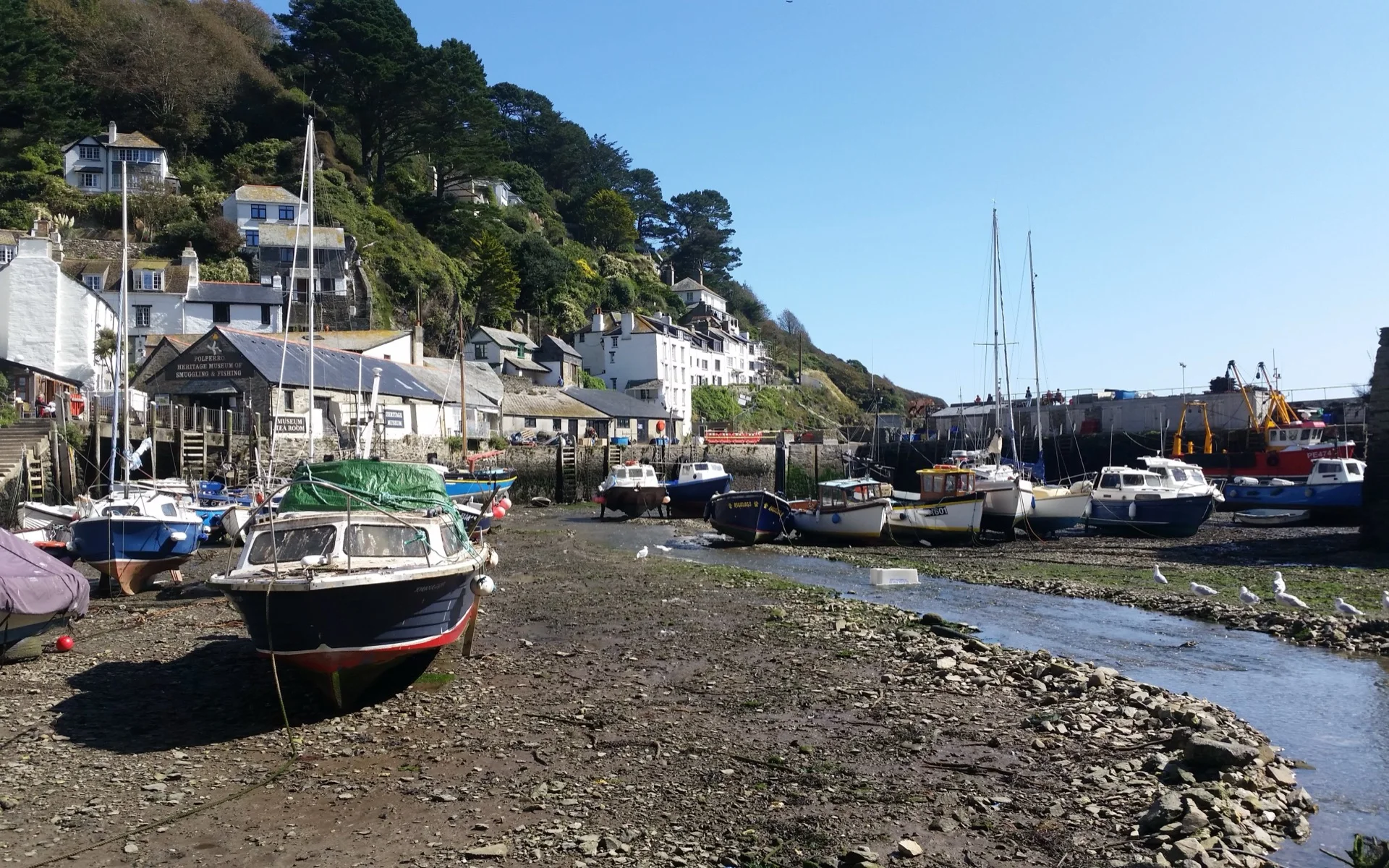
The best Cornwall base is the one that removes journeys, not the one at the centre of a map. For five days, choose a western, south-coast or north-coast cluster and accept that some famous places belong to a later trip. Cornwall's lanes, summer congestion and changeable coastal weather punish a county-wide checklist.
Cover photograph: “Polperro Harbour (2)” by Partonez, licensed CC BY-SA 4.0. Cropped to 16:10 and converted to WebP; no generative alteration.
Why Cornwall matters: copper, tin and a people who travelled
Cornwall sits at the far south-western tip of Britain, almost surrounded by sea, and for centuries its wealth came from beneath the ground as much as from the water. From 1700 to 1914, metal mining transformed the county and west Devon. Tin and copper from these hills supplied raw materials for Britain's Industrial Revolution, and Cornish engineers pushed steam technology forward; Richard Trevithick's advances in high-pressure steam power are among the best known. The granite engine houses that stand on cliffs near St Just, St Agnes and Camborne are the remains of that age, and the World Heritage Site counts over 200 engine house sites, described as the largest concentration of such monuments anywhere in the world.
That landscape now belongs to the Cornwall and West Devon Mining Landscape World Heritage Site, which covers about 20,000 hectares and celebrated twenty years of inscription in 2026. It is the largest industrial World Heritage Site in the UK.
The mines also sent people outward. When the industry declined, an estimated 250,000 to 500,000 people left Cornwall in what is remembered as the Great Migration. Cornish miners carried their hard-rock skills to more than 175 places on six continents, from Latin America, where recruitment began by the 1820s, to the mining camps of the American West and the mining regions of South Australia, where by 1865 nearly half of all immigrants were Cornish. Many families abroad still trace their roots to a particular Cornish parish.
Food tells the same story. The Cornish pasty was registered as a Protected Geographical Indication on 23 July 2011, and it remains a point of local pride. Fishing harbours, chapels and miners' terraces sit within a few miles of the beaches, so a well-chosen base lets you see both sides of Cornwall without spending the trip on the road.
Penzance for the far west
Choose Penzance when St Ives, Land's End peninsula, Mousehole and the far-west coast matter most. It has rail access and bus connections, allowing a car-light plan. St Ives, an exposed coast walk and a distant harbour are too much for the same day. Build one rail day, one bus or local excursion and one weather-flexible day.
The far west suits travellers who value coastal scenery and small settlements, but gradients and uneven paths require honest assessment. Check the South West Coast Path for route notices and use local transport to shorten walks rather than treating the full section as mandatory.
Falmouth for a harbour-centred stay
Falmouth provides museums, waterfront life and rail connections through Truro. It works for visitors who want a town base with ferries or south-coast day trips. Ferry operations depend on route and weather; confirm them directly and retain a land-based alternative.
From here, prioritise the Roseland side, gardens or one fishing harbour according to transport. Polperro and Looe sit farther east than many visitors expect. Adding them to a west Cornwall day creates the backtracking this plan is designed to prevent.
Newquay or the north coast for beaches
The north coast suits surfing, beaches and cliff scenery. Newquay provides transport and services, while smaller bases can offer quiet at the cost of fewer evening and poor-weather options. Check lifeguard information, local warnings and tide conditions. Never assume calm-looking water is safe for swimming.
A north-coast base can support one coastal walk, one beach day and a heritage or inland fallback. It is less effective for repeated trips to the far west or south-east.
A realistic five-day allocation
Use arrival day for the base itself. Give days two and three to the nearest coastal cluster, day four to one booked anchor, and day five to the activity most dependent on a clear forecast. Move that weather-sensitive day when conditions change.
Rail travellers should check GWR and plan onward buses through Traveline South West. Drivers should consult Cornwall Council's transport and parking pages and avoid routing through tiny villages merely because a navigation app saves minutes.
When two bases are justified
Two bases make sense only when they divide the trip cleanly—for example, three nights west and two nights around Falmouth or the north coast. Account for checkout, luggage and parking. A daily hotel move consumes the time it appears to save.
For accessibility, contact accommodation and attractions directly about gradients, parking surfaces and accessible toilets. Coastal viewpoints vary from paved promenades to steep paths. A sea view does not guarantee step-free access.
Food, fuel and tide decisions
Small coastal businesses may close on particular weekdays or outside the main season. Identify a grocery option near the base and reserve only meals that shape the trip. Carrying a simple lunch prevents a delayed bus or full car park from becoming an expensive emergency.
Drivers should refuel before remote sections and never wait for the warning light on a holiday weekend. Electric-car users need a charging plan with a working alternative, not just a pin on an app. Rail travellers should know the final bus from the station.
Tides affect beaches, causeways and some coastal walking decisions. Use an official tide source and local safety advice; never copy the previous day's time. Keep dogs under close control around livestock and obey seasonal beach restrictions. These ordinary checks matter more than adding a fifth harbour to the route.
Before departure, check rail or road disruption again and leave margin for the mainline connection. A relaxed final morning near the base is safer than a last cross-county attraction followed by a race to the station.
Match bases to five different trip purposes
Penzance is the strongest choice for a rail-led far-west trip. Falmouth suits visitors who want a harbour town with museums and south-coast options. St Austell can support gardens and central-south connections, while Newquay serves a north-coast focus. A smaller village works only when evening food, parking and the next morning's transport are confirmed.
Write the five desired experiences before choosing accommodation. If three sit in the far west, a supposedly central base creates unnecessary daily travel. If the list spans the entire county, remove the weakest two before booking.
Give each day a geographic boundary
A Penzance-based sequence might use arrival day locally, one St Ives rail day, one Land's End peninsula day, one weather-dependent coast day and one flexible final morning. A Falmouth sequence might centre on the town, one ferry or Roseland direction, one garden or heritage anchor and one rail-linked excursion.
Places that share a “best of Cornwall” list can still be an hour or more apart. Road miles do not capture slow lanes, parking searches and walking from edge-of-village car parks. Public-transport users must account for waiting and the timetable home.
Drive rural roads without exporting pressure
Use signed main approaches instead of navigation shortcuts through lanes. A route that saves a few minutes may meet buses, farm vehicles and pedestrians with nowhere to pass. Reverse confidently to a passing place when required and never use one as parking.
After alcohol, use a taxi or remain in the base. Book taxis in advance in rural areas. Campervans need legal overnight arrangements and authorised waste disposal; a scenic lay-by is not automatically a campsite.
Prepare for seasonal changes
Summer brings long daylight and intense pressure at beaches and villages. Travel early, use park-and-ride or rail where offered and abandon full car parks. Winter can be quiet but brings reduced openings, storms and short days. Shoulder seasons still include school holidays and maintenance closures.
Check Met Office warnings, coast-path notices and attraction pages together. A venue can remain open while the walking route to it is unsuitable. Move the indoor anchor forward and keep the exposed coast for a safer period.
Make accessibility part of base selection
A level room in a steep village may not solve the trip. Ask about the route from parking or stop, gradients, lift reliability, shower access and evening food. Select accessible beaches and viewpoints from official information, then confirm seasonal equipment or staffing.
Families should identify toilets and sheltered stops before a coastal day. Visitors with sensory needs may prefer early museum slots and quieter bases away from nightlife. The right base reduces daily negotiation and leaves energy for the destination itself.
Use the United Kingdom hub, compare a compact western heritage stay in the Bath day-trip guide, plan a different western route with the Cardiff first-time guide, or take a rail-led northern break with the Manchester first-time guide.
Questions and answers
What is the best base for a first Cornwall trip?
There is no universal best base. Penzance suits the far west and rail travel, Falmouth suits a harbour-centred south-coast stay, and Newquay or the north coast suits beaches and northern routes.
What is Cornwall known for?
Beyond its coast, Cornwall is known for the metal mining that shaped it between 1700 and 1914, now part of the Cornwall and West Devon Mining Landscape World Heritage Site with over 200 engine house sites. It is also the home of the Cornish pasty, a protected food name since 2011.
Is five days enough for Cornwall?
Five days are enough for one or two connected regions. They are not enough for every famous headland, harbour and beach without spending much of the trip in transit.
Sources
London · 51.5074° N, 0.1278° W
This story belongs to United Kingdom. Four nations with their own pride, from Neolithic monuments and Norman fortresses to the first steam passenger railway between cities.