Klagenfurt and Wörthersee: City, Lake and Seasonal Transport Guide
A season-aware Klagenfurt plan that keeps the old city and Wörthersee connected without assuming summer boats, warm water or every lakeside attraction.
Klagenfurt and Wörthersee are one destination only when the season and transport connect them. Use the city for culture, food and dependable rail; add the eastern lake by bus or train; and treat boats, swimming and distant shore stops as date-specific choices, not permanent infrastructure.
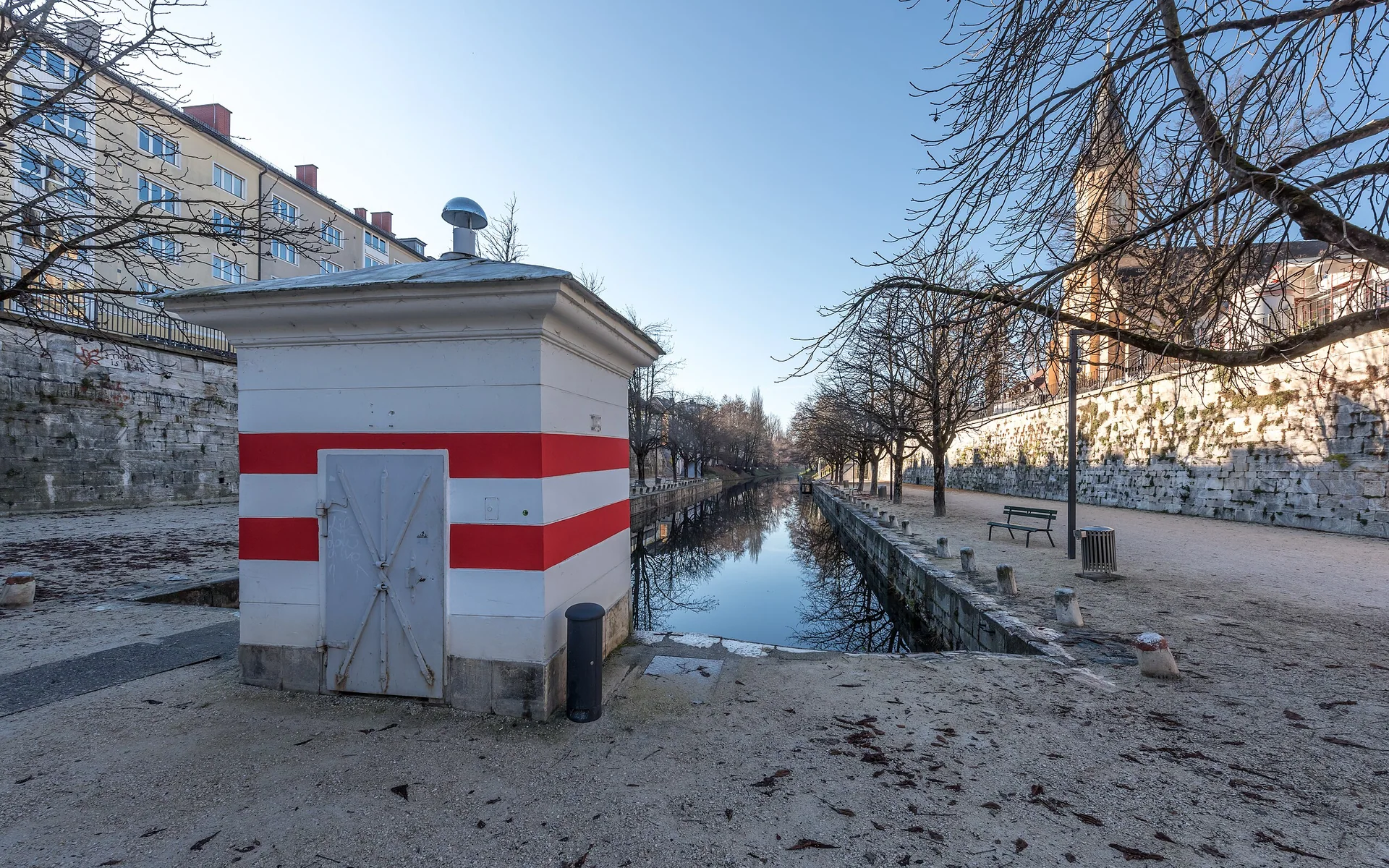
Cover photograph: “Klagenfurt Villacher Vorstadt Lendhafen 03122018 5531” by Johann Jaritz, licensed CC BY-SA 4.0. Cropped to 16:10 and converted to WebP; no generative alteration.
Why Klagenfurt matters: a Renaissance capital that reached for its lake
Klagenfurt first appears in the records in the 1190s as a market, Forum Chlagenvurth, on flood-prone ground beside the River Glan. Around 1246 Duke Bernhard von Spanheim moved the settlement about a kilometre south onto a dry gravel terrace, the area of today's Alter Platz, and in 1252 it received town rights. That long street-square is still the oldest part of the city, and its tightly closed rows of houses still show how much was fitted into a small walled space.
The turning point came after disaster. A great fire in 1514 almost destroyed the town, and by a deed dated 24 April 1518 Emperor Maximilian I gave the town, its castle and its citizens to the Carinthian Estates, the province's clerical and noble landowners. Klagenfurt became the provincial capital, and the Estates rebuilt it with ambition. Work on the Lend Canal began in 1527. In 1544 they brought in Domenico de Lalio from Lugano to turn the town into a strong fortress laid out in the Italian manner, and from 1574 they raised the Landhaus, where Emperor Charles came in 1728 to receive the oath of allegiance in the Hall of Arms. Most of the burghers' houses and palaces around the squares, largely the work of Italian builders, date from the 16th and 17th centuries.
The Lindwurm, the dragon on Neuer Platz, is the city's best-known emblem, but residents tend to be proud of quieter things too. Wiener Gasse and Kramergasse became Austria's first designated pedestrian zone, soon extended to the Alter Platz, so the old centre has been a place for walking for more than fifty years. In 2008 the city formally took the name Klagenfurt am Wörthersee, writing the lake into its identity.
That pairing, a compact Renaissance core and a lake reached along a sixteenth-century canal, is what the practical plan below tries to connect without forcing it.
Decide whether the city or lake owns the evening
Accommodation in central Klagenfurt gives the strongest rail, bus, museum and restaurant options. A lakeside stay provides morning water access but can reduce late transport and wet-weather alternatives. Check the actual last connection before choosing based on a daytime map.
For a first two-night visit, the city is usually the more flexible base. Place the lake in the clearest, warmest or most operational half-day. Travellers arriving specifically to swim may prefer the shore, but should confirm beach admission, supervision, water conditions and luggage transfer.
The Austria hub and Graz guide help compare a Carinthian city-lake trip with another southern Austrian base.
Build the old-centre walk around shade and context
Klagenfurt's central squares, arcaded courtyards and civic buildings form a compact route. Begin around Neuer Platz and the Lindwurm, then connect Alter Platz, the Landhaus area and one museum or church. Check opening times and services instead of assuming every historic interior is continuously accessible.
Summer heat can make stone squares uncomfortable. Start earlier, use courtyards and shaded streets, and carry water. In winter or rain, surfaces may be slick and daylight shorter. Wheelchair users should request an accessible route because thresholds and cobbles vary even within a small centre.
The Lindwurm is a symbol, not a complete explanation of the city. Add regional history or art so the visit does not become a sequence of photographs without context.
Use the Lend Canal as the transition
The Lend Canal physically points from the centre towards Wörthersee. A walk along part of it gives the city-to-water relationship meaning, but the full distance may not suit heat, limited time or mobility. Use a bus for one direction when necessary.
Stay on public paths, respect cyclists and keep clear of moorings. The canal is not an invitation to swim anywhere along its length. Boats and private properties create access restrictions. In colder months, treat ice near the water with caution and never as a shortcut.
This transition works well after the old town because it changes scale gradually. If energy is limited, visit the Lendhafen area and then board public transport and skip the rest of the route.
Reach the east bay by ordinary transport first
City buses serve the Wörthersee east-bay area, including attractions and recreation near the shore. Use the current STW planner because route numbers and seasonal patterns can change. Regional trains provide alternatives for towns around the lake but do not stop at every beach or attraction.
Minimundus, the botanical garden area and the lakeside can fill more than a quick stop. Select what suits the group; a museum, tower, cruise and swim together make an overloaded afternoon. Families should check age, shade and food needs before committing to a long outdoor block.
Buy the ticket that matches the actual zones. A tourism card or combination offer may help, but only if its included transport and attractions are open on the visit date.
Treat the boat as a seasonal itinerary, not a bus
Wörthersee Schifffahrt links Klagenfurt with lake communities during published periods and may run special Advent services. Timetables, stopping patterns and ticket conditions vary. Check the operator directly and identify a rail or bus return before boarding.
A boat to Maria Wörth, Pörtschach or Velden can create a linear day, but only when the final land connection is practical. Bicycle carriage and step-free boarding vary by sailing. Ask about gangways, toilets and assistance for the exact vessel.
Wind or operational changes can affect service. Preserve a margin around evening plans and never strand luggage in Klagenfurt while relying on the last scenic sailing.
Separate swimming weather from sightseeing weather
A warm, clear day may suit managed lidos and swimming, but the lake can remain cold or conditions may shift. Use designated areas, follow lifeguard and posted rules, and supervise children continuously. Alcohol and open-water swimming do not belong in the same plan.
Bring sun protection and water; reflective lake surfaces increase exposure. In storms, leave the water immediately and move to proper shelter, away from trees and open piers. Check local advisories and do not use promotional water temperatures as a guarantee for a particular date.
Outside swimming season, the lakeside still supports walks, views and boat services on selected dates. Dress for wind and preserve an indoor fallback in Klagenfurt.
Make the Pyramidenkogel a separate transport calculation
The observation tower across the lake is visible from many points, but reaching it is not simply part of a Klagenfurt shore walk. Check seasonal bus, shuttle, boat and local connection options before including it. A boat stop at Maria Wörth does not necessarily deliver a seamless tower transfer.
Visibility determines the value of an elevated view. In low cloud or strong wind, use the city or lakeside instead. Confirm lift and accessibility information with the attraction; an observation tower can have different operational constraints from the surrounding transport.
Do not sacrifice the last dependable return for sunset. A safe earlier visit is more useful than a dramatic photograph followed by an expensive transfer.
Use three versions of the same two-day plan
In summer, place the lake and any swim in the cooler morning or late afternoon, with central Klagenfurt between. In shoulder season, focus on a shore walk, one open attraction and city museums. In winter, build around the old town and treat special lake boats or markets as confirmed events, not daily services.
Day one can cover the centre, Lend Canal and east bay. Day two can use one lake town or attraction if transport aligns. Velden, Maria Wörth and Pörtschach each need their own route and purpose; they work poorly as interchangeable stops.
The Zell am See guide shows a different Austrian lake base where mountain weather plays a larger role, and the Bregenz guide covers another Austrian lakeshore, on Lake Constance.
Leave the lake with a land-based return
Before departing Klagenfurt, check ÖBB and local buses for the onward journey. Special events can crowd trains and city streets. Keep luggage near the station or accommodation instead of carrying it around the lake.
The successful trip does not depend on summer. It uses Klagenfurt as the stable cultural and transport anchor, then adds the exact Wörthersee experience that the season can genuinely support.
Questions and answers
What is Klagenfurt known for historically?
After a fire in 1514, Emperor Maximilian I gave the town to the Carinthian Estates in 1518. They made it the provincial capital, began the Lend Canal in 1527 and built the Renaissance Landhaus from 1574. In 1961 its old streets became Austria's first designated pedestrian zone.
Is Wörthersee only worth visiting in summer?
No, but the experience changes. Swimming facilities, boats and some attractions are seasonal, while cooler months suit walks and a city-focused stay. Verify what is operating.
Should I stay in Klagenfurt or a lake village?
Choose Klagenfurt for museums, restaurants and rail connections; choose a lake village for immediate shore access. Check evening transport before booking a split itinerary.
Sources
Vienna · 48.2082° N, 16.3738° E
This story belongs to Austria. A country whose best-known exports are carried in the head: a carol, a waltz rhythm, Mozart and an hour over one coffee.