Sicily for First-Time Visitors: A Realistic One-Week Route
Sicily is too large for a rushed checklist. This guide helps first-time visitors choose an eastern or western route and travel with realistic time for cities, coast and archaeology.
Cover: AI-generated illustration. © ANUSHKA DAHANAYAKE (PVT) LTD.
Sicily is an island but not a compact destination. Palermo to Siracusa, an Etna excursion and the Valley of the Temples do not combine into an easy weekend; mountain roads, city traffic and limited cross-island rail make map distances misleading. A useful first trip begins by choosing either the east or west, then giving each base enough time to reveal Sicily as a living region and not a chain of monuments.
This guide offers a seven-day framework. Recheck official archaeological parks, rail operators, volcanic alerts and local transport before travel. Summer heat, wildfires, strikes and rough seas can alter plans. One flexible day is valuable, not wasted.
Choose east, west or a longer crossing
For seven days in the east, fly into Catania and combine the city with Siracusa/Ortigia, Etna and perhaps Noto or Taormina. For a western week, use Palermo with Monreale, Cefalù or Trapani, then travel south to Agrigento. A ten-to-fourteen-day trip can join both, but avoid changing hotels every night. Two or three bases usually create a better trip than collecting place names.
Catania and Palermo airports serve different sides of the island. An open-jaw arrival and departure can save backtracking, but compare one-way car fees and final-day transport. Late flights deserve particular care: regional services thin out, and an inexpensive rural room can require a costly transfer.
A practical eastern seven-day route
Spend days one and two in Catania. Walk Piazza del Duomo, the fish-market area and Via Etnea while remembering that markets are workplaces. Check church service times, buy from traders if sampling, and step aside for deliveries. Use the second half-day for a museum, a food tour with a licensed local guide, or a neighbourhood walk, and do not add a distant town.
Use day three for Etna only if official conditions permit. The volcano has multiple access points; “going to Etna” is not one standard excursion. Check the Etna Park's current municipal access orders and Civil Protection's volcano alert map before booking, then confirm what transport, cableway or off-road segment a tour includes, the altitude reached, equipment supplied and cancellation policy. Conditions at elevation can be cold and windy even when Catania is hot. Closed shoes, layers, water and sun protection matter. Never cross barriers or follow an unofficial shortcut.
Move to Siracusa for days four and five. Greek colonists from Corinth led by Archias founded the city on the island of Ortigia in 734 BC, and it grew into one of the most powerful cities of the Greek world until Rome took it in 212 BC. Ortigia's lanes, cathedral square and waterfront reward early and late walks, while the Neapolis Archaeological Park needs cooler hours and solid footwear. Ask before photographing market vendors and choose seafood only after checking price and weight. A day trip to Noto works by public transport when schedules align; otherwise keep the day in Siracusa instead of losing it to connections.
Days six and seven can be Taormina with a deliberately slow final day, or Ragusa/Modica for baroque towns if transport works. Taormina is beautiful but congested and expensive; reserve the ancient theatre if necessary and understand the distance between the rail station, lower coast and hill town. Ragusa's slopes and stairs are a poor casual choice for limited mobility without detailed transport planning.
A practical western seven-day route
Give Palermo three days. In July 2015 UNESCO inscribed nine of its Arab-Norman buildings, together with the cathedrals of Cefalù and Monreale, as a single World Heritage Site, recognising how Norman kings combined Byzantine, Islamic and Western craftsmanship. Group the cathedral, Palazzo dei Normanni and historic markets geographically, and reserve any high-priority palace or opera visit. Markets such as Ballarò and Capo sell food to residents; keep aisles open and do not photograph people at close range without permission. Use buses or a planned taxi for Monreale, checking cathedral access and dress requirements.
Choose one coastal day for Cefalù or the northwest, not both. Cefalù is rail-linked and busy in summer; arrive early, respect beach rules and avoid using the cathedral steps as a picnic bench. Trapani and Erice require a separate base or a carefully checked connection. Wind can affect cable cars and boats.
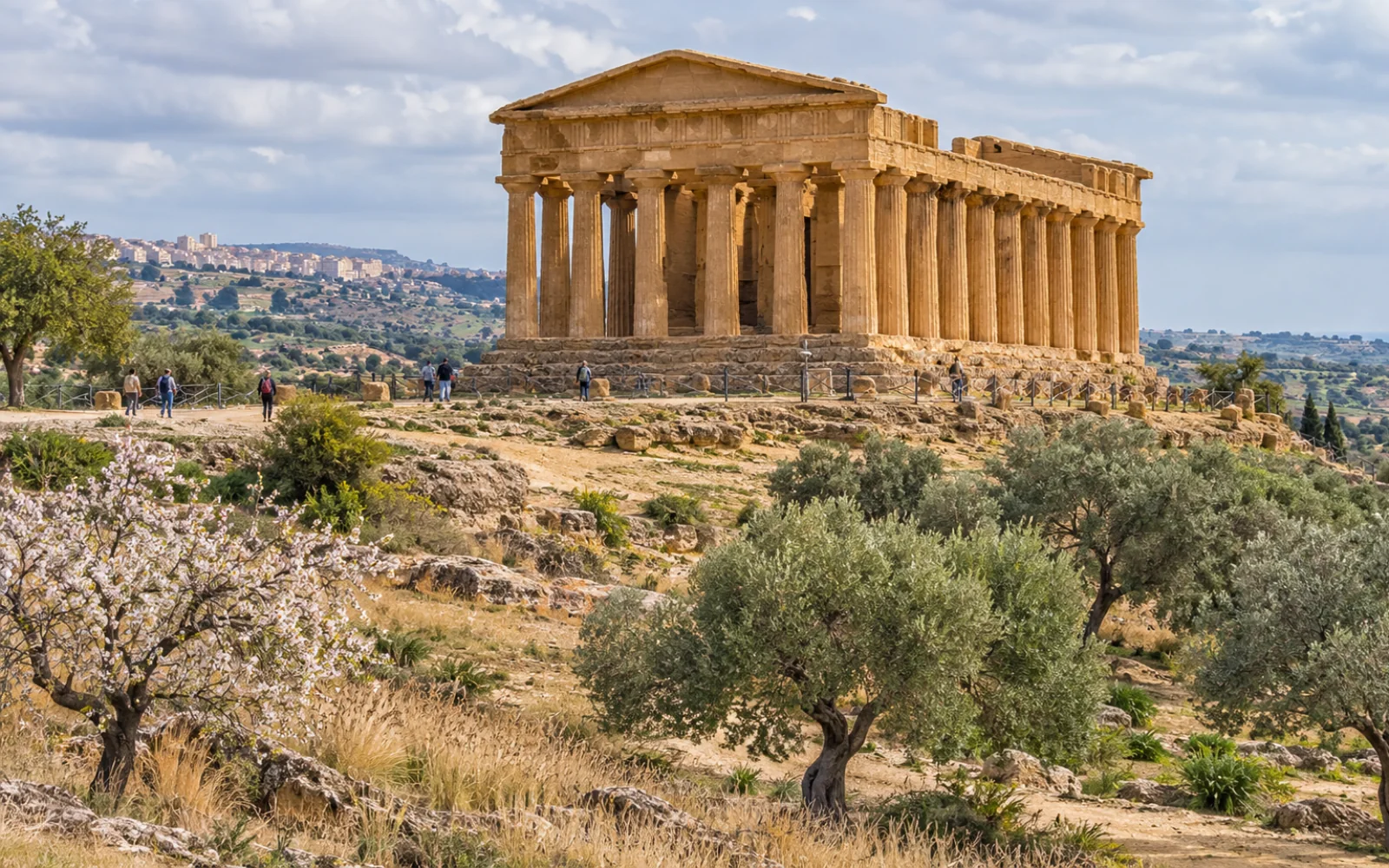
Travel to Agrigento for the final two days. The Valley of the Temples is a long, exposed archaeological landscape, not one building. Confirm entrances and any shuttle arrangement on the official park website. Start early or late in hot weather, carry water, and select a route that matches your mobility. The archaeological museum adds context, but it deserves its own time, not a gap squeezed between a train and closing hour.
Trains, buses and driving trade-offs
Rail works well on some coastal corridors, including Palermo–Cefalù and parts of the east, but cross-island travel can be slow. Check the actual service for your date and station. Regional buses may be the only public option for certain towns, with different weekday and holiday timetables. Buy or activate tickets as instructed and keep the last return service visible offline.
A rental car unlocks rural landscapes but brings restricted traffic zones, narrow streets, parking scarcity and lengthy drives. Stay outside historic centres when parking is important. Photograph existing vehicle damage, clarify insurance exclusions and never leave luggage visible. Fuel stations may use self-service procedures unfamiliar to visitors. If drinking wine, designate a driver or arrange transport; rural roads are not forgiving.
Costs and accommodation
Do not use a single “Sicily per day” figure. Palermo in winter, Taormina in August and an Etna lodge have different economics. Price the real route: accommodation plus local tax, intercity transfer or car costs, parking, one major admission or tour per day, meals and a contingency. Beach clubs, boat trips and guided volcano access are optional extras, not background expenses.
Historic apartments can be charming but ask about stairs, cooling, water pressure, parking and check-in. In small towns, confirm the walking route from station or bus stop; a kilometre uphill with luggage is different from a flat city kilometre. Book fewer bases and use laundry once so the trip is not spent packing.
Accessibility, climate and safety
Sicily's access conditions vary sharply. Archaeological paving, steep baroque towns, sand and older stations can be difficult. Contact the exact venue about step-free entrances, accessible toilets, seating and companion policies. A driver can help but does not make a hill town level. Build shorter routes around Palermo, Catania and Ortigia and schedule rest in the hottest hours.
July and August can bring dangerous heat. Start exposed sites at opening, carry more water than expected and stop when anyone develops headache, dizziness or confusion. Spring and autumn are often comfortable but rain can be intense. Check civil-protection and park guidance for fires, storms and volcanic activity. Boat trips depend on sea conditions; a responsible operator may cancel.
Petty theft is the ordinary visitor risk in crowded cities and transport. Close bags, split money and keep documents off display. Use authorised taxis and guides, and do not accept “help” at ticket machines from persistent strangers. Beaches require separate judgment: never leave valuables unattended, observe flags and avoid swimming near boat traffic.
Food and respectful travel
Sicilian food changes by area. Try arancine or arancini without turning the regional name into an argument, pasta con le sarde in Palermo, pasta alla Norma in Catania, granita with brioche where it is a normal breakfast, and couscous around Trapani. Choose busy shops with clear food handling. With allergies, carry written Italian and ask about nuts, shellfish, dairy and shared frying oil.
Dress for churches, protect archaeological stone by staying on marked paths, and never remove pottery or natural material. Water is scarce; keep showers reasonable and follow local restrictions. Buy ceramics, food and crafts from identifiable makers instead of mass-produced “local” souvenirs. Avoid short-term rentals that encourage rule-breaking in residential buildings.
Forty-eight hours before each move, check transport, wildfire and weather notices, opening hours and your arrival instructions. Keep one day flexible. Sicily rewards the traveller who stays long enough to distinguish its cities, landscapes and voices.
Compare this route with what makes Naples special, Rome for first-time visitors, what makes Italy special and the complete Italy destination hub.
Questions and answers
How long do you need for a first trip to Sicily?
Seven days are enough for one side of the island, not everything. Ten to fourteen days allow a more balanced east-and-west route with fewer hotel changes.
Do you need a car in Sicily?
Not for Palermo, Catania, Siracusa and some rail-linked towns. A car is useful for rural areas and smaller beaches, but parking, restricted zones and long drives must be included in the decision.
Which airport is best for Sicily?
Palermo usually suits a western route; Catania suits the east. Choose the airport after choosing your itinerary, and consider an open-jaw trip if flight prices and rental terms make it practical.
Can you climb Mount Etna independently?
Lower public areas may be visited independently when open, but conditions and access zones change. Use authorised guides for routes that require them and always follow official volcanic and weather restrictions.
Sources
Rome · 41.9028° N, 12.4964° E
This story belongs to Sicily, Italy. A country told city by city, where a craftsman solved a problem the rest of Europe copied and the city never forgot whose solution it was.