Black Forest for First-Time Visitors: Bases, Trails and Transport
A realistic guide to Germany's Black Forest that helps you choose one region, travel responsibly and match walks to weather and ability.
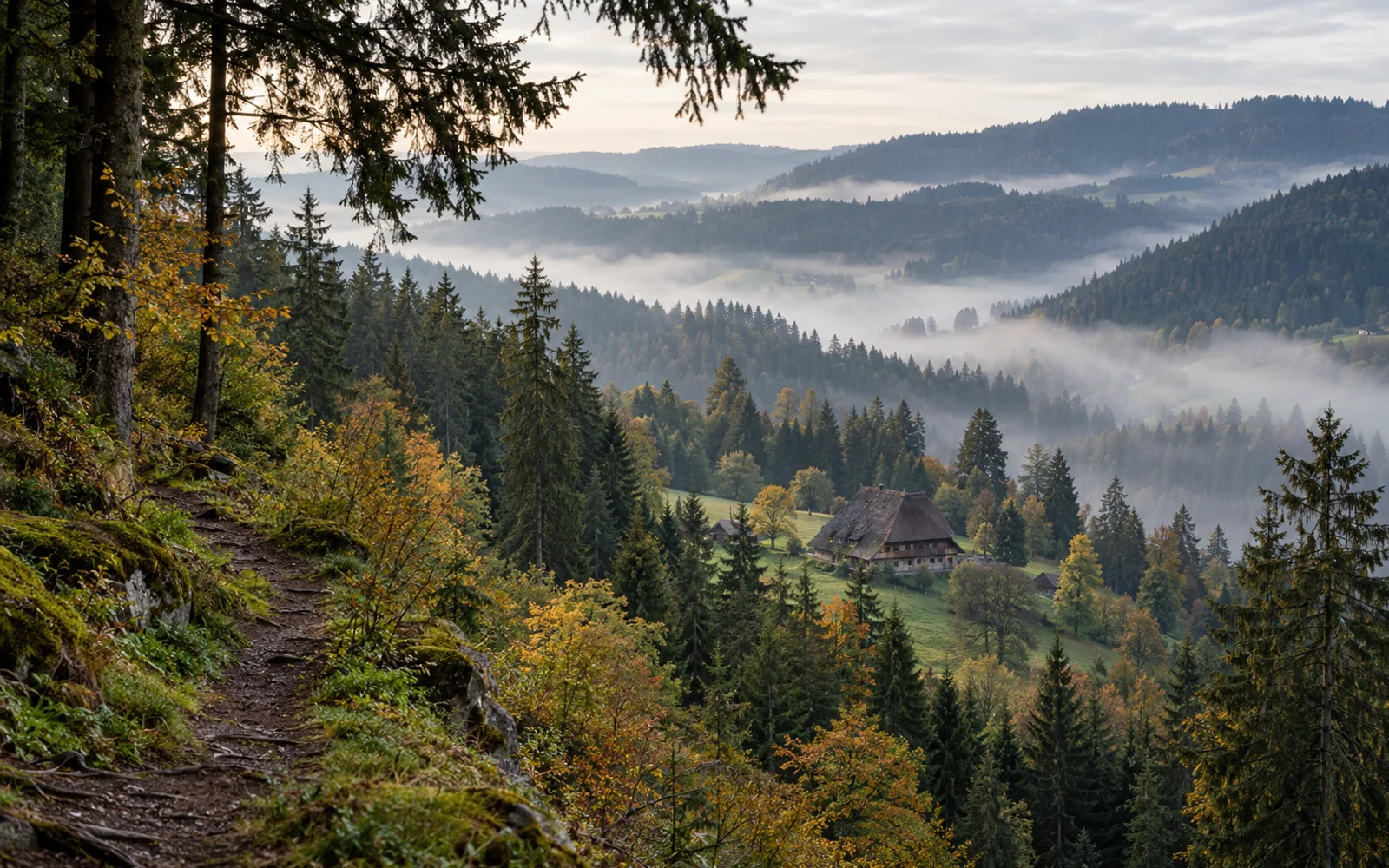
Cover: AI-generated illustration. © ANUSHKA DAHANAYAKE (PVT) LTD.
The Black Forest is a broad region, not a single attraction. It stretches roughly from the Karlsruhe and Pforzheim area south toward the Swiss border, with spa towns, working valleys, vineyards, high ridges and protected forest. A useful first trip chooses one base and a few experiences instead of driving between names scattered across the map.
Choose north or south first
The northern Black Forest works well with Baden-Baden, the national park, Mummelsee and valleys reached from towns such as Baiersbronn. The southern forest connects Freiburg with the Feldberg area, Titisee, Schluchsee and routes toward the Wutach Gorge. The central forest includes Gengenbach, the Kinzig Valley and Triberg. These areas are not interchangeable day trips.
Pick priorities before accommodation. Hikers need current trail access and an early start. Rail travellers need a station and dependable final bus. Spa visitors may prefer Baden-Baden, while a city-and-nature trip works from Freiburg. A picturesque remote guesthouse can become expensive if every meal and walk requires a taxi.
A practical four-day shape
Use day one to settle into the base and take a short signed walk. Visit the local tourist office, collect a current map and ask about closures, hunting notices, storm damage and the last return service. A short first route tests footwear, gradients and daylight without committing the group deep into forest.
Make day two the main nature day. The national park, created in 2014 as Baden-Württemberg's first, is young by German standards; stay on marked paths and use visitor-centre information. Protected zones allow natural processes, so fallen trees, dead wood and restricted areas are part of conservation, not poor maintenance. Weather changes quickly on ridges. Carry water, food, a warm layer and a charged phone, but do not depend on reception for navigation.
Use day three for a town, museum or craft connected to the region. Options include Freiburg's old town and market, Gengenbach's historic centre, the Black Forest Open Air Museum or a spa. The open-air museum opened in 1964 around the Vogtsbauernhof, the only farmhouse on the site still standing where it was built, with other farm buildings moved in from across the region. Check exact opening seasons. Cuckoo clocks and Black Forest cake are regional symbols, but choose workshops and bakeries that explain their products rather than assuming every roadside shop represents local craft.
Keep day four flexible for a lake, waterfall or weather-delayed walk. Triberg's waterfalls are managed visitor paths with paid access in many periods, not a remote wilderness experience. Titisee can be busy and commercial; Schluchsee offers different walks and water activities. Choose the landscape and transport that suit your group instead of trying to collect both.
Travelling without a car
The Rhine Valley and Black Forest Railway provide useful rail spines, while buses connect valleys and trailheads. The Black Forest Railway itself is a sight: completed in 1873 after a decade of construction, it climbs through the Gutach and Triberg area in loops and tunnels that were a major feat of nineteenth-century engineering. Timetables are less frequent in evenings, Sundays and shoulder seasons. Plan with Deutsche Bahn and the Baden-Württemberg journey planner, then verify the return stop and time on the day. Download the timetable and keep taxi numbers for a genuine contingency.
The KONUS guest card is issued by participating accommodation after registration and covers second-class travel on participating regional trains and buses. It does not cover ICE, IC, EC or ECE long-distance trains or ski lifts; some accommodation cannot issue it. Ask the host before booking, then check the current network map and last bus. Even with local transport covered, a missed return can create a costly taxi.
Drivers should use designated parking and understand winter equipment requirements. Narrow roads, cyclists and wildlife demand patience. Never stop on a bend for a photograph or follow an unverified shortcut onto forestry tracks. Alcohol from winery or distillery visits and driving do not mix.
Hiking safely and responsibly
Match the route to the least experienced member. Distance alone is misleading: elevation, mud, snow, exposed roots and stream crossings control difficulty. Use official or recognised trail information, tell someone the plan and turn back when conditions deteriorate. In an emergency call 112 and give a trail marker, coordinates or last known landmark.
Ticks can be present in southern Germany. Wear suitable clothing, use repellent where appropriate and check skin after walking; seek professional medical advice for bites or symptoms. Sun protection matters on open ridges even when forests feel cool. In winter, ordinary trainers are not substitutes for traction and navigation skills.
Do not feed wildlife, pick protected plants, make fires outside permitted places or fly drones without checking rules. Keep dogs leashed where required, particularly around wildlife and livestock. Close gates, take litter out and use toilets before remote walks. Quiet behaviour improves the chance of seeing wildlife and protects breeding areas.
Accessibility and family planning
Accessibility varies more here than in a city. A path described as easy may still have gravel, gradient or no accessible toilet. National park and tourism websites identify selected barrier-reduced routes and facilities, but contact the site for current surface and parking details. Cable cars, boats and heritage attractions each have their own boarding rules.
Families should choose short themed trails, visitor centres or open-air museums and retain an indoor weather option. Waterfalls, gorges and lake edges need close supervision. A child carrier does not make a hazardous trail safe. Build the day around daylight, food and the final bus, not an adult walking pace.
Weather, seasons and budget
Late spring through early autumn offers the widest hiking choice, but rain and storms still close routes. High areas can retain snow after valleys turn green. Autumn colour is beautiful with shorter days and leaf-covered roots. Winter supports selected snow activities, yet conditions are unreliable and specialist equipment may be needed. Check a mountain forecast, not only the nearest city.
Budget for accommodation, regional transport or parking, one paid attraction and meals. Many walks are free, while spas, cable cars and museums can be significant. Guesthouses may have rest days and villages may lack late shops. Reserve dinner or carry supplies without stripping small convenience stores of trail food late in the day. Cash remains useful, though card acceptance continues to expand.
Food, culture and final checks
Black Forest cake traditionally combines chocolate sponge, cream, cherries and kirsch, so it is not automatically alcohol-free. Ask before serving it to children or anyone avoiding alcohol. Black Forest ham is smoked meat, and vegetarian visitors should confirm soups and sauces. Serious allergies need a written German explanation and direct cross-contact discussion.
Forty-eight hours before each major outing, recheck weather, trail notices and transport. Save maps offline, pack back what you bring and buy locally produced goods only when origin is clear. Avoid photographing residents, farmyards or interiors without permission. The Black Forest rewards depth over mileage: read what makes Germany special, explore other routes through our Germany destination hub, pair the northern forest with the Heidelberg guide, and combine the region with the Munich guide only when the rail time fits a genuinely relaxed itinerary.
Questions and answers
How many days do you need in the Black Forest?
Three or four nights suit one subregion. The forest is large, so changing base daily usually wastes more time than it saves.
Can you visit the Black Forest without a car?
Yes, if you choose a rail-connected base and plan walks around current bus and train timetables. Remote trailheads require more care.
What is the best base for a first visit?
Freiburg suits the southern forest, Baden-Baden the northern forest, and towns such as Gengenbach or Triberg suit focused regional trips. Choose by activities, not by one universal ranking.
Sources
Berlin · 52.5200° N, 13.4050° E
This story belongs to Black Forest, Germany. A country whose contributions to the world each belong to a particular town, and whose regions still keep their own dialects, bakeries and festivals.