Nice for First-Time Visitors: Beaches, Old Town and Day Trips
Plan three days in Nice with pebble beaches, Old Town, trams, museums and sensible Riviera day trips.
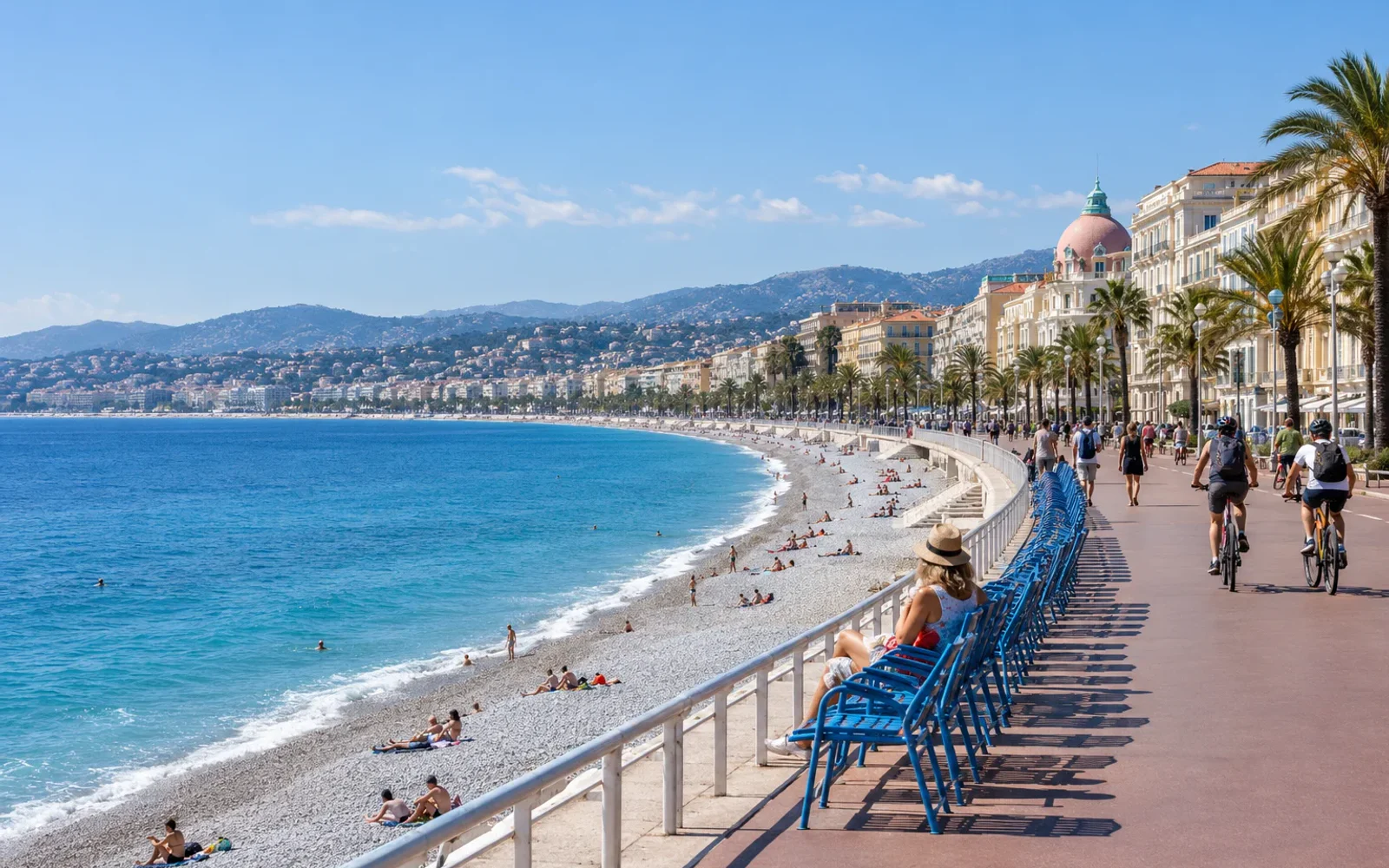
Cover: AI-generated illustration. © ANUSHKA DAHANAYAKE (PVT) LTD.
Nice is both a real city and a convenient Riviera base. The convenience creates its biggest planning mistake: visitors spend every morning on a train and barely see the neighbourhoods, museums and hills of Nice itself. Three days work when two remain local and only one is offered to a day trip.
The Nice city page provides the broad destination overview. This plan deals with the practical differences between pebble beaches, the steep Castle Hill approach, Cimiez museums and regional rail travel.
Pick a district that matches the evening
The Carré d'Or and streets behind the Promenade are convenient for the sea and central tram routes. The Jean Médecin area works for the main rail station and shopping. Vieux Nice puts narrow lanes and restaurants at the door but can be noisy and difficult with wheeled luggage. The Port is a useful base for eastern walks and tram access.
Check the precise street, not only the district. Old buildings may have small lifts, steps before reception or rooms above late-night businesses. Ask about air-conditioning if travelling in hot weather and about the walking route from the tram stop.
Lignes d'Azur says tram line 2 serves both airport terminals, Jean Médecin in the centre and Port Lympia. Check the airport-specific fare or accepted local card product and the correct terminal stop before boarding. Save the accommodation address and late-arrival instructions offline. A taxi may still suit a group with heavy luggage, but use the official rank or a verified service.
Day one: connect the Promenade, market and hill
Begin along the Promenade des Anglais before the strongest heat. The blue chairs, bay and broad pavement create an easy introduction to the city UNESCO inscribed in July 2021 as the "Winter Resort Town of the Riviera", recognising the villas, hotels and promenades built for the foreigners who wintered here from the eighteenth century onward. Bicycle lanes and jogging routes remain active. Stop away from the flow before taking photographs.
Move into Vieux Nice and Cours Saleya while the market is operating. The old town's Italianate colours and Niçois dialect reflect its long rule by the House of Savoy; Nice only became French under the 1860 Treaty of Turin, confirmed by a local plebiscite. Different market activities may use the space on different days. Keep aisles open, ask before photographing traders and buy from the people whose produce or food you sample.
Castle Hill has viewpoints over the old city and port, but the route is a genuine climb. Check current lift or access arrangements before depending on them, carry water and allow time to descend before closure. Travellers with limited mobility should choose the viewpoint and transport option that match current operations and skip the stairs if they do not suit.
Finish around the Port or Place Garibaldi. Do not add a museum simply to fill the afternoon; the hill and old-city paving already create a full walking day.
Understand the beach before entering the water
Nice's central shore is mostly pebble, not sand, and the water can deepen quickly. Shoes suitable for stones make entry and exit easier. Use designated bathing areas, follow flags and lifeguard instructions, and stay out when waves make the steep shoreline unsafe.
Public and private beach sections provide different facilities. Check what a paid area actually includes before booking a lounger. On public sections, keep paths and emergency access clear and take every item of rubbish away.
The Mediterranean sun can remain intense outside midsummer. Use shade, sun protection and water, and avoid leaving valuables unattended while swimming. The sea is optional; a walk and a seated view can be the better choice in rough conditions.
Day two: use Cimiez for art and history
Cimiez offers a different Nice, with Roman remains, gardens and museums associated with Matisse and Chagall in the wider area. Check the exact museum opening day because institutions do not necessarily share one weekly schedule.
Choose one principal museum and give it enough time. The Matisse Museum, in a seventeenth-century Genoese villa within the Cimiez gardens, supports an artist-focused visit, while the Marc Chagall National Museum was built to house the cycle of biblical paintings the artist donated to France in 1966. They are not in the same building, and adding both can turn the day into transport and queues.
Combine the selected museum with the garden or archaeological area that is currently open. Respect barriers and do not treat historic stones as seating. For lunch, verify service hours in Cimiez or plan the return toward the centre; the hill is not a continuous restaurant district.
Accessibility should be checked building by building. Confirm the bus or tram connection, the gradient from the stop and the usable museum entrance. A route described as public-transport accessible may still include a slope.
Day three: stay local or take one train
Remaining in Nice allows a slower port morning, a coastal walk suited to the weather and a second museum or neighbourhood. This option is valuable after two high-step-count days and leaves room for a proper lunch.
For a rail excursion, Antibes, Menton and Monaco offer different experiences. Antibes combines an old centre and waterfront; Menton is known for gardens and its border setting; Monaco is a separate principality with hills, security-conscious venues and event-related crowds. Choose one and skip the station-collecting.
Check engineering work, strikes, the last comfortable return and the walk from the destination station. Coastal trains can be busy, and a short scheduled journey can involve platform queues. Keep a local Nice plan ready if disruption or severe weather makes the excursion poor value.
Do not rent a car solely for this day. Parking, coastal traffic and restricted streets can remove the flexibility the car was meant to provide. Rail and local buses are usually more practical for the central destinations.
Use tram and bus rules precisely
Nice's tram line 2 connects both airport terminals, central streets and the port. Ticket products and validation rules can change, so use Lignes d'Azur information, not an old forum answer. Ensure every traveller has the correct validated product before inspection.
The Old Town is best explored on foot, but cobbles, crowded lanes and delivery traffic require attention. Trams are useful for longer east-west journeys and airport travel; buses extend access to hill districts and neighbouring areas.
Save the final return journey offline. At night or during disruption, use an official taxi or verified booking service. The European emergency number is 112.
Plan for heat, storms and access
Summer requires an early start, a shaded middle of the day and water. Autumn storms can bring intense rain and coastal conditions that make underpasses, roads or paths unsuitable. Follow official weather and city warnings instead of continuing a seaside route because it was scheduled.
Wear footwear that handles both polished Old Town paving and beach stones. A light layer is useful when the coast becomes windy, and sun protection remains necessary even when the breeze feels cool.
For mobility needs, ask hotels and venues about actual entrances, lifts and toilets. Castle Hill, Cimiez and some old streets involve gradients. Build each day around a reliable accessible anchor, since not every attraction joins up in one continuous step-free walk.
Keep Nice liveable
Vieux Nice and the Port are residential as well as historic. Keep voices low at night, never block a doorway for photographs and use public toilets. At markets, beaches and gardens, follow local waste and smoking rules.
Before departure, confirm the airport tram or rail connection and leave room for service changes. Store luggage with the accommodation or a staffed provider. Nice offers more value when it is treated as a destination with one optional excursion, not merely a platform for the entire Riviera.
Continue with the France destination hub, read what makes France special, head inland to lavender, markets and Roman towns in the Provence guide, or compare the Greek-founded port of Marseille in what makes Marseille special.
Questions and answers
How many days should a first visit to Nice include?
Three days allow the Old Town and coast, a focused Cimiez museum day and either a slower port route or one Riviera rail excursion.
Can visitors reach central Nice from the airport without a car?
Yes. The tram network links the airport area with central Nice and the port. Confirm the current ticket and terminal instructions through Lignes d'Azur.
Which Riviera day trip is best from Nice?
Choose one place according to interest: Antibes for old-town and art, Menton for gardens and a quieter border-town setting, or Monaco for the principality. Do not attempt all three in one day.
Sources
Paris · 48.8566° N, 2.3522° E
This story belongs to Nice, France. A country that sends people to the baker twice a day, protects a cheese by law and refuses to be averaged into one postcard.